
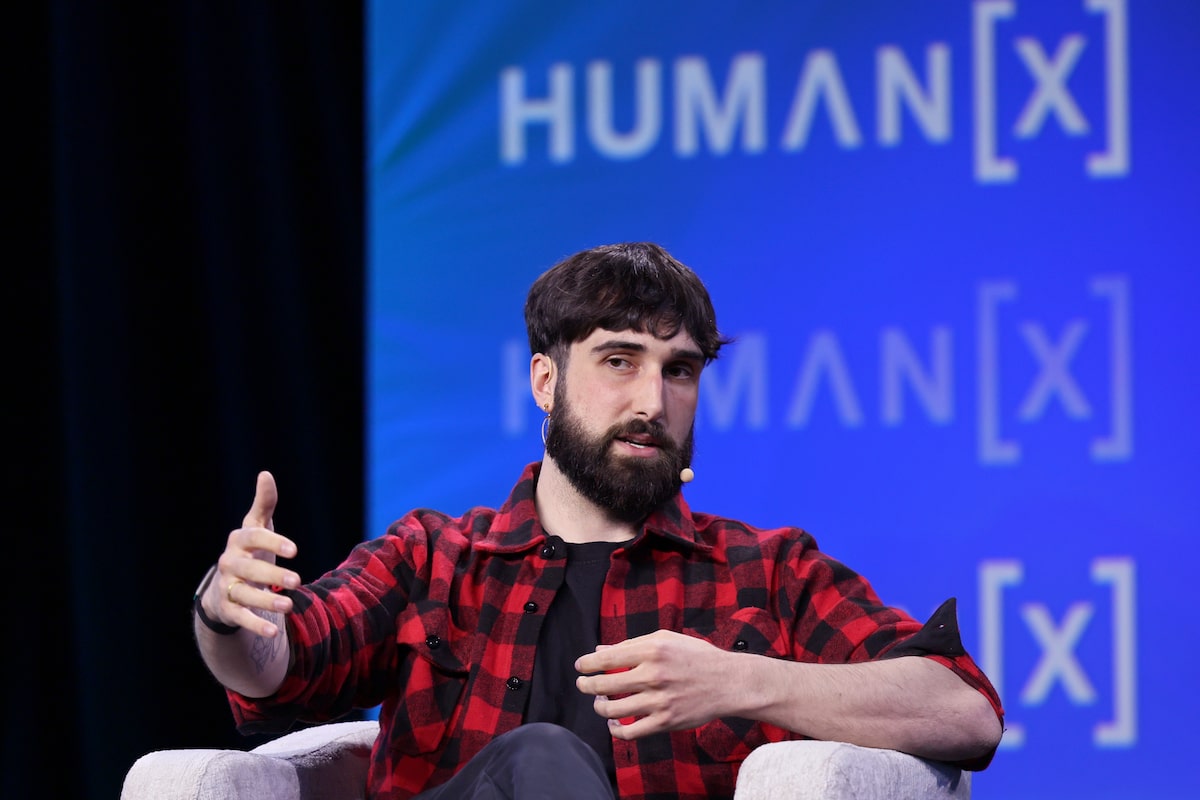
Cohere chief executive officer and co-founder Aidan Gomez onstage at the HumanX conference in San Francisco on Thursday.Big Event Media/Getty Images
Canadian artificial intelligence company Cohere Inc. is in talks to merge with German AI player Aleph Alpha GmbH, according to two sources familiar with the matter.
The deal, if it proceeds, would have large implications for the Canadian AI ecosystem and Cohere’s ability to compete in a capital-intensive industry dominated by American tech giants.
The Globe and Mail is not identifying the sources because they are not authorized to discuss the matter publicly.
Cohere spokesperson Kyle Lastovica said the company does not comment on rumours or speculation, but pointed out that Canada and Germany are collaborating in general on technology. “Cohere meets with companies and institutions across Germany and Europe,” he said.
Representatives for Aleph Alpha did not immediately respond to requests for comment.
German submarine maker partners with AI firm Cohere in bid to build next Canadian fleet
A merger would be politically sensitive. Cohere is a crucially important company for the Canadian government’s AI ambitions. Countries around the world, including Canada and Germany, are attempting to shore up their AI industries to ensure autonomy and control of a powerful and lucrative technology. The headquarters and domiciles of any new entity will matter greatly to both countries.
One of the two sources familiar with the matter pointed out that Cohere is the larger of the two companies, and that its core presence and intellectual property are expected to remain in Canada should the deal proceed.
German publication Handelsblatt, which first reported on the talks, said that the new entity will have offices in Canada and Germany and that the German government will be an anchor customer.
The Canadian federal government was informed about the talks early on, according to The Globe’s sources.
A statement from AI Minister Evan Solomon’s office said it does not comment on commercial discussions between companies. The statement added that Canada and Germany are close technology partners, and that the office supports Canadian AI companies growing and competing globally.
Cohere is one of only a few international players that build the large language models (LLMs) that underly generative AI applications. The company signed an agreement with the federal government last year to identify opportunities for the public service to adopt AI, and in 2024 Ottawa announced it would provide $240-million to Cohere for training new models in Canada. Mr. Solomon has frequently championed Cohere, especially as Ottawa prepares to release a new AI strategy.
Patrick Pichette, a partner at Inovia Capital and a member of the federal government’s AI task force, wrote in his submission last fall that, as part of the upcoming strategy, Ottawa should declare Cohere a national champion and “fuel it with significant revenue contracts,” such as $1-billion each for civil service and defence applications. (Inovia is an investor in Cohere.)
Cohere was founded in 2019 by Aidan Gomez, Nick Frosst and Ivan Zhang. The trio has been vocal about remaining in Canada. “We founded the company here because we love it here,” Mr. Frosst said in an interview earlier this year. “I have a deep community here because I’m deeply invested in Canada.”
Cohere co-founder Nick Frosst at its office in Toronto in 2024. The firm’s three co-founders have been vocal about remaining in Canada.Christopher Katsarov /The Globe and Mail
Both the governments of Canada and the European Union are concerned about the dominance of American AI and cloud computing companies, especially amid trade tensions under U.S. President Donald Trump, and are focused on ways to support domestic alternatives.
Canada and Germany signed an agreement earlier this year to deepen collaboration on building sovereign AI capacity and reducing dependencies on a small number of technology providers.
A deal with Aleph Alpha could give Cohere greater access to German and broader European markets. The two companies share a few similarities. Both focus on enterprise and government clients as opposed to consumers, and emphasize privacy, security and ensuring clients have control over data.
Cohere has scored customers domestically and abroad, including Royal Bank of Canada, Fujitsu and LG CNS. The company was valued at roughly US$7-billion during its most recent fundraising round last September and earned US$240-million in annual recurring revenue last year.
Aleph Alpha has grown at a slower pace. The company last raised some US$500-million in November, 2023, including from German industrial giants SAP SE and Bosch. But it later sidelined building its own LLMs to focus on helping corporate and government customers implement AI tools, regardless of which company makes the underlying models.
If a deal between Cohere and Aleph Alpha proceeds, the new entity will still face huge challenges competing against deep-pocketed U.S. rivals, such as OpenAI, Anthropic and Google. Anthropic in particular is winning over business customers and said this month that its revenue run-rate has surpassed US$30-billion.