

Every longevity article I read follows the same pattern. It leads with supplements, cold plunges, sleep protocols, and metabolic panels. Somewhere near the bottom, if it appears at all, there’s a brief mention of relationships. The variable with the largest effect size in the research gets treated like a footnote. The things you can buy and track get the headline.
When George Vaillant analyzed decades of data from the Harvard Study of Adult Development — the longest-running study of human flourishing ever conducted, now spanning over 88 years — he found that a man’s warmth of relationships at age 47 was a stronger predictor of his health at age 80 than his cholesterol levels had been. Not marginally stronger. Categorically stronger. That finding has been available since the early 2000s. Robert Waldinger, the study’s current director, has repeated it in TED talks, books, and interviews. And yet the wellness industry keeps burying it.
The variable that matters most isn’t biological optimization. It’s whether you have at least one person in your life with whom you are genuinely known. Not liked. Not admired. Not followed. Known. Most people believe longevity is fundamentally an optimization problem. Eat well, move often, sleep deeply, manage stress, and you earn more years. The assumption is intuitive because it puts the individual in control. You can track your macros. You can buy a better mattress. You can run another mile. What you cannot easily track, purchase, or optimize is whether another human being truly understands who you are underneath the performance.
But the research tells a different story. And the different story has been available for decades, steadily accumulating evidence while the wellness market sold something easier to package.
The Data That Keeps Getting Ignored
The Harvard Study’s findings are not an outlier. The people who describe their 70s as their happiest decade tend to share this pattern: they have at least one relationship characterized by mutual depth rather than surface-level pleasantness.
What’s striking is the specificity of the mechanism. Research suggests that the protective factor isn’t social network size, and that having many acquaintances who recognize your face at a party may not provide the same benefits. Having one person who knows what you’re afraid of, what you regret, what you want but haven’t said aloud. Research indicates this may affect inflammatory markers, cardiovascular function, and cognitive decline trajectories. Longevity researchers at institutions like the University of Copenhagen, where the ARDD conference convened in 2025 with Nobel laureates and top experts in aging research, have been converging on a framework that places relational quality alongside, and sometimes above, traditional biomarkers.
Even sleep, which one study found to be possibly more important for longevity than diet, exercise, or social ties, interacts with this relational variable in complicated ways. People who feel genuinely known by someone tend to sleep better. Their nervous systems downregulate more efficiently. The relationship isn’t a separate category from biology. The relationship is biology, expressed through a different channel.
Known Versus Recognized — And Why Your Body Can Tell the Difference
The distinction in the title deserves careful unpacking, because most people conflate being known with being recognized and assume they already have what the research describes.
Being recognized means someone can identify you. They know your name, your role, your general disposition. They might describe you as always cheerful or really put-together or so dedicated to your work. Recognition maps the surface. The person being recognized can maintain the same curated version of themselves they present to everyone else. No risk. No vulnerability. No cost.
Being known is structurally different. Research on self-disclosure in relationships describes it as the deliberate sharing of personal information that carries emotional weight. Information you would not share with a stranger, and that the other person receives without trying to fix, minimize, or redirect. The process is reciprocal. Both people hold something of the other that could, theoretically, be used against them. That mutual vulnerability is what creates the physiological safety signal.
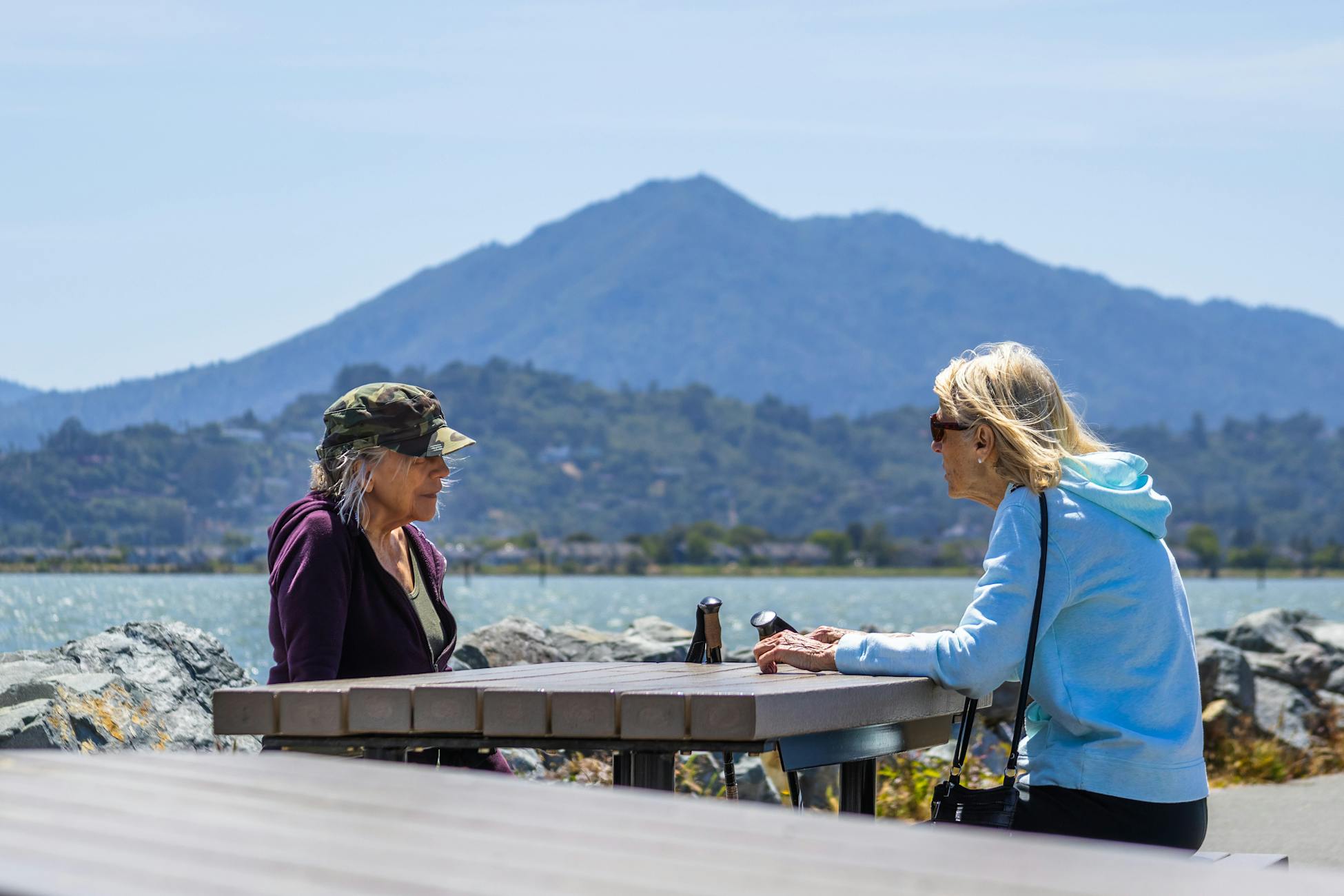
A woman I know has over two thousand connections on LinkedIn and attends industry dinners three times a month. She is recognized everywhere she goes. When her father was diagnosed with a serious illness last year, she told me she couldn’t think of a single person she could call who would understand why she wasn’t devastated. Her relationship with her father was complicated in ways she’d never disclosed to anyone. She had a vast social network and zero people who knew her. The longevity research would code her as relationally isolated, despite her calendar being full.
This gap between social busyness and relational depth is where the data gets uncomfortable. You can have dozens of unread texts and nobody to call when something real happens. The texts are recognition. The call would require being known.
And the body registers the difference with startling precision. Research into the health benefits of self-disclosure between partners has shown that the act of being truly seen by another person produces physiological effects that go beyond subjective wellbeing. The body responds to relational authenticity the way it responds to safety: studies suggest inflammation may decrease, sleep architecture may improve, and the kind of chronic low-grade stress activation that accelerates aging may begin to resolve. A body that is only recognized, no matter how frequently, may remain in a subtle but measurable state of vigilance. The nervous system is still scanning for the threat that comes from being unseen in the ways that matter most.
Why the Wellness Industry Can’t Sell This
When I was a product manager, I sat in hundreds of meetings where we discussed engagement metrics, retention curves, and feature adoption rates. Every variable we tracked had to be measurable, attributable, and ideally, monetizable. The variables that couldn’t be packaged into a dashboard got deprioritized, regardless of their actual importance.
Relational depth is the ultimate non-monetizable variable.
You can’t sell it as a supplement. You can’t track it with a wearable. You can’t gamify it with a streak counter. The wellness industry, which shares the same metric-optimization logic as the tech industry, naturally gravitates toward interventions that can be measured and sold: sleep trackers, meal plans, fitness programs, biomarker panels. These interventions aren’t useless. They’re just not addressing the variable with the largest effect size.
The result is a strange distortion. The average person interested in longevity can name their ideal macronutrient ratio but cannot articulate who in their life truly knows them. They have optimized every input except the one that predicts the outcome most reliably.
There’s a reasonable counterargument here. Exercise, diet, and sleep are under individual control in ways that relationships are not. You can decide to go for a run. You cannot decide to be deeply known by someone. The relationship requires another person’s willingness, capacity, and availability, none of which you can engineer alone. This is precisely what makes the finding so difficult to act on and so easy to dismiss.
This is the part that the biohacking community misses entirely. You can control every input — the food, the supplements, the light exposure, the exercise timing — and still age faster than someone who eats poorly but has one person who knows the full truth of their interior life. The nervous system weighs relational data more heavily than nutritional data. That hierarchy wasn’t designed by a product team. Evolution installed it.
The people who maintain close friendships in their 40s show measurably different health trajectories by their 60s, not because friendship is pleasant but because the nervous system interprets relational depth as a survival signal. Pleasant acquaintanceship doesn’t trigger the same response. The system is looking for a specific input: does someone know me, and have they stayed?
What At Least One Actually Means
The threshold is worth examining. The research doesn’t suggest you need a vast circle of intimate confidants. One relationship characterized by mutual knowing appears sufficient to produce the protective effect. This is counterintuitive because the culture valorizes large networks, broad social influence, and the appearance of being well-connected. But the longevity data isn’t measuring breadth. It’s measuring depth. And the minimum effective dose is one.
One person who asks how you’re actually doing and waits for the real answer. One person who has seen you contradictory, uncertain, or afraid and didn’t withdraw. One person whose understanding of you could not be replicated by reading your social media profile, because what they hold is the version that never gets posted.
That single relationship does something no supplement stack can do. It tells the body, at the level of the autonomic nervous system, that it is safe enough to invest in long-term maintenance rather than short-term defense. Immune resources shift from threat response to repair. Cardiovascular inflammation decreases. The brain allocates energy to consolidation and growth rather than vigilance.
Partner content
The Vessel have created a free quiz that reveals your wild soul archetype — the part of you that drives everything. Takes 2 minutes.
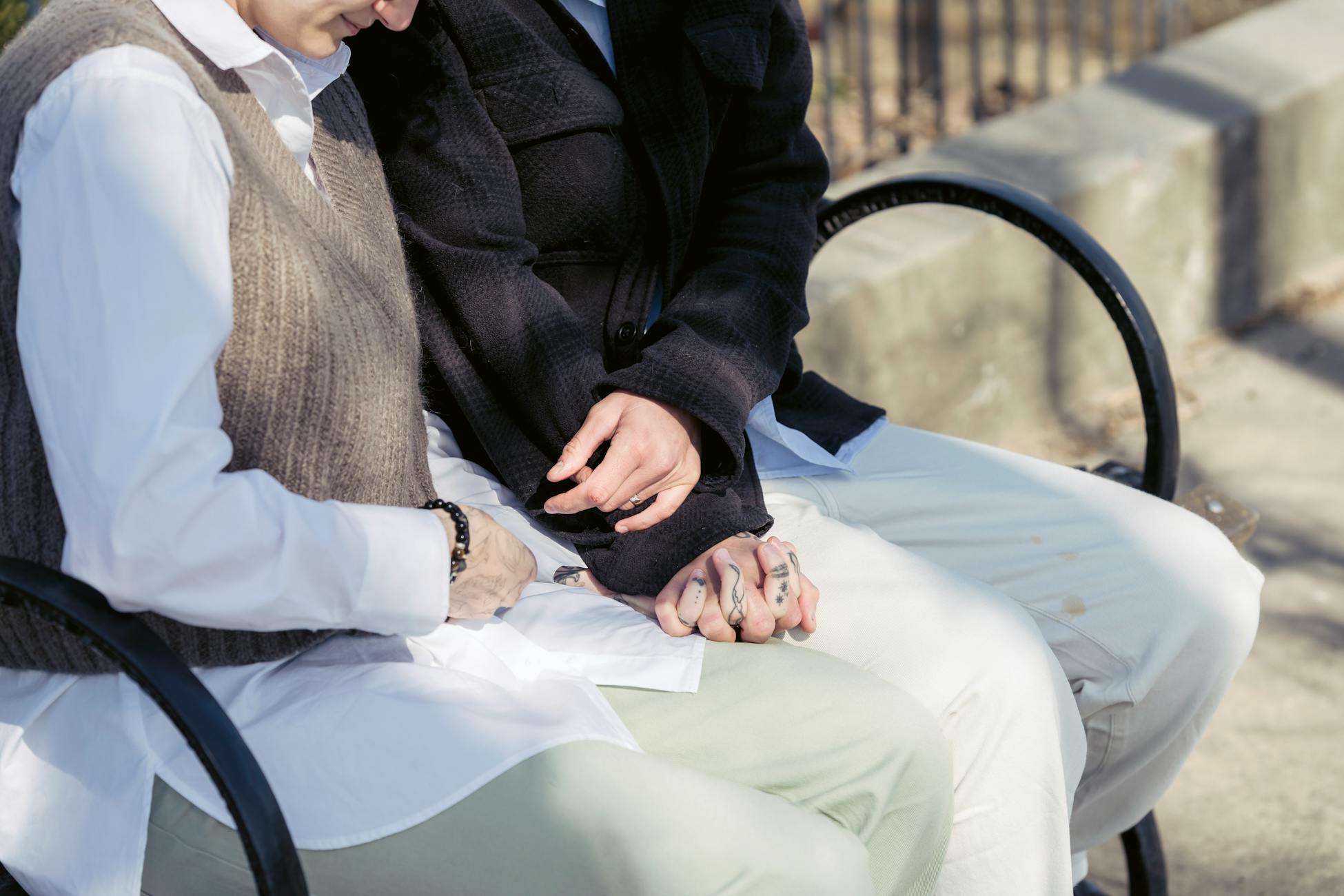
People who study centenarians often note this pattern. The people who live past 100 rarely have elaborate health routines, but they almost always have at least one relationship of unusual depth. Japan’s oldest living person credits factors that have little to do with clinical optimization and everything to do with connection.
The Architecture of Being Known
What makes this finding so unsettling is that it indicts a particular mode of living that most successful, busy, health-conscious adults have adopted without questioning. The mode says: optimize the body, manage the schedule, maintain the network, perform the self. It produces people who are widely recognized and deeply unknown. People who can recite their VO2 max but haven’t told anyone about the thing they’re most ashamed of. People who will live fewer healthy years than they could have, not because they failed at discipline but because they failed at disclosure.
Those who approach longevity as a quality problem rather than a quantity problem tend to stumble toward this truth eventually. The years you gain mean very little if you spend them performing a version of yourself that nobody has ever seen through.
I later learned that psychologists have a term for the cumulative effect of sustained self-concealment: it produces measurable increases in anxiety, depression, and somatic symptoms over time. The body registers the gap between the public self and the private self as a chronic stressor. Closing that gap, even with just one person, reverses some of the physiological cost.
So what does it actually look like to build this? Not in theory, but in the daily architecture of a life already full of obligations and optimizations? It starts smaller than most people expect, and it has nothing to do with scheduling a deep conversation. It begins with the decision to answer honestly the next time someone asks how you are. Not performatively honest. Not the curated vulnerability that plays well on social media. Actually honest, in a way that risks being less impressive than your usual answer.
It means choosing one person you already trust slightly more than the others and telling them something you’ve been carrying alone. Not the biggest thing. Not your deepest wound. Just one true thing that you would normally edit out. And then seeing what happens. The research on self-disclosure suggests that this kind of incremental vulnerability — small, repeated, reciprocated — is how relational depth actually gets built. It is not a single dramatic act of confession. It is a slow pattern of allowing yourself to be seen, one honest sentence at a time, and discovering that the other person doesn’t leave.
The longevity researchers aren’t saying exercise doesn’t matter, or that diet is irrelevant, or that sleep can be neglected. They’re saying that when you actually rank the variables by effect size, relational depth sits above all of them. The single behavior most strongly linked to healthy aging is maintaining at least one relationship where the performance drops and the person underneath is received.
So here’s the question worth sitting with. Why is it easier to track your sleep, count your macros, and optimize your supplement stack than it is to tell one person what you’re actually going through? You already know the answer. Tracking feels safe. Disclosure doesn’t. One gives you data. The other requires you to be seen. And the research is clear about which one your body weighs more heavily. If you’re serious about longevity, stop asking what you should be taking. Ask who actually knows you. If you can’t answer that, no biomarker panel is going to close the gap.