
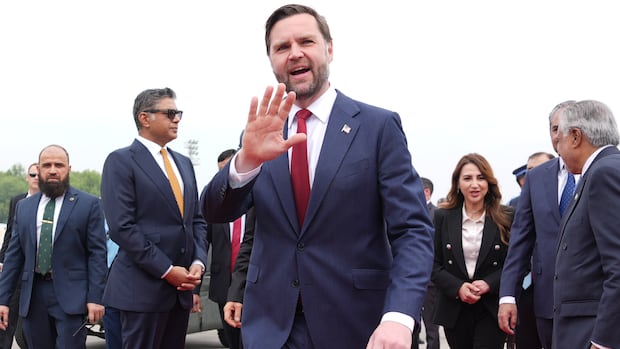
The United States and Iran began face-to-face negotiations in Pakistan on Saturday, days after a fragile, two-week ceasefire was announced, as the war that has killed thousands of people and shaken global markets entered its seventh week.
The White House confirmed the direct nature of the talks, a rare instance of high-level engagement, and said they were ongoing as of 10 p.m. local time.
Meanwhile, the U.S. military said two destroyers transited the Iran-gripped Strait of Hormuz ahead of mine-clearing work, a first since the war began. Earlier, however, Iran’s state media said Iran forced a U.S. military ship attempting to cross the strait to turn around.
Iran’s state-run news agency said three-party talks had begun after Iranian preconditions — including a reduction in Israeli strikes on southern Lebanon — were met and after U.S. and Iranian officials met separately with Pakistani Prime Minister Shehbaz Sharif.
The U.S. delegation, led by Vice-President JD Vance, and the Iranian delegation, led by parliament Speaker Mohammad Bagher Ghalibaf, were discussing how to advance the ceasefire already threatened by deep disagreements and Israel’s continued attacks against the Iranian-backed militant group Hezbollah in Lebanon.
“I cannot say whether they are sitting in the same room or in separate rooms, but talks have started and are progressing well,” said one Pakistani official with knowledge of the peace efforts, speaking on condition of anonymity because they were not authorized to talk to the media.
Iran doubled down on parts of its earlier proposal, with its delegation telling Iranian state television it had presented some of the plan’s ideas as “red lines” in meetings with Sharif. Those included compensation for damage caused by the U.S.-Israeli strikes that launched the war on Feb. 28 and releasing Iran’s frozen assets.
WATCH | U.S. president and Iran trade demands ahead of peace talks:
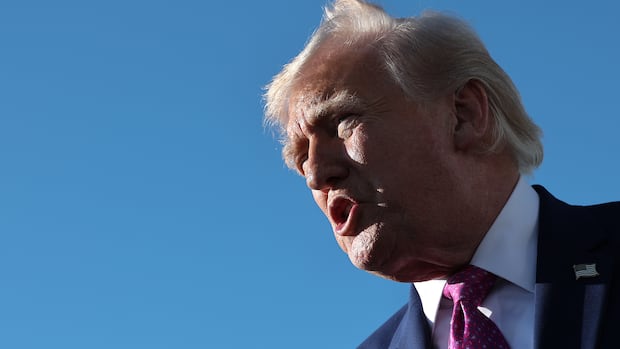
Trump, Iran trade demands ahead of high-stakes peace talks
With U.S. Vice-President JD Vance headed to Pakistan for peace talks with Iran, President Donald Trump again demanded Iran give up its nuclear program. For its part, Iran demanded the release of blocked assets and a halt to Israeli strikes in Lebanon.
Iran’s 10-point proposal called for a guaranteed end to the war and sought control over the Strait of Hormuz. It included ending fighting against Iran’s “regional allies,” explicitly calling for a halt to Israeli strikes on Hezbollah.
The Americans’ 15-point proposal includes restricting Iran’s nuclear program and reopening the strait.
The war has killed at least 3,000 people in Iran, 2,020 in Lebanon, 23 in Israel and more than a dozen in Gulf Arab states. It has largely cut off the Persian Gulf from the global economy, sending energy prices soaring and damaging infrastructure in half a dozen Mideast countries.
Since the Islamic Revolution in Iran in 1979, the most direct U.S. contact had been in 2013, when then-president Barack Obama called Iran’s newly elected president, Hassan Rouhani, to discuss Iran’s nuclear program.
The most recent highest-level meetings were between John Kerry, U.S. secretary of state at the time, and his counterpart, Mohammad Javad Zarif, during negotiations over the program.
Now talks are underway between Vance, a reluctant defender of the war who has little diplomatic experience and warned Iran not to “try and play us,” and Ghalibaf, a former commander with Iran’s powerful Revolutionary Guard who has issued some of the government’s most fiery statements since fighting began.
U.S. President Donald Trump posted repeatedly on social media leading up to Saturday, saying Iranian officials “have no cards” to negotiate with. He accused them of using the Strait of Hormuz, a key artery for global energy supplies, for extortion. “The only reason they are alive today is to negotiate!” Trump wrote.
Iran’s closure of the Strait of Hormuz has proved its biggest strategic advantage in the war. Commercial vessels have avoided the strait, effectively blocking the passage of oil, natural gas and fertilizer. About a fifth of the world’s traded oil had typically passed through on more than 100 ships a day. Only 12 have been recorded transiting since the ceasefire.
Iran has floated the idea of charging ships, though the idea has been widely rejected by countries including the United States and Iran’s neighbour, Oman.
The spot price of Brent crude, the international standard for oil prices, was above $94 US a barrel on Saturday, up more than 30 per cent since the war started.
WATCH | What’s complicating the U.S.-Iran ceasefire deal:
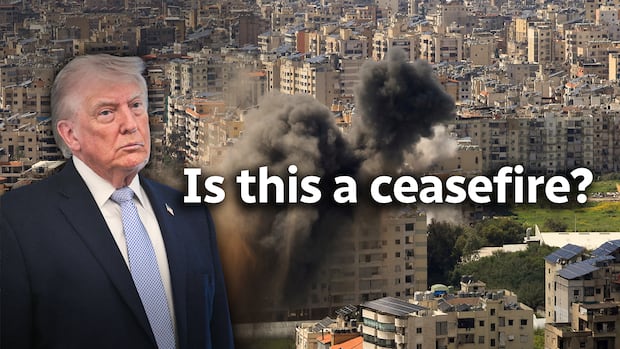
Inside the U.S.-Iran ceasefire that everybody interprets differently | About That
The U.S. and Iran reached a fragile ceasefire agreement hours after President Donald Trump’s threat to destroy Iran’s ‘whole civilization.’ Andrew Chang explains what’s complicating the deal, breaking down the confusion around its terms and the hurdles remaining as U.S.-Israel negotiations with Iran continue.
Images provided by The Canadian Press, Reuters, Adobe Stock and Getty Images
The U.S. military said on Saturday that it had started “setting conditions” for clearing mines in the Strait of Hormuz.
In a post on social media platform X, the U.S. Central Command said two warships, the USS Frank Peterson and USS Michael Murphy, transited the Strait of Hormuz “as part of a broader mission to ensure the strait is fully clear of sea mines previously laid by Iran’s Islamic Revolutionary Guards Corps.”
“Today, we began the process of establishing a new passage and we will share this safe pathway with the maritime industry soon to encourage the free flow of commerce,” Admiral Brad Cooper, the head of Central Command, said in a statement.
Earlier on Saturday, Trump posted on social media that the U.S. military has started to clear the Strait of Hormuz, and that all of Iran’s minelaying ships have been sunk.
“We’re now starting the process of clearing out the Strait of Hormuz,” the U.S. president wrote in a post on his Truth Social platform, adding that “all 28” of Iran’s “mine dropper boats are also lying at the bottom of the sea.”
Trump has repeatedly said that American forces have destroyed Iran’s navy and air force while crippling its ballistic missile and nuclear programs.
Israel, Lebanon expected to have direct talks
Israel’s insistence that the ceasefire in Iran does not include a pause in its fighting with Hezbollah has threatened to sink the deal between Iran and the U.S. The militant group joined the war in support of Iran in the opening days. Israel followed up with airstrikes and a ground invasion.
WATCH | ‘Absolute terror’: Canadian in Lebanon describes bombings: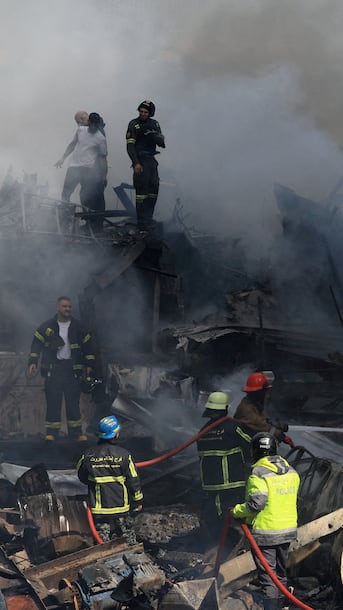
‘Absolute terror’: Canadian in Lebanon describes bombings
The U.S. has said Lebanon was never part of its ceasefire agreement with Iran and that Israel can continue its incursion and air assault into its northern neighbour in what Israel says is an attempt to root out Hezbollah fighters. That’s left thousands of civilians in cities like Beirut with a difficult situation: lose what shelter they have and flee or stay and risk missile and drone attacks.
On April 7, the day the U.S.-Iran ceasefire deal was announced, Israel pounded Beirut with airstrikes, killing more than 300 people in the deadliest day in Lebanon since the war began, according to the country’s Health Ministry.
On Saturday, Israel pressed ahead with strikes in Lebanon after reiterating its view that there is no ceasefire there. Iran and Pakistan have disagreed. The Lebanese National News Agency reported multiple Israeli strikes early Saturday in the south of the country, killing at least three people. No strikes were reported later on Saturday.
Negotiations between Israel and Lebanon are expected to begin on Tuesday in Washington, D.C., Lebanese President Joseph Aoun’s office said on Friday.
Israel wants the Lebanese government to assume responsibility for disarming Hezbollah, much like was envisaged in a November 2024 ceasefire. But it is unclear whether Lebanon’s army can establish a monopoly on arms or confiscate weapons from the militant group, which has resisted efforts to curb its strength for decades.
Hezbollah, meanwhile, said it fired a barrage of rockets that targeted a military facility in northern Israel.