
Updated April 11, 2026, 3:06 p.m. ET
AUGUSTA, Ga. – Augusta National Golf Club Chairman Fred Ridley reiterated his support of the efforts of golf’s governing bodies to regulate the distance elite players are hitting the golf ball.
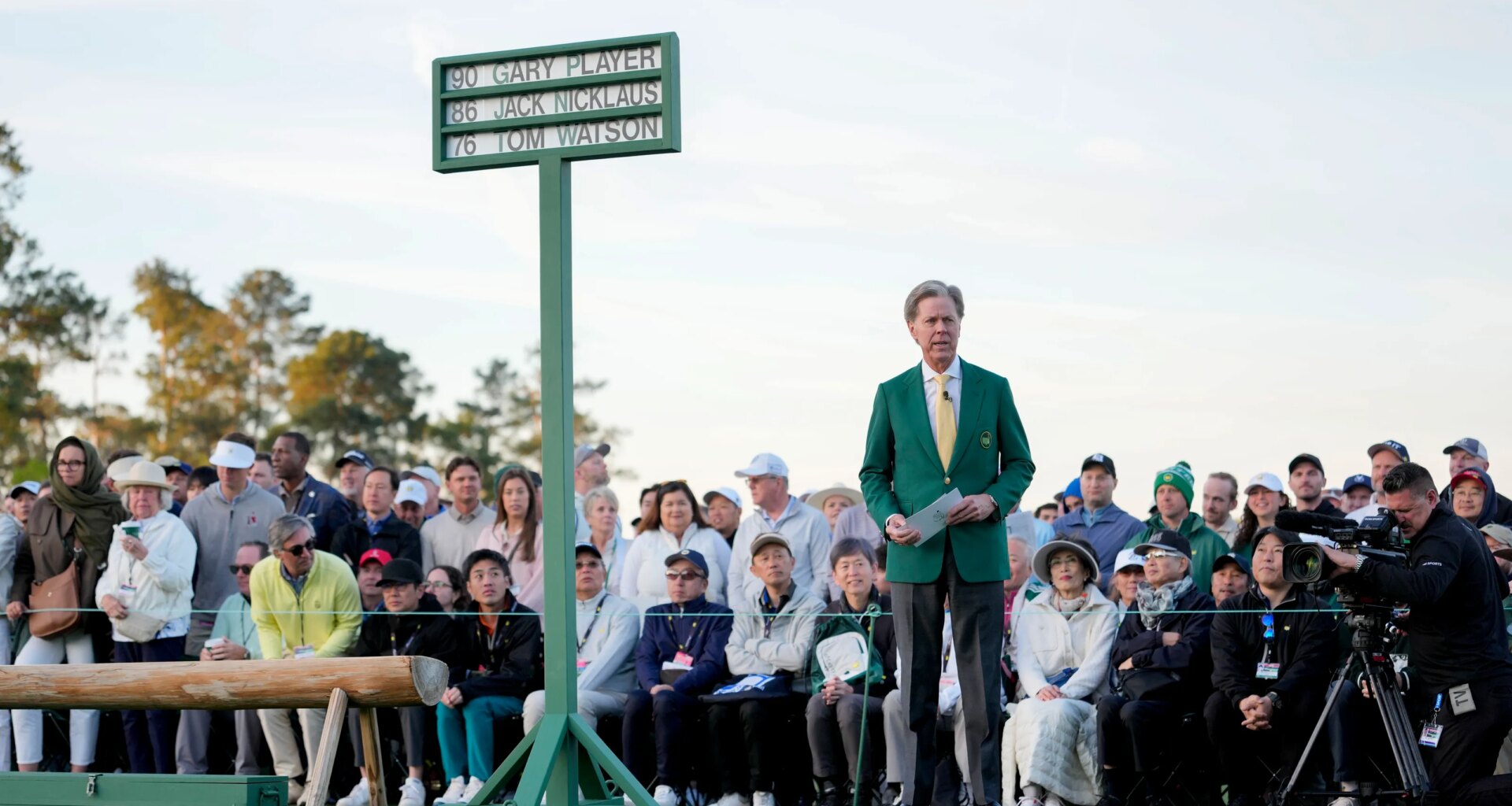
Speaking at a press conference on Wednesday, the eve of the 90th Masters, Ridley said, “My feeling on this subject is failure’s not an option. I think we need to continue to work together to come to some agreement.”
More: Masters leaderboard, scores, pairings, stories, video
The USGA and R&A announced in late March that it is proposing that the rule, which was formalized in late 2023, not go into effect until 2030. The rule involves the Overall Distance Standard test and would raise the test speed from the current 120 mph to 125. The original plan involved a staggered start that would only affect elite golf in 2028 before applying to all golfers in 2030. The governing bodies announced in January that they were seeking input on whether the rollback would be better if it were set at a single date, which would be Jan. 1, 2030. The deadline for submitting comments to the proposed date change is April 16.
“Recognizing that the implementation of the Overall Distance Standard test for golf balls may be delayed to 2030, I want to reemphasize that support and affirm our position as the USGA and R&A represent their collective obligation as custodians of the game,” Ridley said in his opening remarks. “I also want to be clear that our position is grounded on much more than protecting the Augusta National golf course. We will continue to make modifications as are necessary to react to driving distances that in some cases exceed 350 yards.
Need a news break? Check out the all new PLAY hub with puzzles, games and more!
“Unfortunately, many courses, including some iconic venues, do not have that option. Until recent years golf has been a game of imagination, creativity, and variety. The game has become much more one-dimensional. As players drive the ball prodigious distances and routinely hit short irons into par-4s and even some par-5s, this issue goes beyond competitive impacts. Increased course lengths results in more time, more cost, and more environmental concerns.
“The data that has been shared with all stakeholders makes one thing clear: The impact to the recreational game will be immaterial. All of us in this room and millions of weekend golfers around the world will be hard-pressed to notice the effects of this change, and I do not believe our enjoyment of the game will be affected.”
More: Masters legends agree with Augusta National chairman on golf ball
In March, PGA Tour CEO Brian Rolapp was asked for the Tour’s position. His answer did not endorse the governing bodies’ plan, nor did it reject it. What it did was leave the door open for the Tour.
“Yeah, I got this question last August [when Rolapp started as the PGA Tour’s CEO], and I knew virtually nothing about it,” Rolapp said. “I learned a lot, lot since then. But I think this is clearly a complex issue. From what I can tell, it comes down to two questions. Is distance a problem or should it be addressed? That’s question number one. Question number two, does the current rule being proposed accomplish that?
“As far as the PGA Tour is concerned, we have not taken the position. We have not made our mind up on where this is. When we get comfortable with the rule and the data, at that point, we’ll make a decision.”
The PGA has been vocal in its opposition to the rule change but it has new leadership with Terry Clark taking the helm as CEO after Derek Sprague resigned. Clark hasn’t spoken publicly yet. He will certainly be asked to comment on the golf ball at the PGA Championship next month, if not sooner.
Ridley hasn’t wavered in his belief that distance at the professional level needs to be controlled to preserve certain elements in the game.
“The greats of the game are defined not merely by how far they hit the ball, but their extraordinary skill in all aspects of the game. Their ability to shape shots, to take on risk, and to execute under pressure is at the heart of championship golf and is best displayed through a full spectrum of shot-making opportunities,” he said. “Regulation of the golf ball is not an attempt to turn back time or stifle progress. It is an effort to preserve the essence of what makes golf the great game that it is.”
There is the possibility of the PGA Tour and PGA of America opposing the rule, which would leave the three of the majors — Masters, U.S. Open and British Open — playing by one set of rules and the PGA as well as the Tour’s schedule adopting its own policy that permits a different ball. That would be an utter disaster for the game.
“Tough issues like this require compromise, and I think there has been some compromise to date. There’s certainly commercial interests that are at play here, and we all know what those are, but at the same time, I think, if we can look at this from the standpoint — and it’s not just trying to — it’s not the good old days. That’s not what we’re trying to do. What we’re trying to do is to protect the integrity of what makes golf so great. I think I tried to articulate it in my comments, and that’s that it’s more than about just hitting prodigious drives,” Ridley said. “I talked to Jackson Herrington, one of our young amateurs, and he told me that yesterday he hit it over the bunker on 1 and 5, which is about a 325-yard carry, and one was into the wind. I’ve said that we can make changes, but there’s not much we can do to make changes, number one, unless we tear down the Eisenhower Cabin, and we’re not going to do that. We’ll make changes when we can, but I think it’s time to really address this issue. It’s been talked about for a long time.”