
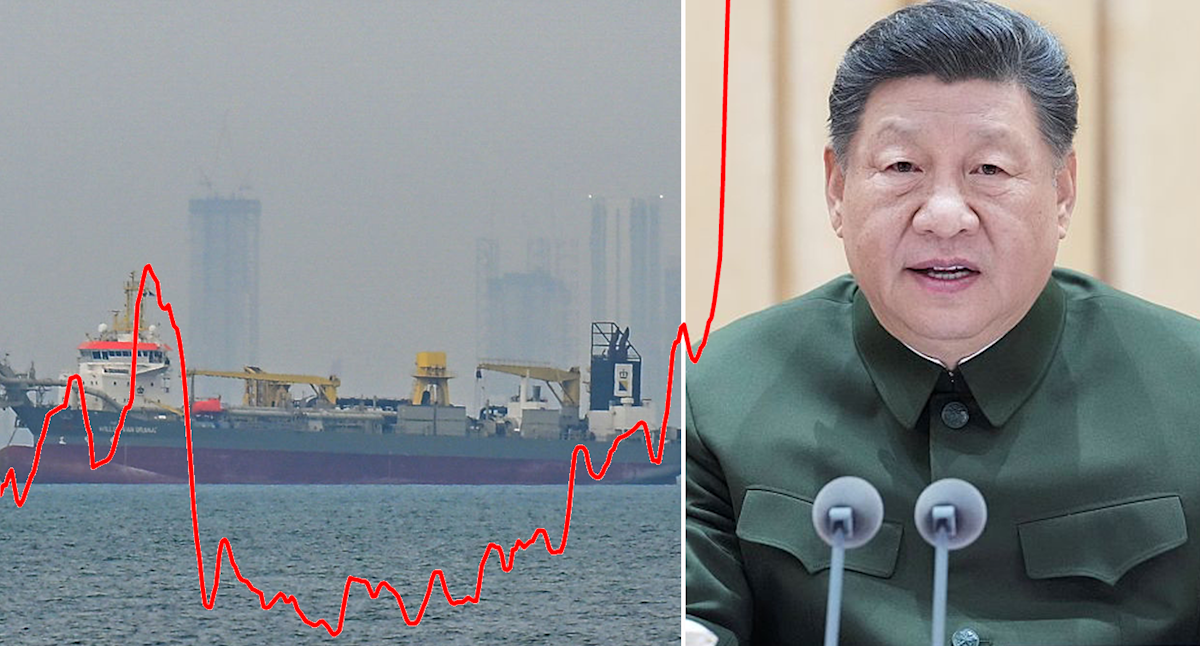
 China’s latest move amid the Iran conflict could be another blow to farmers and food prices. (Source: Getty/Yahoo Finance)
The overall market continues to be surprisingly sanguine in the face of US president Donald Trump’s latest escalation in his war with Iran. But shortages and disruptions to key global industrial supplies continue to mount.
China is reportedly moving to essentially ban the export of a crucial chemical from next month. And that could impact a number of industries and make life even harder for those in the agricultural sector, the nation’s largest bank is warning.
According to Bloomberg, China has indicated it will halt exports of sulfuric acid from May, hitting metals and fertiliser sectors which are already facing challenges from oil disruptions and the impact on downstream industries.
RELATED
The expected ban will reportedly cover sulfuric acid that’s a by-product of copper and zinc smelting in China, as prices of the highly important chemical soar this year.
A vast majority of global sulfur supply is a waste product, extracted from fossil fuels like oil and natural gas.
The currently strangled Strait of Hormuz accounted for around a quarter of sulphur production, of which sulphuric acid is a derivative of, and around 40-50 per cent of global sulphur exports, noted Commonwealth Bank’s commodities specialist Vivek Dhar in a note to investors on Tuesday.
China’s move to restrict exports comes amid surging prices with the country’s sulphuric acid exports making up roughly 15 per cent of the global seaborne market, he wrote.
“Sulphuric acid markets were already tight before shipping through the Strait of Hormuz was effectively halted,” Dhar warned.
 Sulfuric acid prices have surged this year. (Source: CBA/Bloomberg)
Sulphuric acid is a vital chemical in modern industry and is used to extract essential metals used in products including solar panels and electric car batteries. According to the Australian Department of Energy, it is “the world’s largest volume industrial chemical”.
But around half of the world’s sulphuric acid is used to make phosphate fertilisers. And that has prompted concerns about more possible headwinds for the agricultural industry. And that likely means higher prices at the grocery store.
“With urea prices, which is another key fertiliser, rising on the back of reduced exports through the Strait of Hormuz as well, the fertiliser market is being adversely impacted from two sides,” the Commbank analyst said.
“This underscores the plight of the agricultural sector in the wake of the Middle East conflict, which is also trying to manage a surge in diesel prices.”
A front end loader moves sulfur for the production of sulfuric acid. (Source: Getty/Bloomberg) · Bloomberg via Getty Images A large billboard displayed in Tehran on April 12 shows Iran proudly boasting about strangling the critical waterway. (Source: Getty) · Anadolu via Getty Images
Farmers have already been warning about a 20 per cent rise in the cost of food thanks to the elevated cost of diesel – something which Agriculture Minister Julie Collins could not rule out this week.
On Wednesday, Anthony Albanese will meet with Brunei’s Sultan Hassanal Bolkiah. The small Asian nation ships about nine per cent of Australia’s diesel and supplies Australia with about 10 per cent of urea imports. He then flies to Malaysia for further talks aimed at safeguarding the flow of petrol and diesel.
He is the first Australian prime minister to visit Brunei since Tony Abbott in 2013 for the East Asia Summit.
Get the latest Yahoo Finance news – follow us on Facebook, LinkedIn and Instagram.