
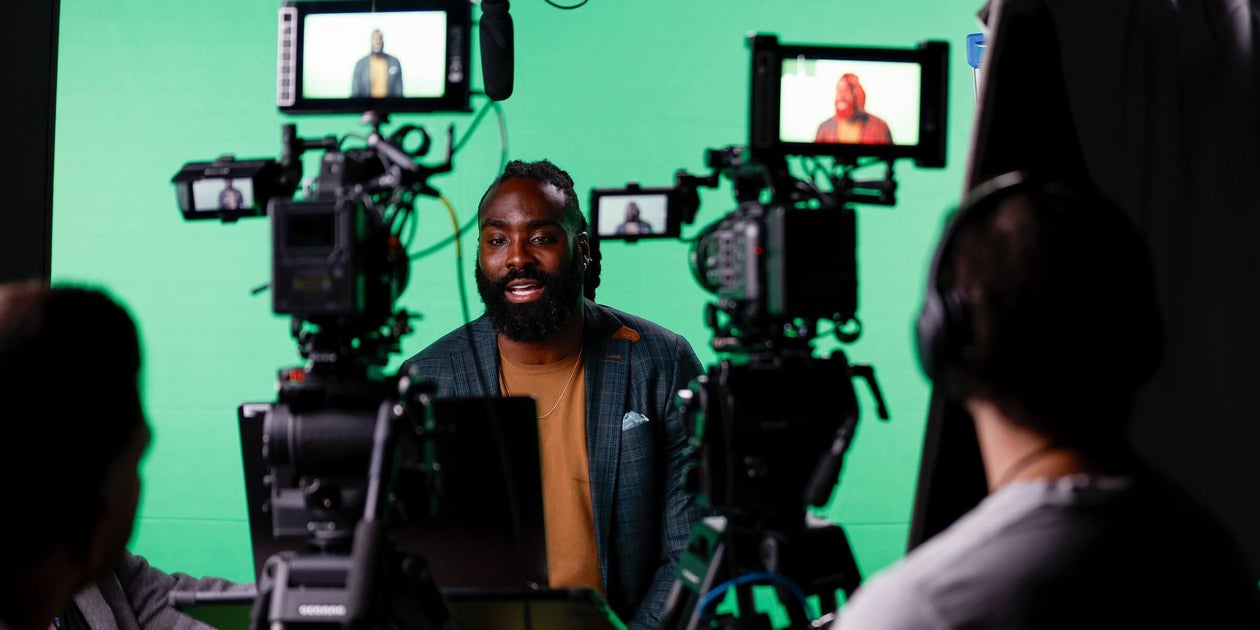
Demario Davis was drafted by the New York Jets in 2012, and Brandin Cooks by the New Orleans Saints in 2014. But here they were, rookies again, at SoFi Stadium in Los Angeles last week.
“Suited and booted,” Davis said.
The two were among 24 players attending the NFL’s annual broadcasting and media workshop, a three-day boot camp where they meet network executives, attend workshops and train for a possible post-playing career in the broadcasting booth or television studio.
“What was very impressive was how much the guys were taking up this opportunity,” Davis said. “You see guys with notepads, you see them asking questions. … Guys are hungry. Though they may not need to walk into this space right away for a job, but just that desire for excellence. I think that’s something that the game teaches us.”
Players attended meetings and panels and got time in front of the camera during the day, then stayed up until midnight learning rosters of old games they would be commenting on and studying. Producers and executives from all the major networks are on hand to answer questions about in-game TV analysis, studio work or radio broadcasting — and identify their next hires.
“The NFL has done a great job of creating a pipeline for players to go from one career into the next,” Davis said. “Over 70 percent of the athletes that you see on these sports shows came through this program.”
Players such as Davis, Cooks and tight end Zach Ertz are looking to follow in the footsteps of workshop alumni such as Maurice Jones-Drew, Jason McCourty and Jason Kelce — but not quite yet. Davis, 37, recently re-signed with the Jets as a free agent after the linebacker spent the last eight seasons with the Saints. Cooks is a free agent, but the receiver has been talking to the Buffalo Bills about returning for a second season there. Ertz is also a free agent after spending the past two seasons with the Washington Commanders.
For Cooks, this is the first time he has contemplated life after football.
“I had a blast,” the 32-year-old said. “It’s been a great opportunity to come learn from some of the best in our business doing media. Getting to Year 13, 14, like, what do I want to do after? This gives me an idea if it’s something I really want to do in the future.”
And?
“I like this,” Cooks said. “You get to talk about the game that you love and stick around it. So, yeah.”
It’s tough to get a spot at the workshop, which was first held in 2007. There were 90 applicants for 24 spots in this year’s program. Each player was asked to answer questions to make sure this is something he is serious about and then asked to submit reels.
“The reels are really important because we have a blue-ribbon panel of about 10 people who sit down, read every application and view every reel — of podcasts and social and on sets and anything else they’ve done,” said Tracy Perlman, senior vice president of NFL player operations.
Some players sent in old interviews at their lockers. They were told this was their chance to be their own content creator and their reels should reflect what they want to do in the space. After the reels were screened, players were ranked 1-90, with no clear-cut criteria.
“We pick some people just because of the energy that they have,” Perlman said. “We pick some guys because their analysis is great. We pick other guys who seem to be a natural.”
That would include recently retired wide receiver Adam Thielen, who attended last week and should be appearing on your television sooner rather than later. Retired quarterback and assistant coach Henry Burris also fared well, as did tight end Dominique Dafney, who was on the Carolina Panthers’ practice squad last season.
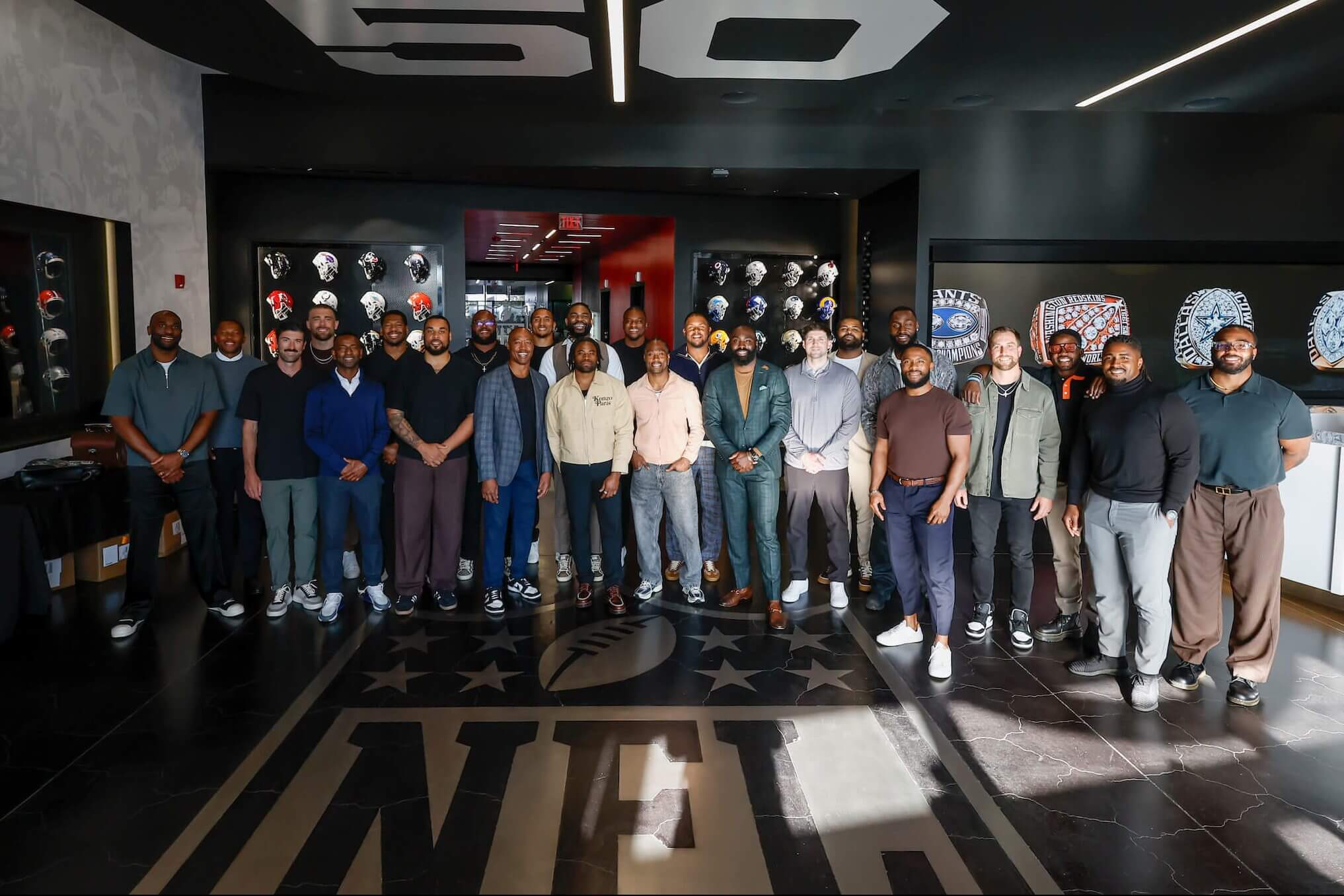
A group photo of the 2026 participants in the NFL’s broadcast and media workshop. (Maddie Knight / NFL)
“You don’t have to be the star quarterback,” Perlman said.
That was one of the messages imparted in the opening panel led by alumni McCourty and Jones-Drew.
“It’s really to get them to relax a little bit, because you can see that they’re a little bit anxious,” Perlman said.
This new chapter will come down to hard work and skill, players were told, no matter how big a star they were on the field. The message was to approach the three days like their playing days and get better with practice.
“They’re giving you live reps real quick, giving you feedback, putting you back in the fire,” Davis said.
Davis actually said he wasn’t nervous. He has been thinking about life after football for, well, more than a decade.
“I think you have to kind of come into the league looking at life after the game,” he said. “Football is what you do, but it’s not who you are. And so for me, I’m always trying to navigate different lanes. And I think the NFL and NFLPA have done a good job of helping guys kind of comb through that.”
Davis got his degree in communications — with a radio and television emphasis — at Arkansas State, and he feels he has two to three seasons left (he signed a two-year, $22 million deal with the Jets) before leaning into that background.
“It’s been great making relationships with producers and execs of major networks,” he said. “I want to really spend the next couple years while I’m playing getting reps — whether that’s doing interviews, doing games and in off weeks.
“I am just trying to figure out what people have done to have success, and where the pitfalls and the traps that people fall into are. And find my unique voice.”
That was most challenging in the radio sessions last week.
“You have to be extremely descriptive,” Davis said. “You have to remember, you’re looking at something that other people can’t see. So being able to describe that the ball was on the right side of the field or there was a deep left corner. Quarterback broke a tackle, and he dropped back 5 yards and rolled to his left.
“Watching it visually and explaining it to someone else who can’t see what you see is a dance that you have to learn.”
It does make the subsequent TV work easier.
“My favorite part is when they get coached up after the first radio tape, and they go back in the second time, and then they knock it out of the park,” Perlman said.
When she first scheduled a session with players and network executive producers and directors, Perlman thought 90 minutes was a little ambitious.
“No, it takes an hour and 45 because the guys won’t stop asking questions,” she said.
Players learn just how big their circles and networks are.
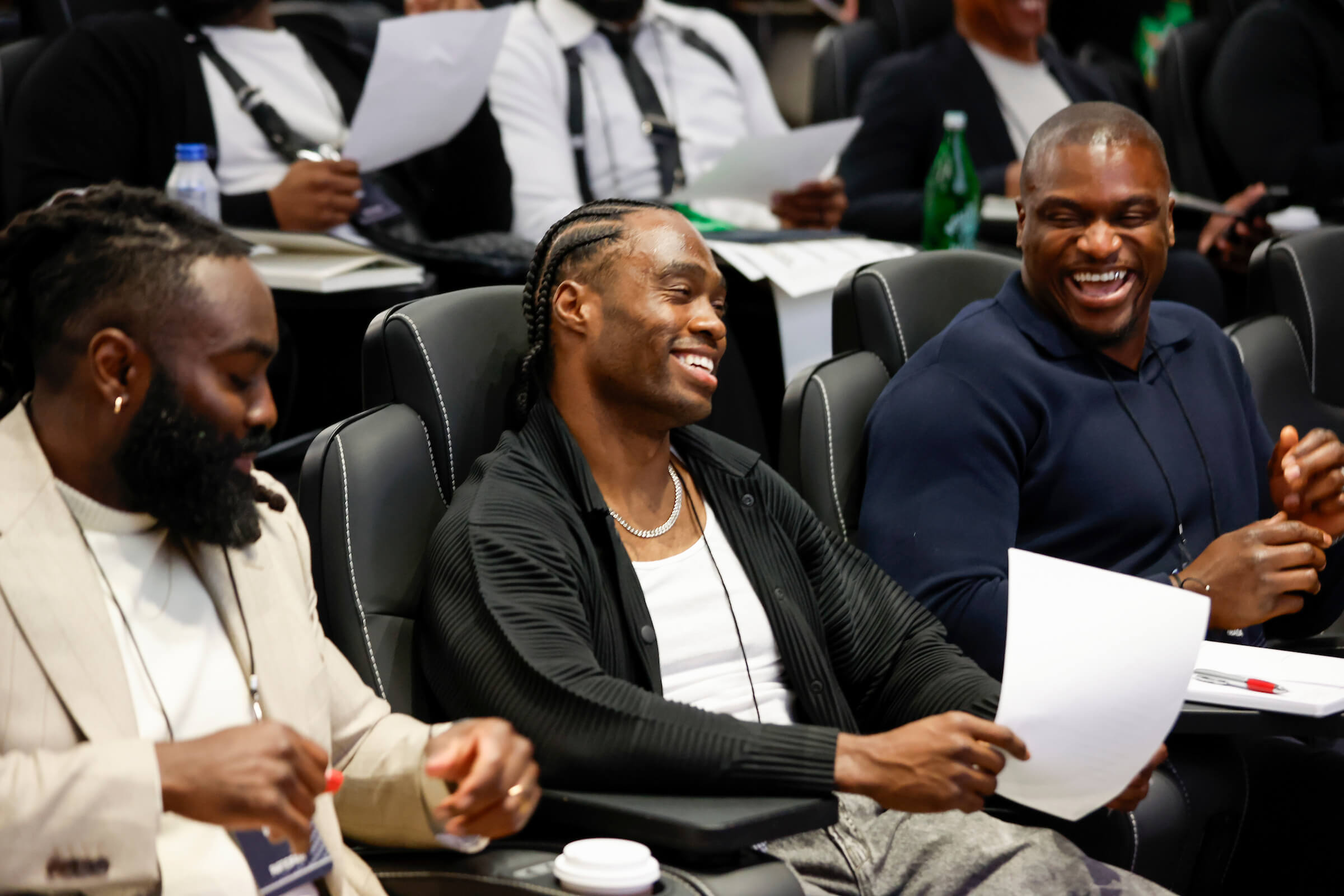
Brandin Cooks, center, shares a laugh with Demario Davis, left, and Efe Obada. (Maddie Knight / NFL)
“You can see all the possibilities really start to formulate in their head,” Perlman said. “Some realize they actually might enjoy doing radio. And I do think that guys start thinking about … ‘You know what? If I don’t get a job here, I’m going to go local. If I don’t get a job here, I’m going to call my school.’ Because what we keep telling them is you have such a huge network — don’t rely on these five pregame shows because that seat is hard to come by.”
Each player left Thursday with an hour-and-40-minute reel of every rep they filmed or recorded at the workshop. They can send those out when looking for bye-week work next season.
“Get your reps,” Perlman said.
Initially, Cooks didn’t think he would enjoy working a TV broadcast. All that time to fill on air. All that idle chatter. But he was wrong.
“Boy, did I have fun with Noah Eagle, talking about the Pittsburgh and Baltimore games from last year,” Cooks said.
Eagle was one of several current play-by-play broadcasters helping in what is a league-wide and multi-network effort to help players build bridges to their futures.
“It’s one of the most collaborative programs that we host, and it’s filling the networks’ pipeline, but at the same time, they’re pouring into our players,” Perlman said. “I’m really appreciative that we’re able to do it.”
The players really enjoy it. Davis said it was like being back in a locker room with everyone on hand last week. But Cooks said there was also some competitive fire burning after all the hugs and back slaps, in a good way.
“We’re having a lot of laughs, but it’s a healthy competition, for sure,” Cooks said. “Obviously, you want to walk away and be considered the best. I mean, that’s why we’re football players, and that’s what got us into this sport in the first place.”