
Early in the afternoon of Oct. 10, 2015, John Ashley Pryce noticed something strange in his yard. A garbage bag was torn open, and trash was “strewn about the property” in Eastgate, B.C., a small community just east of E.C. Manning Provincial Park.
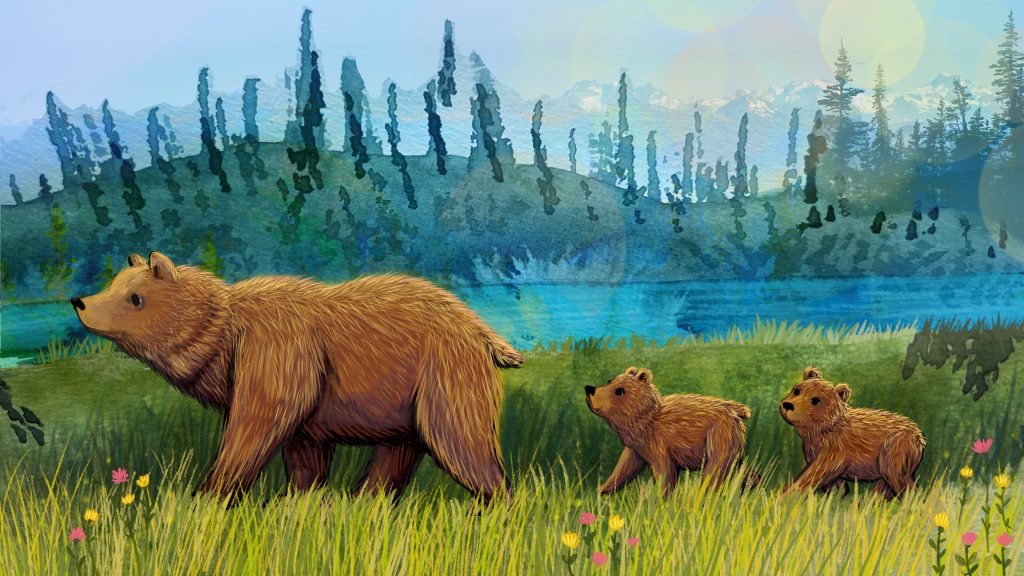
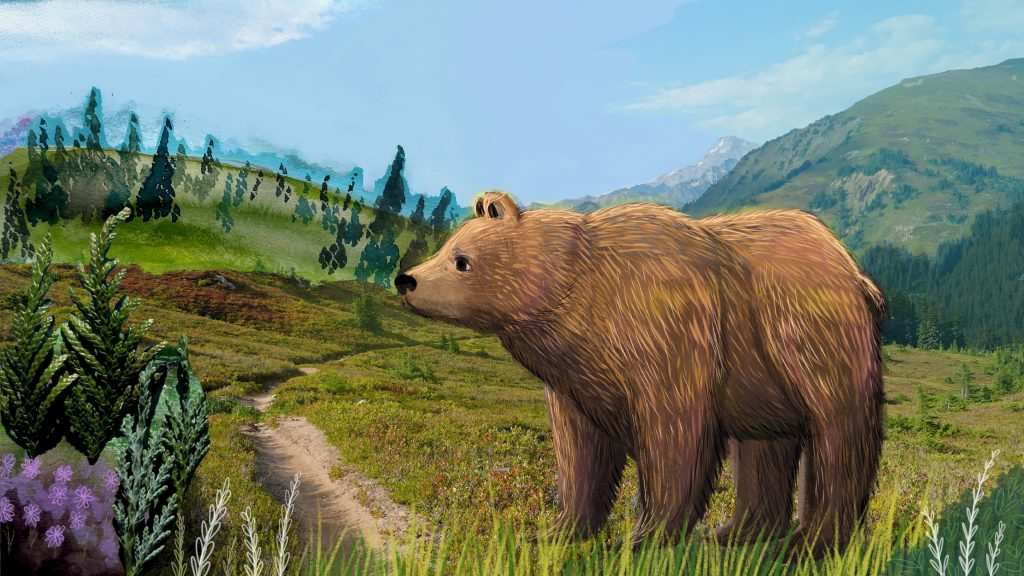
Pryce took in the scene, his eyes passing over yellowing leaves and dried grass before coming to rest on a massive creature sniffing the detritus. Its fur was mottled with shocks of brown, blonde and black. His eyes traced a prominent hump behind its shoulders and a round, dish-shaped face, both hallmark characteristics of a grizzly bear.
Pryce grabbed his camera. The shutter snapped as he took a photo. The bear looked up at him for a few seconds before tearing off down the hill and disappearing.
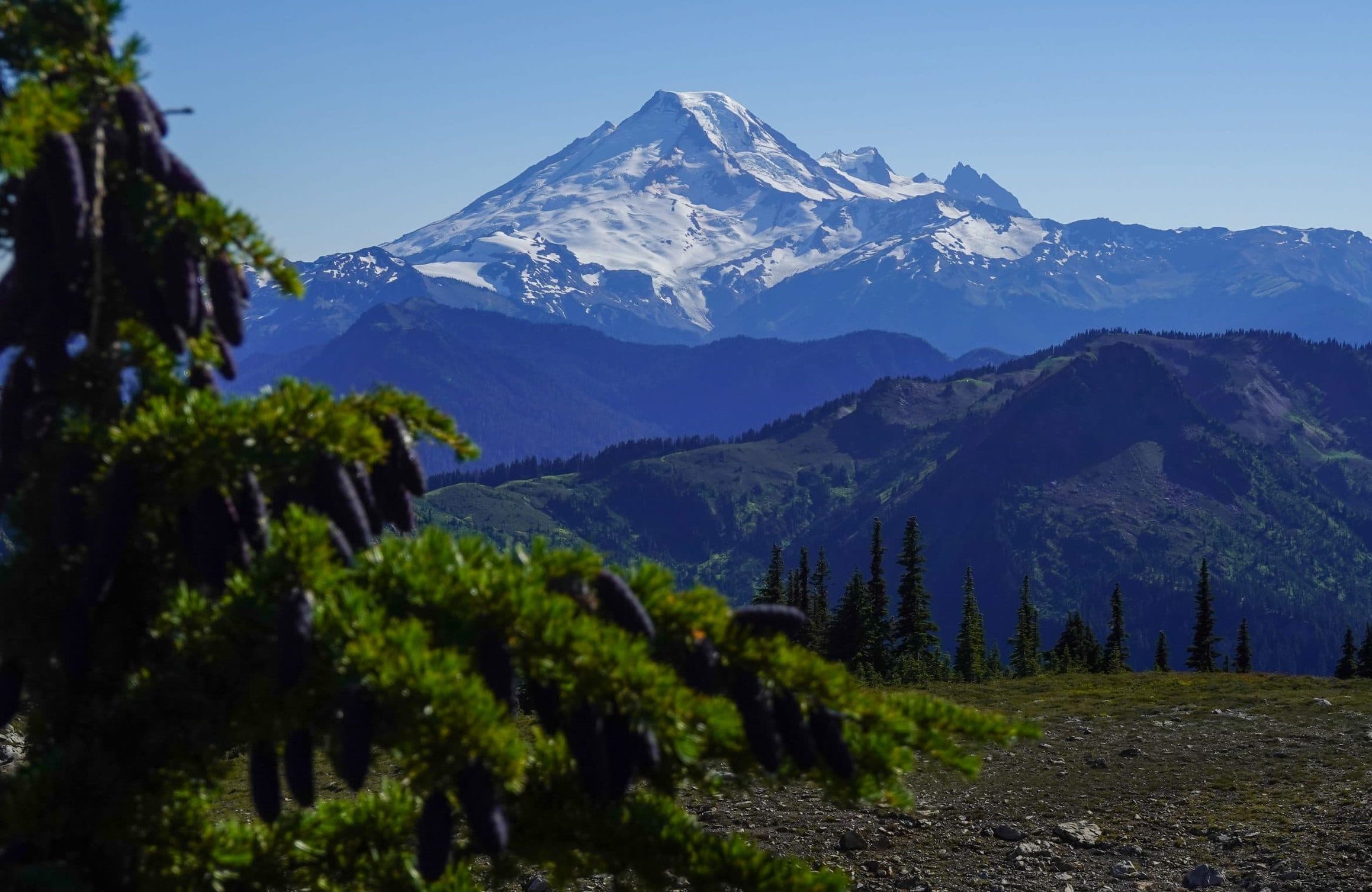
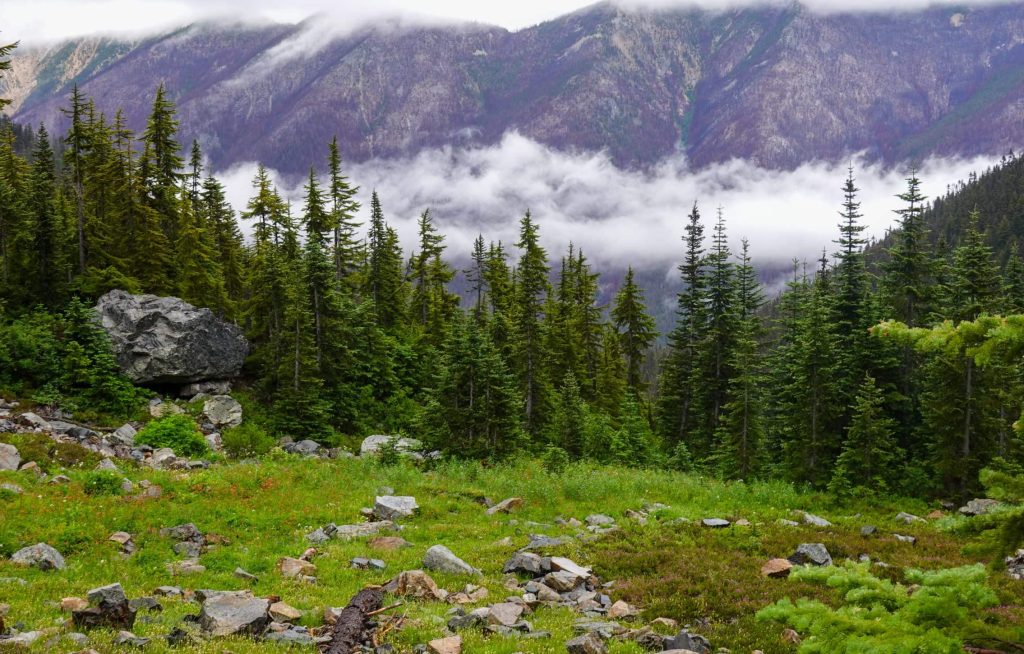
Pryce couldn’t have known it at the time, but this would be the last confirmed grizzly sighting recorded in the North Cascades. A range of mountains, glaciers, rivers and forests stretching from Lytton, B.C., to just east of Seattle, Wash., it is one of the wildest transboundary ecosystems anywhere along the Canada-U.S. border. It is also home to one of the most endangered grizzly bear populations on the continent.
Scientists estimate that, at most, six grizzly bears still live in the North Cascades. It’s not clear how many bears were once there, but according to Hudson’s Bay Company records, some 3,788 grizzly pelts were shipped from forts in the region between 1827 and 1859. Later records from miners, surveyors and settlers make note of dozens of grizzlies killed throughout the region.
Today, many experts call the North Cascades grizzly an extirpated species, meaning locally extinct. The International Union for Conservation of Nature has “red-listed” the bears, labelling them “critically endangered.”
Since the bears were listed as threatened under the U.S. Endangered Species Act in 1975, efforts have been made on both sides of the border to recover the population. Most recently, in 2024, the U.S. National Park Service and the U.S. Fish and Wildlife Service announced they would begin reintroducing bears into North Cascades National Park — an effort derailed after Trump’s return to office led to funding and staffing cuts for both agencies.
But an Indigenous-led project called the Joint Nations Grizzly Bear Initiative has continued to move forward. Led by the Okanagan Nation Alliance, the project is a collaboration with First Nations throughout the region, including the S’ólh Téméxw Stewardship Alliance, the Nlaka’pamux Nation Tribal Council, the Lillooet Tribal Council, the Upper Similkameen Indian Band, Simpcw First Nation and the St’át’imc and Sekw’el’was. Together, they’re hoping to begin reintroducing grizzlies to the North Cascades in 2026.
Cross-border grizzly efforts hindered by false starts and government cuts
The mountaintops in Manning Park were still dusted with snow when Joe Scott arrived in early June 2024. He had travelled from his home in Washington for the first in-person gathering of the Joint Nations Grizzly Bear Initiative. For Scott, the trip was decades in the making. He started working at Conservation Northwest, a transboundary conservation group based in Washington that was then called the Northwest Ecosystems Alliance, in 1998. At the time, he explains, “It was the only group that was advocating for grizzly bear recovery. Nobody else would touch it.”
When the Joint Nations gathering began, it had been only a few months since U.S. agencies announced their reintroduction plan. Grizzly advocates felt that they were closer than ever to bringing bears back to the North Cascades. But Scott had seen recovery efforts fail before.
In the 1990s, budget constraints forced then-U.S. grizzly bear recovery coordinator Chris Servheen to choose between recovering bears in Montana or in the North Cascades. In what Servheen called a “command decision” he picked Montana, arguing that the Montana project seemed more likely to succeed.
British Columbia came close a few years later. In 2001, they were on the verge of moving bears from Wells Gray Provincial Park in the B.C. Interior to Manning Park. But when the BC Liberal Party swept to power, it cut wildlife and conservation programs, prematurely ending that effort. Since then, according to Scott, North Cascades grizzly recovery has been a series of “lurching fits and starts.”
At the June 2024 meeting, conversations among the more than 70 Indigenous leaders, community members, researchers and conservationists connected Western and Indigenous science. Participants spoke about preparing for grizzlies’ return to the landscape, discussed challenges in public education and coexistence strategies. They outlined plans to mitigate human-bear conflict and shared ways to manage garbage and other attractants.
Matt Manuel, natural resource coordinator for the Lillooet Tribal Council, described it as looking for “solutions within a common habitat that needs to be shared between the grizzly bear and those that are occupying or using the land” in a video produced at the gathering.
Much of the conversation at the Manning Park gathering focused on the North Cascades National Park Grizzly Restoration Plan, which would have relocated three or five bears per year on the American side of the border. At that rate, attendees expected it would take decades to establish a healthy population in the park, and even longer for the bears to move into surrounding lands or up into Canada. Still, the gathering closed with palpable excitement.
But something nagged at Scott. He was “sitting there on pins and needles with full awareness that the [2024 presidential] election is going to make all the difference in whether this gets done.”
When President Donald Trump was re-elected and unleashed Elon Musk’s Department of Government Efficiency on federal agencies, the worst-case scenario followed: more than a thousand national park rangers, scientists and other staff were laid off in February 2025. Facing an uncertain future, many others resigned. According to the National Parks Conservation Association, the Park Service had lost 24 per cent of its permanent workforce by the summer. The impact on grizzly reintroduction was devastating.
Dive deeper on this topic
“Park Service loses staff, Fish and Wildlife loses staff,” Scott explains. “They’re already behind the eight ball with a lack of capacity, and then at this point, they just said, ‘We don’t have the people to do this,’ so it just died.”
The collapse of the plan was a blow, but there was still hope. At the Manning Park gathering, the Joint Nations Grizzly Bear Initiative had not only been preparing for the U.S. plan to bring bears back into North Cascades National Park. They were also developing their own plan, a comprehensive strategy that included habitat conservation, community engagement, public education and, eventually, restoring grizzlies on this side of the border.
First Nations-led effort rooted in Indigenous knowledge of the region
Mackenzie Clarke had never seen a grizzly before she packed up her life and moved from Saskatchewan to the Kootenays to work on a grizzly research project with Garth Mowat, the B.C. government’s large carnivore specialist. Soon, she was hooked.
Eventually, working on grizzlies brought her to the Joint Nations Grizzly Bear Initiative, where she works as the tmixʷ (wildlife) program lead on the project.
Clarke’s role is unique in wildlife conservation. Rather than a nonprofit or government agency, she works for the Okanagan Nation Alliance, a First Nations government. As someone with settler roots, she thinks it’s an important shift in how wildlife conservation happens. “There wasn’t a lot of Indigenous involvement or consultation” in previous North Cascades grizzly recovery efforts, she explains.
Despite this, Indigenous knowledge has long been key to understanding the history of North Cascades grizzlies. After grizzlies were listed as threatened under the U.S. Endangered Species Act, researchers began looking for at-risk populations. When researchers began studying North Cascades grizzlies, they struggled to find bears. Researchers found evidence of bears, including tracks, scat, digs and bear dens. They set up fur-snagging traps, lengths of barbed wire hung near scented lures and used the gathered fur samples in genetic testing that confirmed the presence of bears. Despite all the evidence of grizzlies, no live bear has ever been captured or collared in the region.
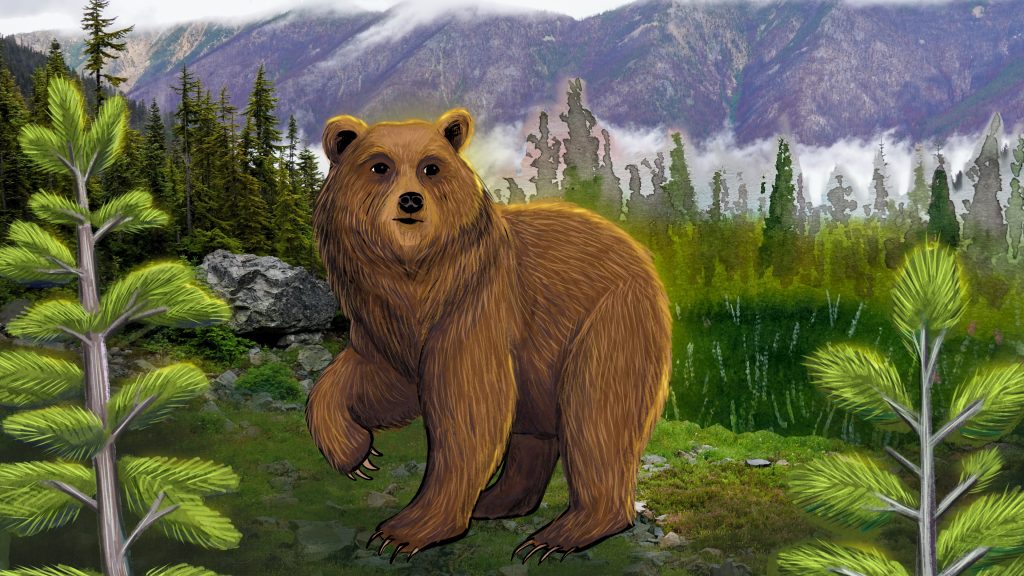
In the late 1980s, some scientists and politicians argued that researchers’ struggles to capture a bear were evidence against a historic grizzly presence in the North Cascades. So researchers turned to Indigenous knowledge to prove their case.
“There’s a lot of historical knowledge from the communities on where the bears used to be,” Clarke says.
Early efforts relied on anthropological research from the first half of the 20th century, which included accounts from Indigenous people of grizzlies near the Chilliwack and Fraser rivers and among high-elevation berry patches. According to late archaeologist William Duff, the Stó:lō knew grizzlies to be “particular frequenters of the high country.”
But by the late 1990s, First Nations were leading their own studies. In 2001, the Stó:lō published a Traditional Knowledge study as part of the B.C. recovery effort. They interviewed more than a dozen community members, recording decades of grizzly bear sightings throughout their territory.
Both this study and the anthropological records included stories about the unique nature of grizzly bear harvests before settlers arrived in these lands. Grizzlies were not seen as a major food source. They would be eaten if killed, but the nature of the harvest suggested a deeper connection between people and bears.
Grizzly bear hunters would track the animals while carrying a sharpened bone about the length of their forearm. When they found the grizzly, the hunter would attempt to jam the bone into the bear’s open mouth with the sharp end pointed up. When the bear slammed its mighty jaws, the bone would strike a killing blow into the grizzly’s brain. The stories noted that many grizzly bear hunters ended up one-handed.
In 2014, the Okanagan Nation Alliance’s Chief Executive Council passed a resolution declaring grizzly bears “at-risk and protected within Syilx Territory.” They directed staff to work with scientists and communities to support “immediate action to assist [grizzlies] from disappearing due to low numbers and habitat isolation.”
By 2018, the resolution was starting to bear fruit. They launched field surveys and began writing their own recovery plan. They also started meeting with other First Nations interested in North Cascades grizzlies.
“The governments of all the nations mobilized,” Scott explains, who at the time helped to funnel conservation funding to the efforts. “The intent was to move the recovery process along by identifying the needs and filling the various gaps.”
That February, the Okanagan Nation Alliance, alongside the Stó:lō, St’ati’mc, Nlaka’pamux and Secwepemc launched a “multi-nation approach for grizzly bear recovery efforts” that would help launch the Joint Nations Grizzly Bear Initiative in 2021.
Restoring grizzlies benefits the environment — but also cultures and communities
Jordan Coble was in university when the first pieces that would become the Joint Nations Grizzly Bear Initiative were being put in place. But now, serving as both a councillor with the Westbank First Nation and as the chair of the Okanagan Nation Alliance’s Natural Resource Committee, he’s grateful for “the courage of those that come forward and say, ‘We should do this, and we must do this, and we must do it together.’ ”
To Coble, the extirpation of grizzly bears from the landscape echoes what happened to Indigenous Peoples.
“Where we’re at today is rebuilding from 150 years of colonization, of separation and forced removal and isolation from our land itself,” he says. In this context, he sees restoring grizzly bears as a way to restore not just a creature but also landscapes, communities and relationships.
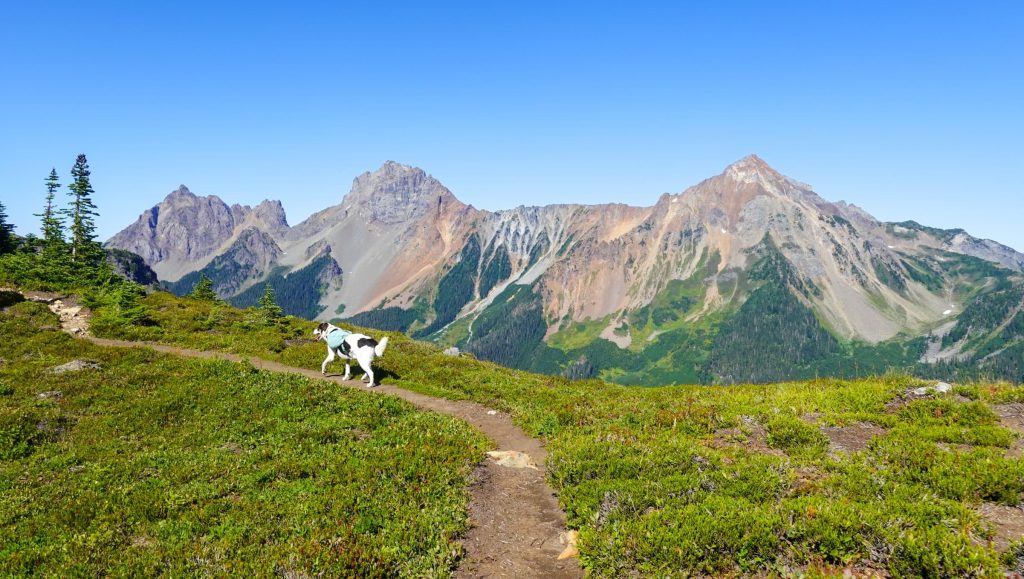
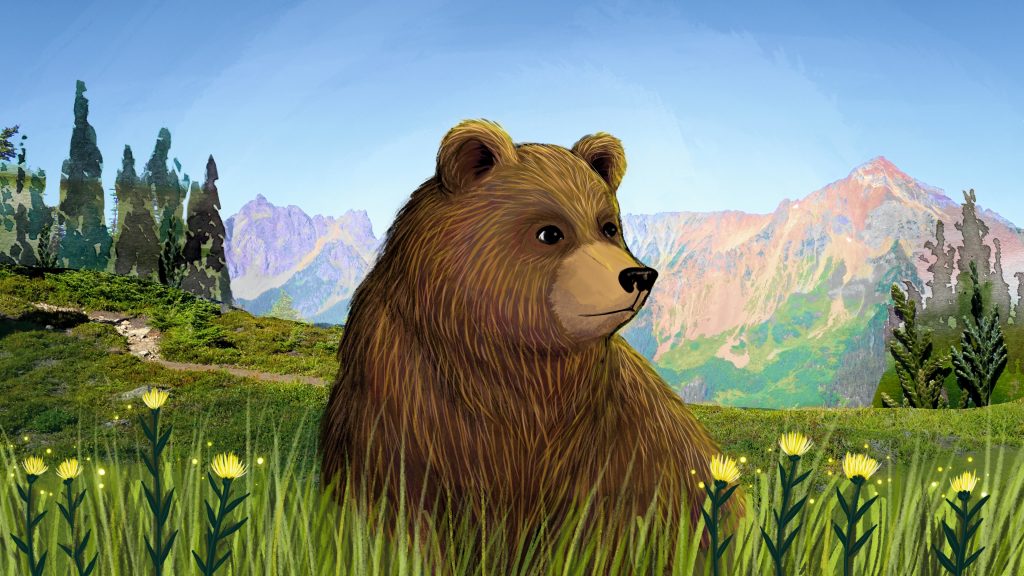
“Guiding the path forward has been interesting because colonization was quite effective in separating our communities from one another [and] separating our communities from the land itself,” he explains. “Now that we’re turning back to those practices where we’re reminding ourselves that we have interconnections beyond our communities, beyond our nations.”
This relational approach extends to the natural world as well. For Coble, North Cascades grizzly bear recovery is just one piece of a bigger project.
“The nation started returning salmon back to the Okanagan, and then saw the success from that built out into forestry and other aspects,” he says. “That interconnection of all those living species, right from salmon to the tops of the mountains where the grizzly bears live, is really important. It’s kind of nice to think about it that way, that we kind of worked our way up into the mountains.”
North Cascades region can sustain grizzlies, expert says
In late July 2025, a little more than a year after the gathering in Manning Park, Michelle McLellan was back in the North Cascades. McLellan, an expert in the relationship between grizzlies and the landscapes where they live, had been at the 2024 meeting. She had also been hired by the Joint Nations team to evaluate North Cascades habitats for potential reintroduction.
Using studies from the Coast Range, which extends from Yukon to the Fraser River, and other regions where researchers had tracked grizzlies with radio collars, she correlated bear movements with habitat factors such as landscape, climate and plant cover, and used the data to build a model of the potential grizzly bear habitat in the North Cascades.
It was a good start, but McLellan “felt it was important to go to the landscape and see what that looks like.” She and a group of researchers, park rangers and conservationists spent the better part of a week ground-truthing the maps. They bushwhacked through overgrown forests, taking note of the horsetail ferns and sedges that bears like to eat in the spring. They climbed into the alpine, looking for whitebark pines with cones that make a calorie-dense grizzly snack. They counted blueberry and huckleberry bushes, snacking on sweet purple huckleberries as they moved through the landscape, considering the locations of roads, campgrounds and other human pressures that could impact bears or bring them into conflict with people.
Dive deeper on this topic
“There’s definitely sufficient food to sustain a population there,” McLellan says, though not as high-quality as the grizzly habitat of the Coast Range or the Rocky Mountains. “In general, we did find some good patches that were far from people … the kind of remote valleys you couldn’t just walk into.”
The habitat evaluation was a big step, but it is only one piece of a complex puzzle that reflects the long history of challenges with recovering bears in the North Cascades.
One of the more notable chapters in that history was the story of a grizzly bear named Winston. In 1992, Winston was captured near Pemberton, B.C. He had already been relocated once but had returned and was getting into trouble with local farmers.
Winston was released in eastern Manning Park later that year. He travelled south, crossing into the Pasayten Wilderness, Wash., on the eastern edge of the North Cascades. From there, he headed northwest, through Manning Park and into the Chilliwack River Valley, where hunters picked up his trail and chased him north.
On Dec. 30, 1992, his radio collar pinged near Bridal Falls, B.C., a small community just east of Chilliwack. Researchers lost track of Winston through the winter, but in April they picked up his trail again and headed north along the banks of Harrison Lake. Whether he had swum across the Fraser River or used a bridge is anyone’s guess.
By that June, he was back in the Lillooet River Valley close to Pemberton. His radio collar fell off sometime that summer, and for a few years, no one knew what happened to Winston. Then, in 1999 bear with similar markings to Winston was captured again in the Pemberton Valley. This time, the bear had been going after chickens on a local farm. It was relocated to the Anderson River Valley near the town of Boston Bar, where it destroyed its radio collar and was never seen again.
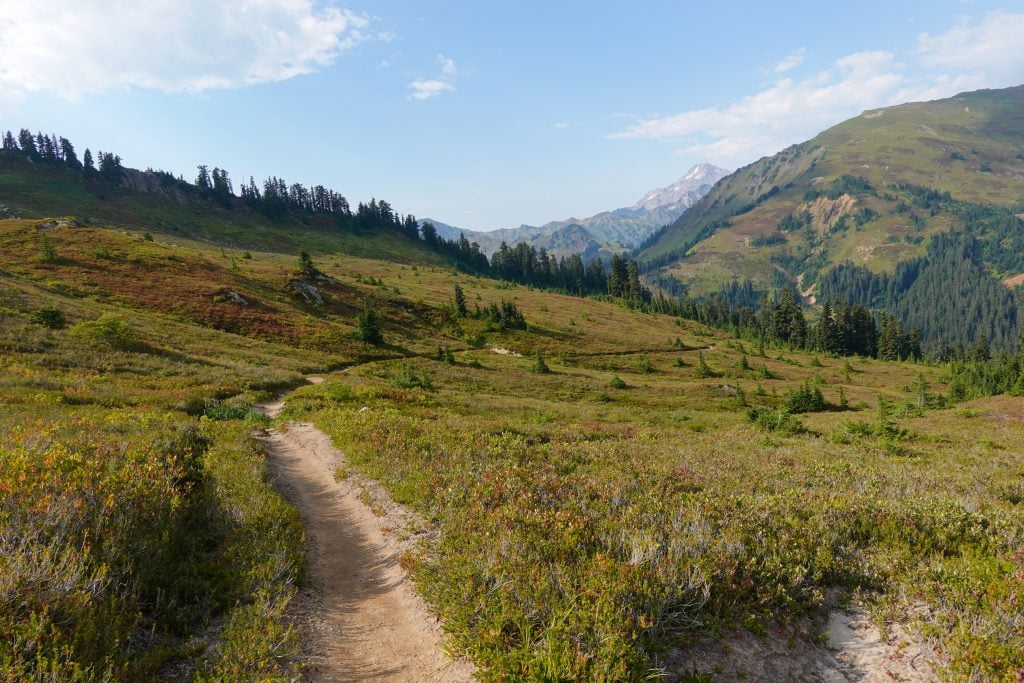
It’s still a topic of some debate whether that last bear was truly Winston. And while North Cascades grizzly researchers like to tell this story, they use it mainly to point out the myriad ways bear relocation has improved since then. For one, male grizzlies, which require massive habitat ranges and have strong homing instincts, aren’t typically used for relocation programs meant to recover grizzly populations. Successful programs in other regions have taught scientists that sub-adult females have the highest success rate. They have also learned to source bears from ecosystems with food profiles similar to those of the recovery area and have developed rigorous evaluation criteria to identify the best candidates for relocation.
It’s also why grizzly bear augmentation is a slow and meticulous process, expected to take decades to restore populations to a level where they might begin to interact with people.
For McLellan, success might look like moving 20 bears in the next 10 years.
Coble takes an even longer view of it.
“I feel like we’re not going to know until 20 to 50 years down the road if there’s grizzly bears back in the North Cascades in a sustainable manner,” he says.
Opposition and concern over grizzly reintroduction lingers, but support is widespread.
Still, when McLellan talks about the project in public, she hears a lot of people worried that “all of a sudden, there’ll be grizzly bears all over the landscape.”
This isn’t a new concern. Scott describes North Cascades grizzly recovery as “a relatively simple body of work that has been made really complex by people who don’t want to see it happen.”
Opposition to grizzly bear reintroduction has been loudest on the eastern side of the North Cascades, where livestock operations raised concerns about depredation. In 1993, government representatives at a public meeting about reintroduction held in Okanogan, Wash., faced death threats. In 2001, B.C.’s reintroduction efforts faced opposition from cattle ranchers in the Nicola Valley, including one who told the Vancouver Sun he was “hoping this whole friggin’ program will go away.”
Dive deeper on this topic
Over the years, many of the concerns of those opposed to reintroduction have been addressed by government agencies and conservation groups. Today, opposition to reintroduction is a small minority. According to polling released by the National Parks Conservation Association in 2023, 85 per cent of Washington residents support the reintroduction of grizzly bears in the North Cascades. There isn’t specific polling on the North Cascades in B.C., but a majority of the public regularly supports efforts to protect grizzly bears across the province.
Still, the Joint Nations project isn’t taking any chances. When reintroduction seemed imminent in 2024, they began ramping up public education, stakeholder engagement and community efforts.
“We’ve been trying to make sure that nobody’s going to be surprised that bears are going to be coming back to the landscape,” Clarke says.
She sees education, habitat restoration and conflict management as critical to the long-term viability of the North Cascades grizzly recovery. Building up support for grizzly recovery in communities is also essential.
“It’s okay to take this community by community, but also, step by step,” Coble explains. “Building that awareness, building the understanding that, more than anything, it’s important that the grizzly bears are here.”
For Clarke, this community work also means increasing the sense of agency that people throughout the region feel about coexisting with bears. She points out that some of this work is already underway in communities where black bears live. But she also points to a range of other ways for communities to get involved, such as conducting community bear-hazard assessments, developing attractant management plans and engaging Indigenous Guardian programs in bear management.
They’re also working to spread the word in non-Indigenous communities. Groups like Conservation Northwest and Coast to Cascades, an organization that aims to restore connectivity among bears in the Cascade and Coast mountain ranges, have long been partners. In B.C., the Joint Nations Grizzly Bear Initiative is increasingly working with the Hope Mountain Center for Outdoor Learning, an outdoor education non-profit based in Hope, B.C. that runs a phone line for reporting North Cascades grizzly sightings.
Clarke admits it’s an ambitious project with many moving parts. But she is also optimistic about recovering bears and about being ready to support both bears and communities once that happens.
“There’s not really that many bears,” she says, “so you can set things out properly before, and hopefully, have all the resources in place.”