
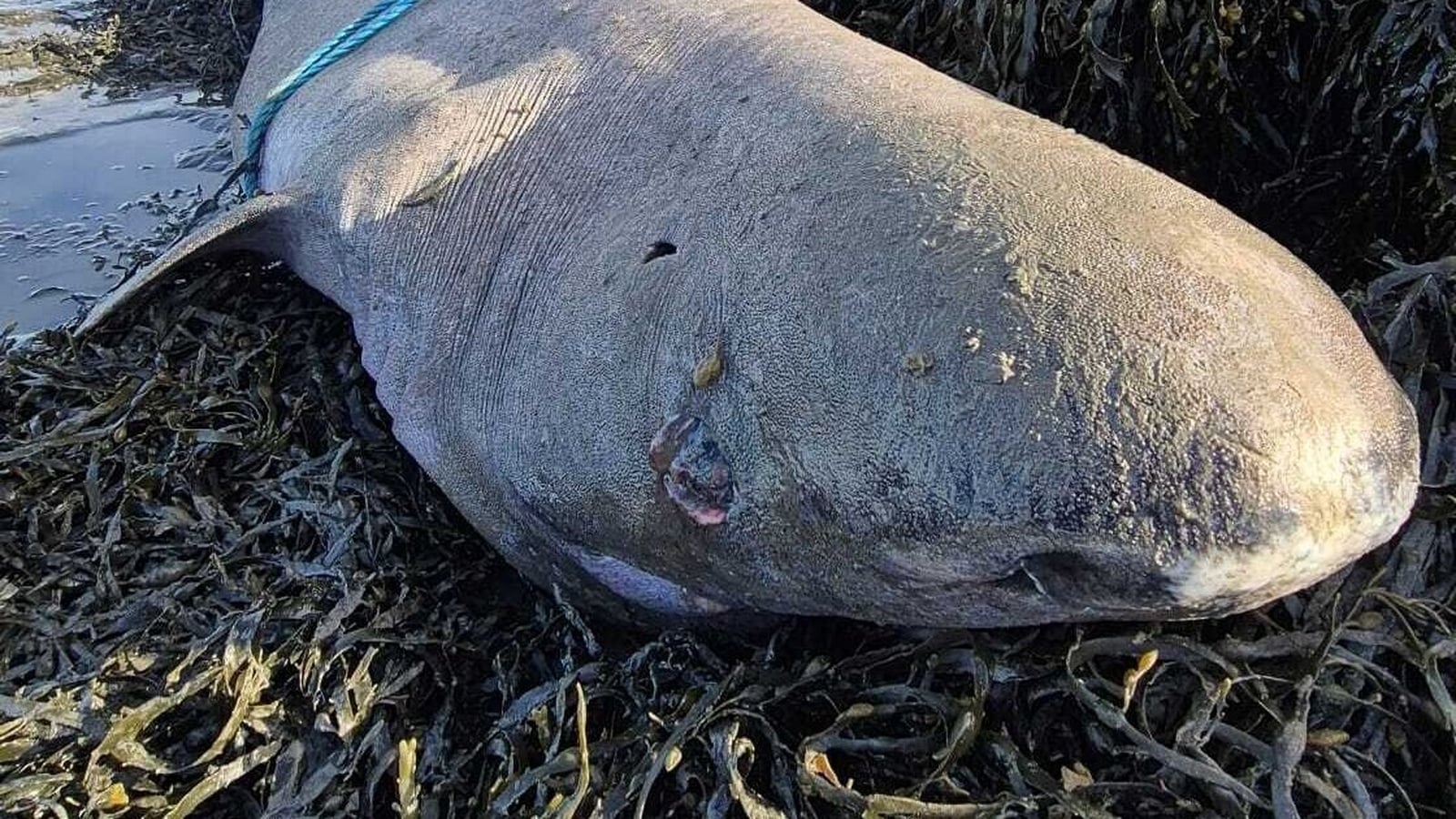
A very rare shark that washed up on a beach in Co Sligo has been recovered by the National Museum of Ireland.
The Greenland shark, a species with a lifespan that can stretch over 500 years, was found on the shores of Finisklin last Saturday.
It is the first recorded stranding of the species on the Irish coast.
The Irish Whale and Dolphin Group (IWDG) described it as a “very rare and interesting stranding”, saying that little is known about it in Ireland as it is generally native to deep waters around the Arctic and North Atlantic.
“The Greenland Shark is the longest living vertebrate in the world with a life span of several centuries; the oldest recorded specimen was over half a millennium in age.
“A large species, they typically reach lengths of four to six metres.” it said.
The shark that washed up in Co Sligo measured almost three metres in length, and could be up to 150-years-old.
The IWDG said that the stranding was reported to them by two men, Hammad Chaudhry and James Winters O’Donnell.
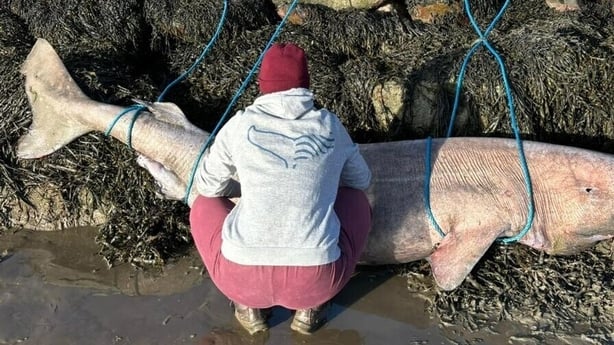
The shark was recovered following a multi-agency operation (Photo: Anna Sanz)
It was initially thought to be a basking shark, before it was later identified as the rare Greenland species.
It was then secured the group following a multi-agency operation that included Sligo County Council, Regional Veterinary Laboratory Sligo, the Harbour Master, and workers from the Department of Agriculture, Food, and Marine, as well as the National Museum of Ireland who coordinated the effort.
A spokesperson for the museum said that the shark was found in a “difficult to access” part of the coast, and that the operation required specialist equipment including a crane which was used to lift it from the shore.
They said the shark is now undergoing a detailed postmortem examination, and that it’s hoped this will provide “valuable data to the understanding of this elusive deep-water species”.
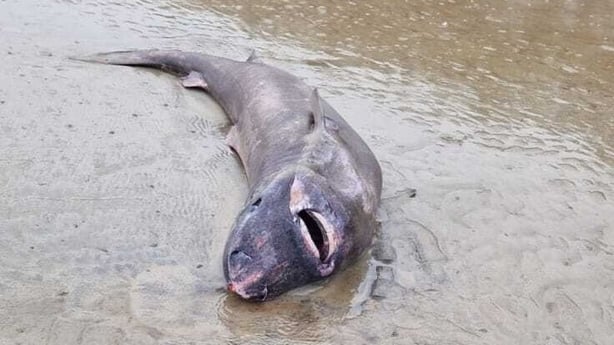
The shark was first reported by Hammad Chaudhry and James Winters O’Donnell
Tissue samples from it will be preserved for the National Museum’s collection.
“The Greenland shark, known for its extreme longevity and deep-sea habits, is exceptionally rare in Irish waters, and this stranding represents a significant opportunity for research into its biology, health, and ecology.
“Subject to the condition of the skin and its suitability for preservation, the National Museum hopes to display the specimen in the future, which would allow visitors to learn more about one of the world’s most mysterious shark species and the scientific work undertaken to study it.”
The museum thanked all those who helped with the recovery and preserving of the shark.