
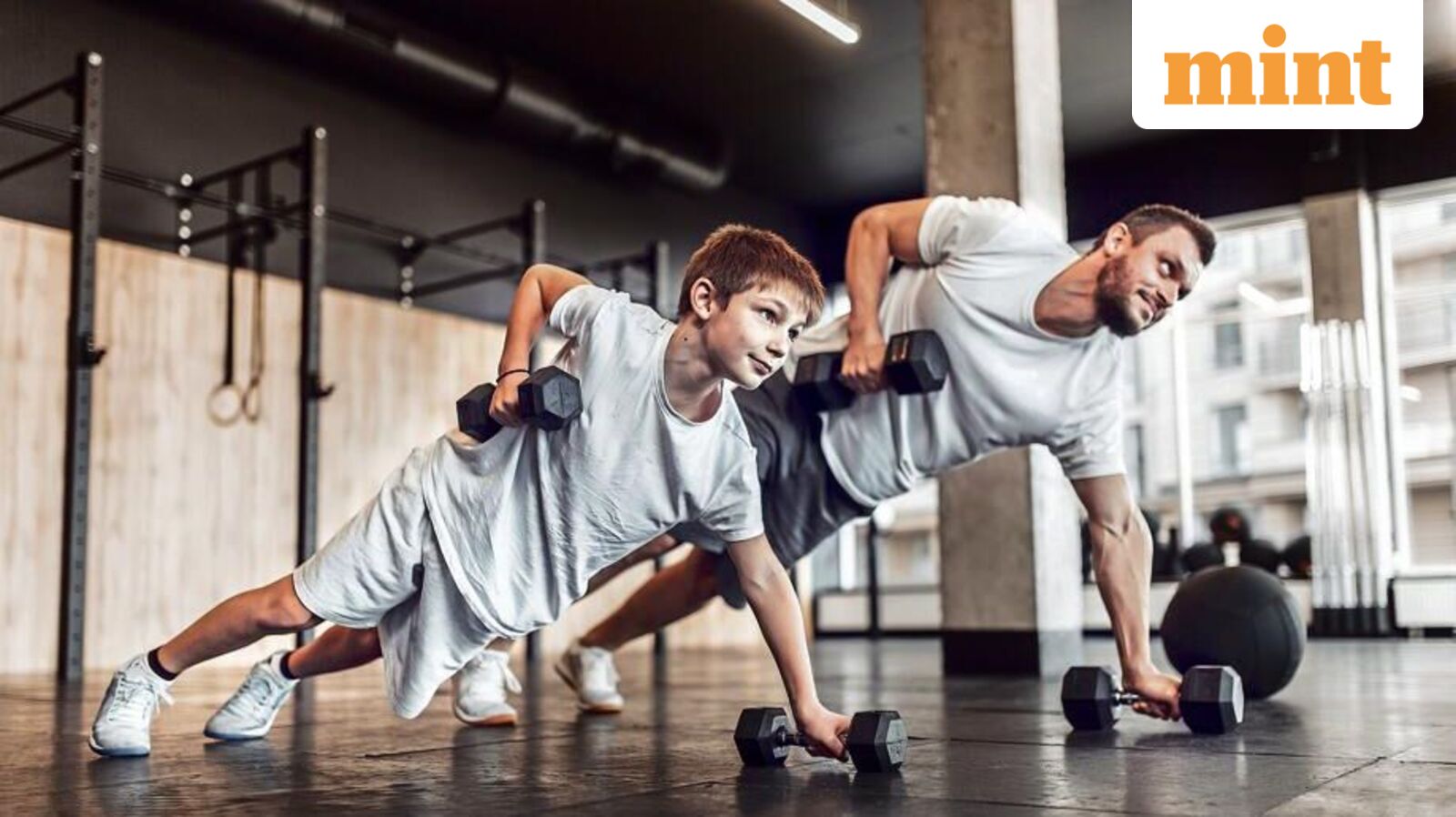
Harshita Modi proudly tells anyone who listens that her 9-year-old son, Staval, plays badminton for their club and is “always picked to represent his school in the flat race.” In early March, she showed up at a Run Fit training camp in Kolkata to enrol herself and her son for an exercise routine based on athletic conditioning because her friends told her that several kids and women in their mid-thirties, like her, attend the sessions.
In Bengaluru, Siddhartha Arun, 14, loves playing cricket and is very serious about it. A year earlier, the teenager realised he needed to get stronger and walked into his South Bengaluru apartment gym. “I need to become stronger to get better at cricket. My mother lifts weights and I see how strong she is, so I figured that I also need to go to the gym,” says Arun, whose friends play sports but don’t do any strength training. When he went to the building gym, however, the apartment’s managing committee told his parents that children under 16 years of age were not allowed to use the gym. “My mother had to argue with the committee for almost a year before I was allowed to use the facility.”
Parents in India love to enrol their kids for multiple activities such as cricket, football, karate, swimming, racquet sports and skating. But rarely do any of them send their kids for any kind of strength training that involves weights. The scene is different in the rest of the world where special strength training sessions are held for kids in gyms and schools, especially if they play any kind of sport. Dedicated sessions for pre-teens and teenagers are common at several gyms in cities like Dubai and Singapore. Mohammad Ali Akhtar, a former gym instructor who runs the Run Fit sessions, says one reason why few children in India sign up for strength training is because the parents don’t know better. “Most parents have reached their 30s and 40s without ever going to the gym so they don’t understand how important strength training is, especially if their kids are playing a sport,” he says.
Also Read | All you need to know about ‘fibremaxxing’WHAT PARENTS FEAR
One of the biggest worries among parents is their kids wouldn’t grow—especially in height—to their full potential if they start lifting weights early on, says Bijoy Singh, head coach at Gridiron fitness studio in Kolkata. “These fears are just hearsay. In fact, strength training is likely to improve their muscle strength and bone density, which aids healthy growth.”
Dr Vikas Basa, paediatric orthopaedic surgeon and consultant at Kokilaben Dhirubhai Ambani Hospital, Mumbai, echoes Singh and Akhtar when he says that many parents in India remain hesitant about allowing children to train in gyms. The fears largely stem from long-standing myths and lack of awareness about how modern strength training works, he notes. “The most common concern is that weight training may stunt a child’s growth. Others worry about the possibility of injuries, excessive muscle strain, or children lifting weights that are too heavy for their age. Some parents also associate gyms with adult body-building and fear that children may follow unsafe routines they see online,” Basa adds.
Another reason is that many gyms in India are not specifically designed for children, and parents worry that trainers may not understand paediatric exercise requirements. Educating parents about the difference between supervised youth training and heavy bodybuilding is important to address these fears, Basa insists. “Children’s training programmes are very different from adult gym routines. The goal here is developing movement skills, coordination, and strength safely. The emphasis is on learning proper form and building neuromuscular coordination, rather than lifting heavy weights. Repetitions are usually higher with lighter resistance, and workouts are designed to be fun and engaging so children stay motivated,” he says.
Also Read | For apartment residents, sports tournaments are where the action’s atSTART THEM YOUNG
When children follow a strength training routine with age-appropriate exercises, supervision, and proper coaching, it can be safe and beneficial. Akhtar believes that strength training is important for children who play sports because it improves muscle strength, joint stability, coordination, and overall athletic performance. It also helps develop better posture and body awareness. For children involved in sports such as football, tennis, swimming, or athletics, strength training can reduce the risk of injuries by strengthening muscles around joints like the knees, ankles, and shoulders.
According to Akhtar, children can begin strength training around the age of 6–7, when they are better able to follow instructions and stay focused for longer periods. Basa adds that they can begin structured strength training around 7–8 years. “At this stage, children have developed sufficient balance, coordination, and attention span to follow instructions safely. This must be done under supervision. The focus should be on proper technique rather than heavy weights,” Basa notes, adding that another key benefit of taking up strength training at an early age is it improves bone density during crucial growth years and helps the kids build lifelong exercise habits.
Before you rush your children off to the gym, it’s important to be aware of the risks involved too. To begin with, children should never lift weights without guidance from a specialised trainer or coach. Many parents who work out themselves may feel equipped to supervise, but this is not advisable. The risks in case of unsupervised or inappropriate training include muscle strains, improper lifting techniques, or excessive training loads. “Children may also feel pressure to train beyond their capability if programmes are not tailored to their developmental stage,” warns Basa.
To minimise risks, children should train under qualified coaches who understand paediatric exercise science, follow age-appropriate programmes, and prioritise safety and technique over heavy lifting. When these safeguards are in place, strength training can be a safe and valuable component of a child’s physical development.
Shrenik Avlani is a writer and editor and the co-author of The Shivfit Way, a book on functional fitness.
Also Read | Why is every fitness fanatic in love with Hyrox?