
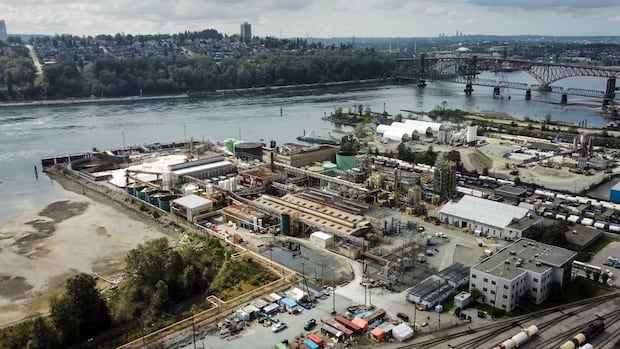
Chemtrade, a liquid chlorine manufacturer in the District of North Vancouver, is “disappointed” that councillors rejected its proposal to continue operating its facility past 2030.
Chemtrade Logistics Income Fund said the proposal would have allowed significant safety upgrades to the plant, which produces liquid chlorine mostly used for treating drinking water.
Scott Rook, president and CEO of Chemtrade, said in a news release Tuesday that the closure of the facility could have significant impacts felt across the country.
“Without chlorine production from our facility, Canada could become reliant on foreign trading partners to secure additional production of chlorine, a product critical to the health and safety of millions,” Rook said in the release.
The company said that it will pursue further engagement with the municipality and higher levels of government to try to extend operations at the site.
“Chemtrade is also investigating possible alternative avenues for recourse, including legal action,” the company said.
A risk assessment report caught the eye of local and neighbouring city councillors.
The report went to a special council meeting in Burnaby, where one councillor called the report “scary.”
WATCH | Chemical company targets rival with online influence campaign:
Campaign against B.C. chlorine plant was secretly funded by rival
An online lobbying campaign targeting a North Vancouver chemical plant is secretly funded by one of that company’s rivals, as revealed by a CBC News and Investigative Journalism Foundation investigation. District of North Vancouver councillors have received hundreds of emails from accounts claiming to be local residents who are concerned about a potential chlorine spill, but as Jon Hernandez reports, the campaign has been traced to a Toronto-based lobby firm and one of Chemtrade’s direct competitors.
K2 Pure Solutions was involved in a secret online lobbying campaign against Chemtrade in 2024.
K2 Pure later apologized for its involvement in the campaign, but its CEO defended the message of the campaign, which raised issues about the safety of the proposal.
K2 Pure did not respond to a CBC News request for comment by publication deadline.
District of North Vancouver council voted in a 4-3 split to abandon Chemtrade’s proposed rezoning Monday night.
Chemtrade said its North Vancouver facility is the largest producer of liquid chlorine in Canada and produces more than 40 per cent of the country’s supply.
It has been operating on the site since 1957.
Why did Chemtrade want to rezone the site?
Chemtrade had previously told the district it intended to close its operations on a portion of land it leased from the Vancouver Fraser Port Authority by 2030. In October, the company applied for an exemption to the district’s prohibition against manufacturing hazardous substances.
In a December staff report to district council, Chemtrade proposed allowing chlorine production on the site at 100 Amherst Ave. in perpetuity and transitioning the facility to a “produce-and-ship” model that would reduce chlorine inventory on site.
District staff supported the proposal, which would have permitted capital improvements, including removing on-site chlorine storage tanks and constructing a new enclosed railcar-loading building.
Chemtrade submitted a risk assessment, which was independently peer reviewed by Risktec Solutions on behalf of the district, that concluded the proposal met “accepted risk thresholds” and “would reduce overall risk relative to existing conditions,” according to the report.
The facility employs 118 full-time staff, according to the report.
Chemtrade didn’t propose any changes to its production processes or overall production quantities.
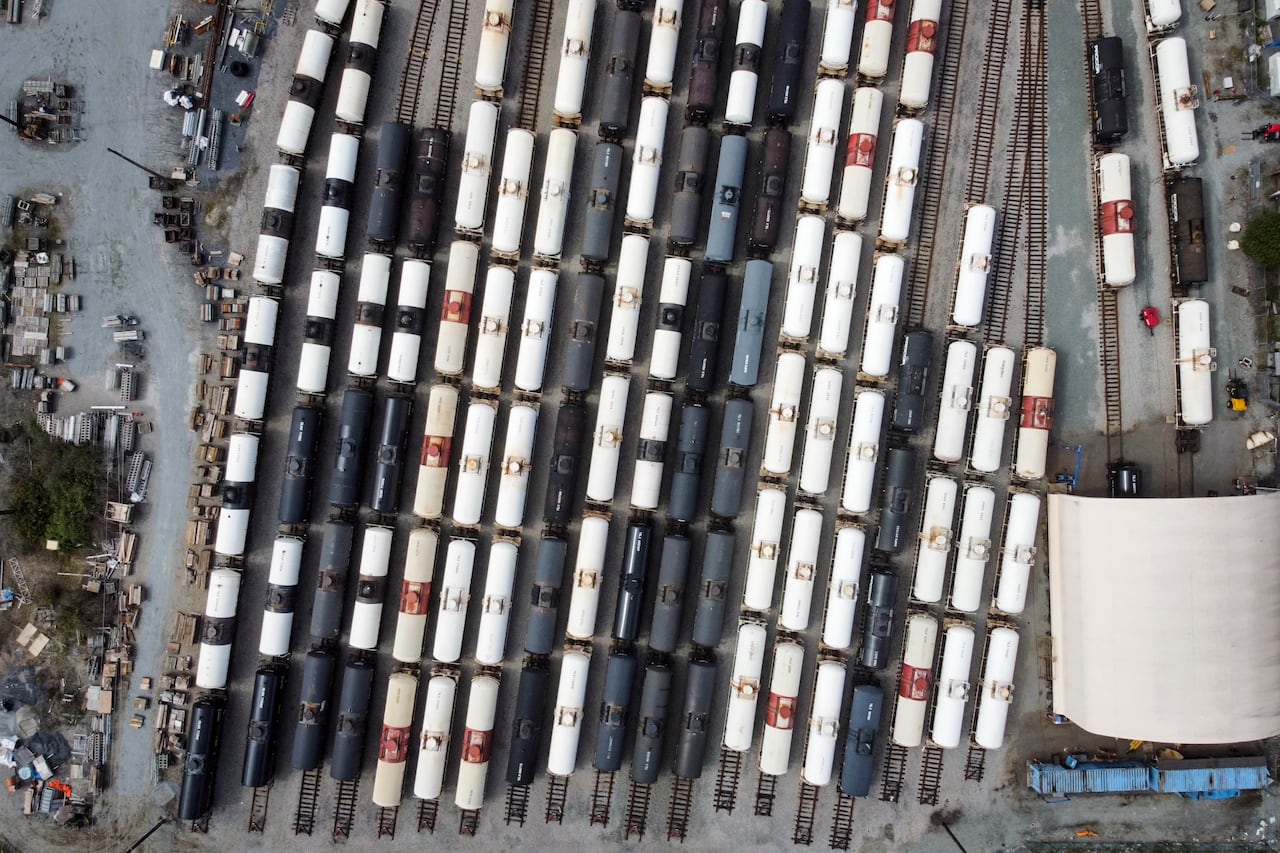 Chemtrade’s lease to produce chlorine on its site in North Vancouver ends in 2030. (Ben Nelms/CBC)
The staff report said the facility is “one of the lowest-carbon chlor-alkali operations in North America, powered almost entirely by renewable hydroelectricity and self-produced hydrogen.”
A public information meeting summary report, included the district’s public input package, noted there have been no significant unintentional releases of chlorine gas at the facility since 2010 and added there has never been a fatality.
Units in Chemtrade Logistics Income Fund fell more than 18 per cent after the rezoning was rejected.
What was the ‘scary’ report?
There were vehement opponents to Chemtrade’s proposal.
Michael Graveson, a chlorine industry consultant, submitted a report by AcuTech to both the district and the City of Burnaby, which sits less than a kilometre away from the Chemtrade site across the Burrard Inlet.
The report said storing and transporting liquid chlorine “poses a high-consequence risk to the public.”
Graveson presented the report at a Burnaby special council meeting earlier this month, alongside the city’s recently retired fire chief Chris Bowcock, who said the risk assessment provided to North Vancouver did not include issues related to transporting the liquid chlorine by railcar.
The AcuTech report indicated that if there were a railcar derailment or accident, liquid chlorine could turn into chlorine gas, which has toxic effects and would pose a significant risk to life.
“When an industry understands that something isn’t done correctly … within that industry, people will step up to protect that industry, to identify what’s not being done as they see fit, and provide those resources and that technical expertise, that isn’t available at the city,” Bowcock said.
Bowcock said he understood the report was contracted by K2 Pure Solutions.
Later in the meeting, however, Graveson said he hired AcuTech.
CBC News has not been able to independently verify the source of the report.
The report recommended the facility convert the chlorine to bleach before transporting by rail.
K2 Pure Solutions’ website says the company “helps provide an answer to eliminating the need to transport chlorine for water purification and disinfection.”