
The March Street stage will be largely removed to allow installation of a large whitefish sculpture, but a small podium will be retained there
Whitefish aren’t the easiest fish to catch in these parts, but downtown Sault Ste. Marie just landed a big one.
A stainless steel whitefish sculpture, big enough to walk under or through, will be installed in what’s now the March Street Stage, under an agreement with Garden River First Nation approved this week by Sault Ste. Marie city council.
The big fish will be fabricated by Kathryn Corbiere, a Manitoulin Island artist specializing in plasma cutting and custom fabrication.
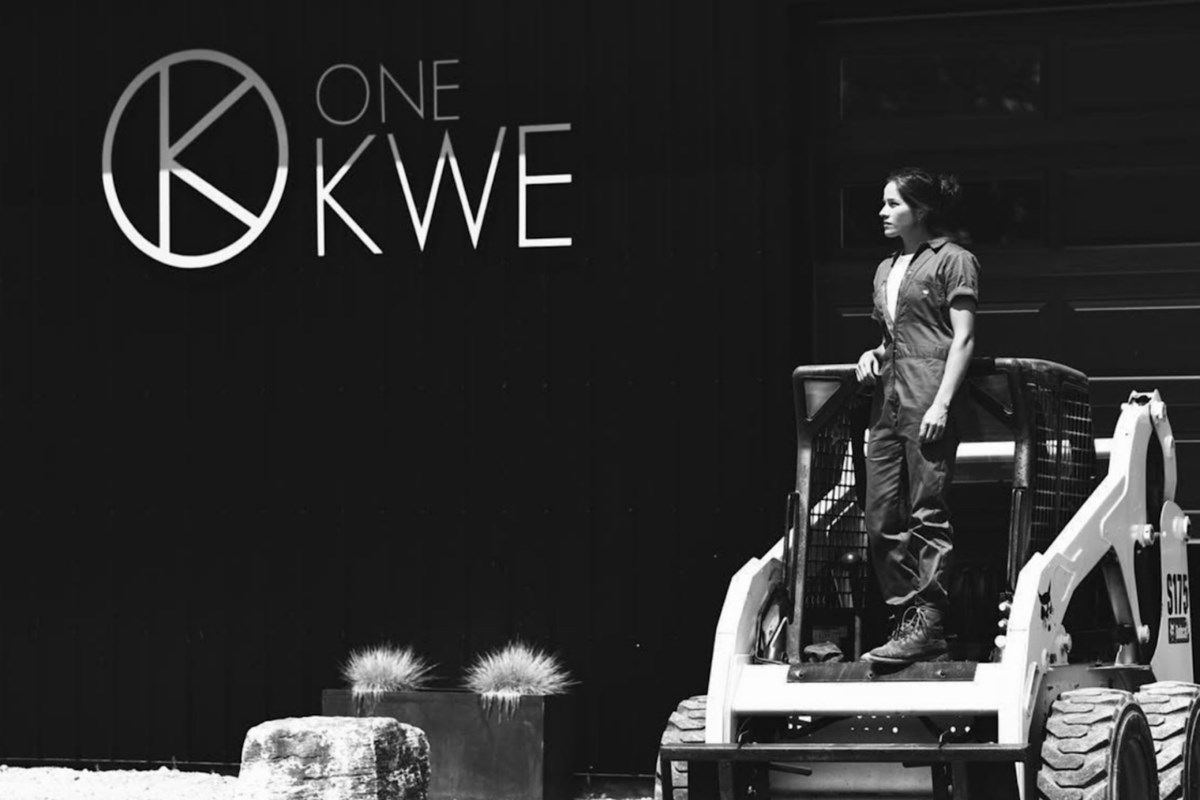
The Anishinaabe welder’s studio in M’Chigeeng is known as OneKwe.
In addition to sculpture, she also makes modern furniture.
“She has an established relationship with Garden River First Nation,” say Travis Anderson, the city’s director of tourism and community development, and Kaitlyn Neveu, Indigenous policy and process renewal advisor, in a report prepared for Monday’s council meeting.
“She previously worked with the community on the creation of a feather statue located along the walking trails in Ojibway Park and a metal logo that is prominently displayed within the Garden River First Nation administration building,” says the report.
“Her work is also displayed at TMX – Toronto Stock Exchange, Cambrian College, and locally at Northway Wellness Centre.”
She designed and fabricated the National Lacrosse League’s championship cup trophy.
City councillors agreed this week to award Corbiere a $125,000 contract to build and install the sculpture on the March Street stage property, which borders both March Street and Queen Street East.
The March Street stage will be largely removed to allow installation of a large whitefish sculpture, but a small podium will be retained there, Neveu said.
Ward 4 Coun. Marchy Bruni commented that it might be useful to provide drawings when seeking approvals from city council.
“When Anishinaabe artists come through, it’s not necessarily that they’re going to follow a direct drawing of what comes,” responded Neveu.
“It’s a vision. It’s emotion and time. It’s feeling. And it really comes from spirit.
“This is an Anishinaabe artist, so we are trusting her abilities and what she brings forth.
“The concept is there. The idea is there, and she did give us a smaller sketch. But I think the revealing of it will be what really brings the spirit of the situation to life,” Neveu said.
Here’s Corbiere’s own artist statement about the work she’s still designing for downtown Sault Ste. Marie:
For many generations the Anishinaabeg of the area now called Garden River First Nation travelled along the many tributaries that fed the Gitigaan-ziibi to reach family hunting grounds.
The community planted gardens at the mouths of the tributaries that fed the river.
The Gitigaan-ziibi (Garden River) was a source of sustenance, as well as a place of gathering and community. Along with hunting and the growing of crops, the river herself provided food; up until the late 1900s whitefish (dikmek) were prized and readily available; the Anishinaabeg were highly skilled at fishing from canoes at Bawating (place of the rapids), and along the river and her tributaries.
Today, community members continue to gather, hunt, grow food, and fish for the trout, salmon, and steelhead that populate the river, following the teachings to ‘live a good life’ – Mno bimaadziwin.
The sculpture celebrates the values inherent in living a good life: the values embedded in the seven Grandfather Teachings and the processes of living in community, hunting, gardening, fishing, gathering. Fabricated of stainless steel, a metal that doesn’t erode and stands the tests of weather, seasons, and time – the sculpture is strong and enduring like the Anishinaabeg and reflects the ongoing importance of the Teachings.
The sculpture will be formed of seven lengths of curved stainless steel. Spaced apart along a curve, together the arcs of steel form a sinewy shape that echoes the riverine shape of the river, the flow of the rapids, and the spine of a fish.
The seven curves and the shape they form honour the Seven Grandfather Teachings, the River, and the importance of fish and fishing throughout the ages.
Each of the seven arcs will be adorned with etchings created from original drawings by Anishinaabe artist Ray Fox to illustrate the seven dodems.
The work is designed so that the size and placement of the arcs invite people to walk under and through the sculpture.
As they weave through each of the arcs, they can engage with and reflect upon the sculpture, the dodems, and the teachings.
To further invite engagement with the work, granite boulders from the Cambrian Shield will be placed at intervals throughout the sculpture.
In the way that boulders in the rapids at Bawating move water and create resting places for fish, the boulders will invite people to sit, reflect and gather.
The seven arcs form a semi circle; when people gather together at the sculpture they can join the ends to form a full circle – in this way they will be connected to the sculpture, to each other, to history, and to the Teachings which offer the knowledge we need to live a good life in the present and the future.
The collaborative art project springs from a Friendship Accord signed by both the city and Garden River First Nation on Feb. 25, 2025.
“Early discussions with the artist and staff included a walk-through and sit-down conversation with Darrell Boissoneau, where ideas were shared about creating a welcoming gathering space in the downtown core for the urban Indigenous population, envisioned as Baawating Square,” Anderson and Neveu said in their report.
“The downtown core holds particular significance as a central and accessible space where community members can gather, connect, and engage in cultural practices.
“Installing Indigenous art in prominent places is an important part of reconciliation because it restores Indigenous presence in the community, shares authentic stories, and fosters understanding in everyday public spaces.
“Furthermore, Indigenous public art assists communities to confront the past, honour Indigenous voices, build a more inclusive future, and supports the Calls to Action of the Truth and Reconciliation Commission of Canada, which emphasize awareness and cultural recognition.”