
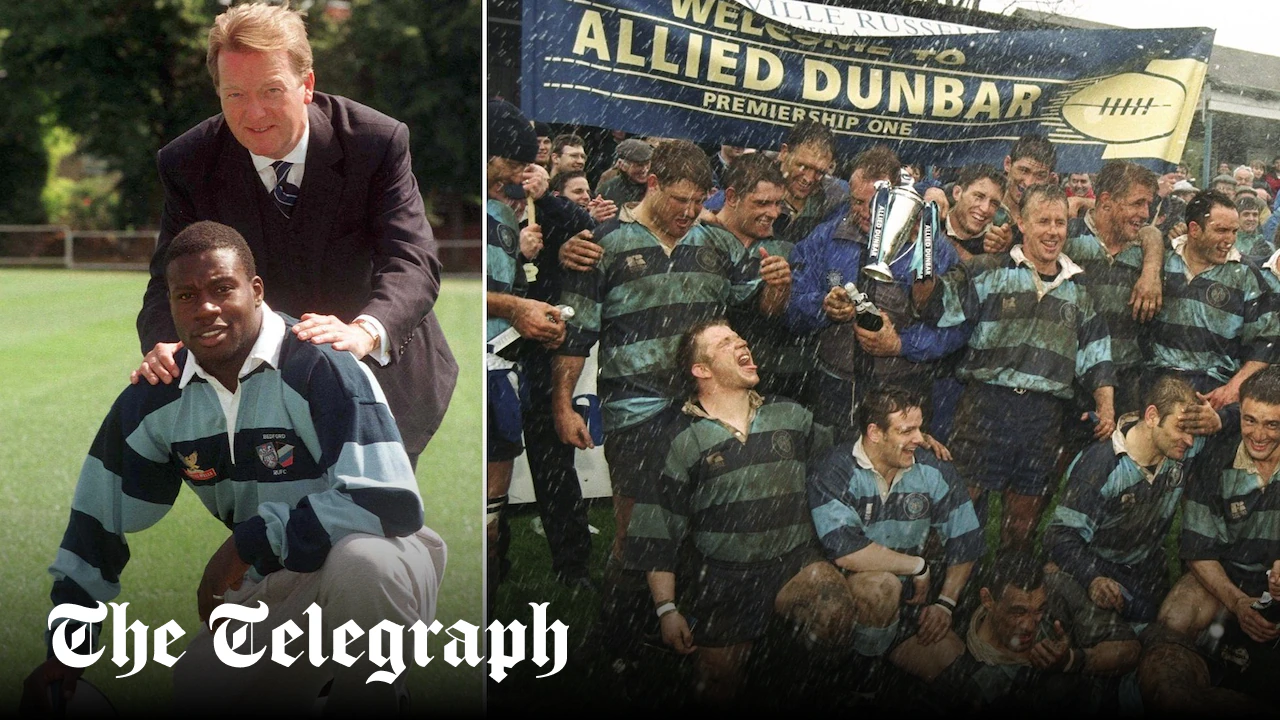
The game might have been turning professional but the way it was organised was anathema to Warren, who was the king of boxing promoters in the 1990s, backing Frank Bruno, Naseem Hamed and Chris Eubank.
“It was quite a culture shock for me,” Warren said. “I had always dealt directly in selling boxing rights and putting shows together without any governing body in between. That was what I was used to. When I went along to some of these rugby meetings, I was not going in saying we should do this or we should do that but I went to listen and see. I was quite shocked at how it operated. The voting process where the RAF could determine what happened in the top league, I could not get my head around that at all.
“England are very good at the badge and blazer mentality. We have to move with the times. That does not mean running roughshod over tradition but you have to look to the future or it will die on its backside.”
He was particularly frustrated that the television rights for club rugby were not bundled together with England’s matches which Sky had secured in 1996. Ironically, this would become CVC’s same strategy when the private equity group purchased stakes in the Six Nations along with Prem Rugby and the United Rugby Championship. “As a moment in time we missed a big opportunity,” Warren said. “We should have got club rugby as part of the deal with Sky wanting to buy the Five Nations. We should have used that because it is the clubs who are paying the salaries of the players who are representing the countries.”
Bedford secured promotion to what was then Allied Dunbar Premiership 1 in 1998, only the second time in their history in which they had reached the top tier of English rugby. Things in Warren’s eyes were going “swimmingly” and this was just the start. “We wanted to be the best,” Warren said. “That was it. I am sure that would have happened too.”