
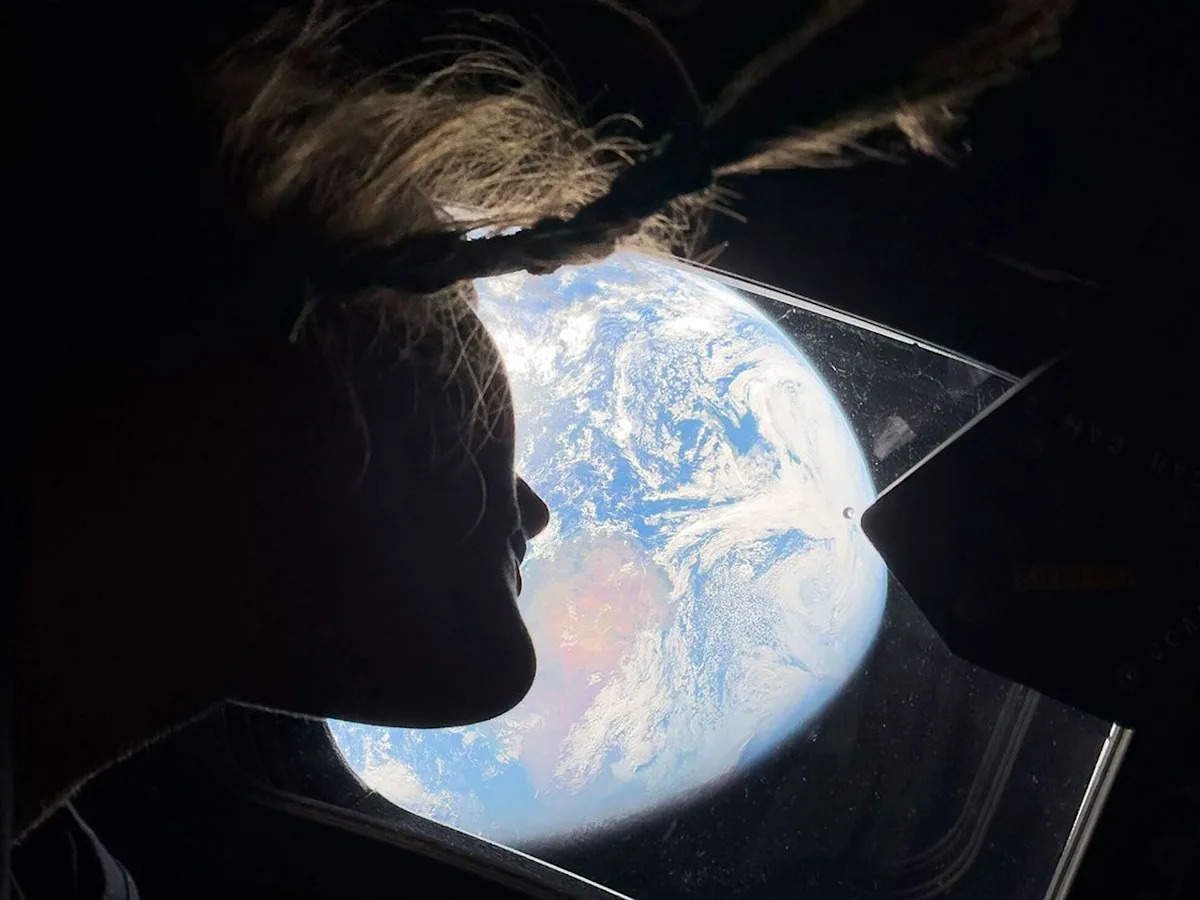
Last week’s nine-day space flight around the moon could not have come at a better time for a fractured world. It did something badly needed — it offered hope for something better than missiles, bombs, destruction and death.
And while cynics like me usually don’t support the sort of happy-clappy conversations that came from the Artemis II crew, their talk of love and peace was a welcome relief from the vulgar, derisive warmongering going on here on Earth.
Artemis II reminded us that we all live together on a fragile planet affected by everything we do. While I held out little or no hope for “peace for our time,” for all of those nine days many of us sat in awe, listening to articulate people speak the truth. We hope it was to power, reminding us of the reality we share.
But the history so many ignore, the history that turned Neville Chamberlain’s 1938 “promise” of peace if Hitler was “allowed” to annex part of what was then Czechoslovakia, turned out to be risible. The British prime minister is now remembered for the failure to appease a murderous tyrant.
Living in perilous times, the encouraging words from space may not matter much to today’s wannabe tyrants, but it’s something for the rest of us with no control over the consequences and no power to which to cling.
For those of us of a certain age who are acknowledged science fiction nerds, memory intrudes — we remember the beginning of the space race, the exhilaration when Neil Armstrong stepped from the Apollo II capsule onto the moon’s surface and the long years between that day — July 20, 1969 — and this year’s “shared” slingshot around the moon. It was shared because everyone in the world with access to electronics could follow the Artemis mission.
How much different this was compared to the stunning launch of Sputnik by Russia on Oct. 4, 1957. I was 12 years old, four days before becoming a teenager, and glued to my parents’ black-and-white, rabbit-eared television. I could not have been more thrilled.
It was happening. Humans were exploring space — the science fiction writers were not just concocting the future out of whole cloth, they were going to be proven right.
Twelve years later, two men — Buzz Aldrin followed Armstrong onto the moon’s surface — stepped onto a different world.
And then, we seemed to have lost interest in the far reaches of space. We were content to stay close to home, launching satellites and the space station and being satisfied with that.
Related
Then, the Challenger disaster happened on Jan. 28, 1986. Such memories don’t fade with time. I will always recall sitting down to breakfast on a sunny Hawaiian morning, when my husband returned from our hotel room grim and pale-faced. Soon, the entire restaurant fell silent as the news passed from table to table. It was as if all the air had been sucked from the room.
I am sure the memories of that explosion caused by faulty O-ring seals, which killed all on board, and the earlier near-disaster facing the 1970 Apollo 13 mission when an oxygen tank exploded, were uppermost in the minds of everyone connected to this past week’s mission.
Such explains the extraordinary safety measures, concerns and tests that delayed the launch.
Some memories are etched in one’s brain. There are the obvious ones, the personal ones, the birthdays, weddings and family matters that shape our individual lives. Even among families, such memories are unique, for each sibling has a different set.
What I remember is six years older than my sister, and her memories are seven years older than our late brother, given the gap in years between us. All of these shape our individual lives, in the sense that everything that happened before we were born is history — after our lives begin, all is experience.
The emotional conversations with and between today’s astronauts are unique in their business. Kudos to the trainer, educator or mentor who recognized that this is no time for suck-it-up, be-a-man bro culture, but time for some emotional truth.
A human being recognized that what the world needed was not triumphalism, but an injection of humanity, emotion and personal connection with each other.
Catherine Ford is a regular columnist.