
Previously, hearts that stopped beating because of circulatory death were often unsuitable for donation and transplant because of a lack of oxygen. That limited the pool of donor hearts to those offered after neurological death only.
But those donor hearts also came with their own challenges because it was impossible to see how they functioned after retrieval. The window for transplantation was also narrower – about three to four hours – in part because donor hearts had to be transported on ice.
The OCS Heart extends transportation time to about 12 hours, meaning donor hearts can reach recipients farther away from where they are retrieved. Niagara Health’s Heart Investigation Unit performs cardiac catheterizations to ensure the organ’s health before being transplanted.
The first heart transplant after circulatory death in Canada was performed last fall at University Health Network’s Toronto General Hospital. It came six years after the first such transplant ever in 2019 in Massachusetts.
Although TGLN can’t provide precise numbers, Niagara Health has been able to retrieve “a few” donor hearts since September thanks to the OSC Heart. Each year, Niagara Health supports between nine and 19 organ and tissue donors.
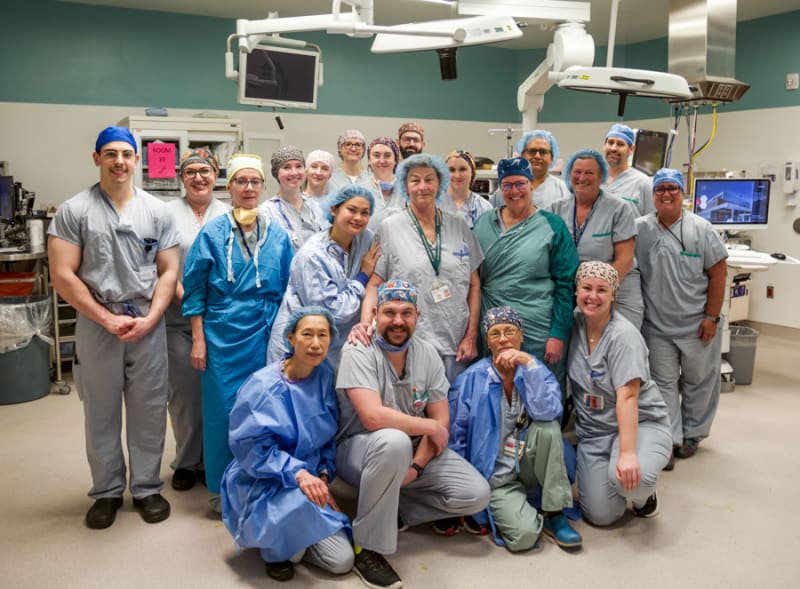
The key to Niagara Health’s successful contributions comes down to Walker’s OR team being able to pivot and work quickly when a donor heart or other organs becomes available.
The donation process
Once a patient has been identified as a donor candidate, TGLN approaches the family to discuss wishes and consent.
It can be a difficult decision – one that often impacts a family’s grieving process – but many consent because they understand the impact, Walker explains.
“The TGLN team does an amazing job of supporting families, which turns a tragic outcome into something that helps a family find peace at the end of a patient’s journey,” he says.
Next, it’s a matter of co-ordinating multiple teams under tight timelines. Sometimes, scheduled procedures need to be bumped to free up an OR. The OR team then works alongside a retrieval team that comes from outside of Niagara Health. Depending on the organs being donated, the process can take between two to six hours.