
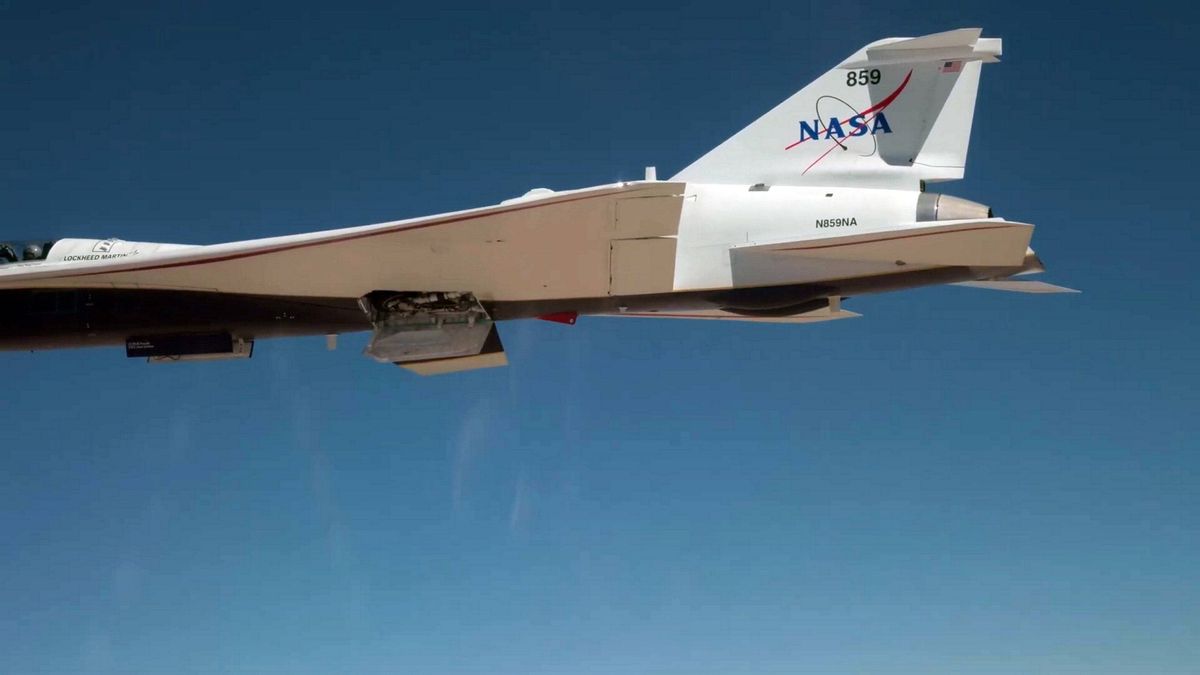
NASA’s X-59 quiet supersonic research aircraft flew with its “wheels-up” for the first time this month, marking a major milestone in the quest for faster transatlantic travel
19:09 ET, 16 Apr 2026Updated 19:16 ET, 16 Apr 2026
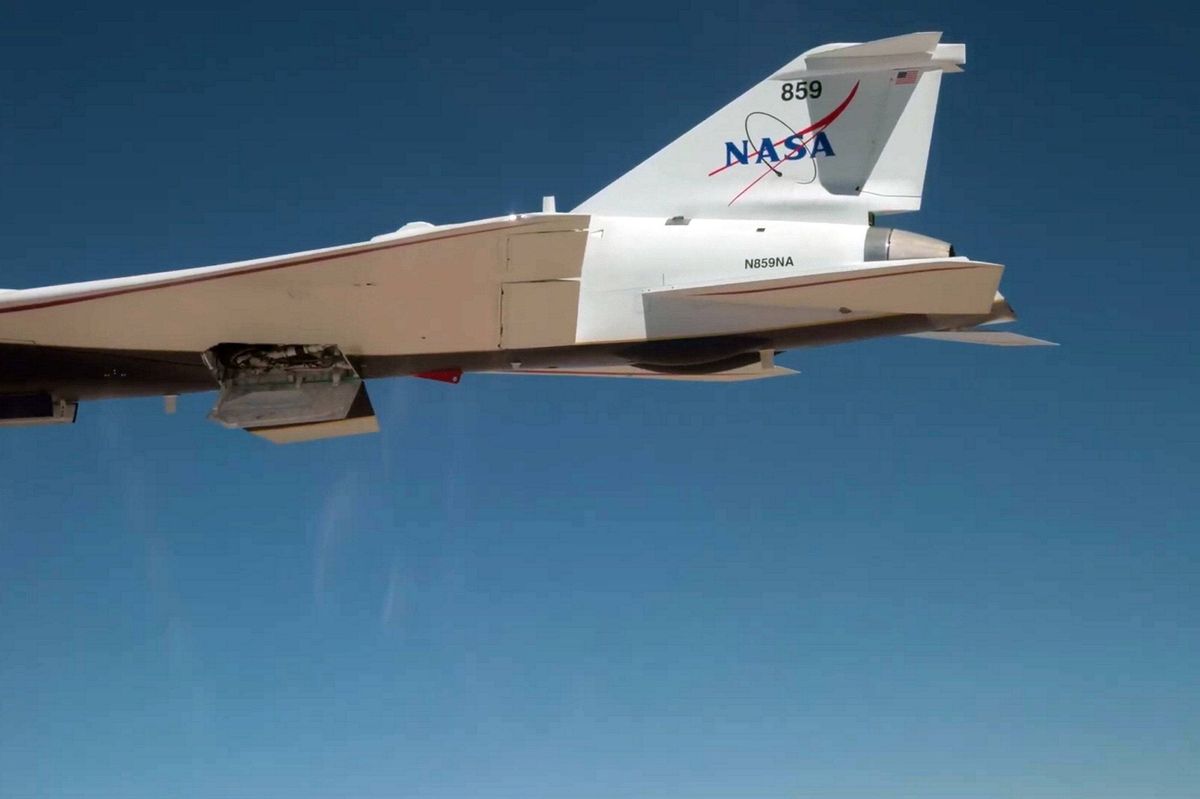
The experimental craft took off from its home base at NASA’s California research center and completed a 90-minute flight
A successor to Concorde capable of traveling from London to New York in less than four hours has achieved a significant testing milestone.
NASA’s X-59 quiet supersonic research aircraft completed its first “wheels-up” flight earlier this month. Flying with retracted landing gear allows researchers to evaluate the aircraft’s aerodynamic design, an essential feature that enables the X‐59 to exceed the speed of sound while producing merely a quiet thump rather than a disruptive sonic boom.
The aircraft is designed to reach Mach 1.5 — roughly 990 mph — suggesting it could complete a non-stop journey from the United Kingdom’s capital to the Big Apple in around 3 hours and 44 minutes. Concorde achieved a maximum cruising speed of Mach 2.04, or 1,354 mph, exceeding twice the speed of sound.
READ MORE: Experts warn Spirit Airlines liquidation could represent ‘end of budget travel’READ MORE: Six weeks of jet fuel left as world faces ‘largest energy crisis we have ever faced’
This supersonic capability enabled it to reach New York City in approximately 3 hours. Standard commercial flights typically require around seven to eight hours.
The X-59 aircraft’s comparatively subdued flight characteristics could address the noise issue that has prevented such planes from operating over densely populated regions.
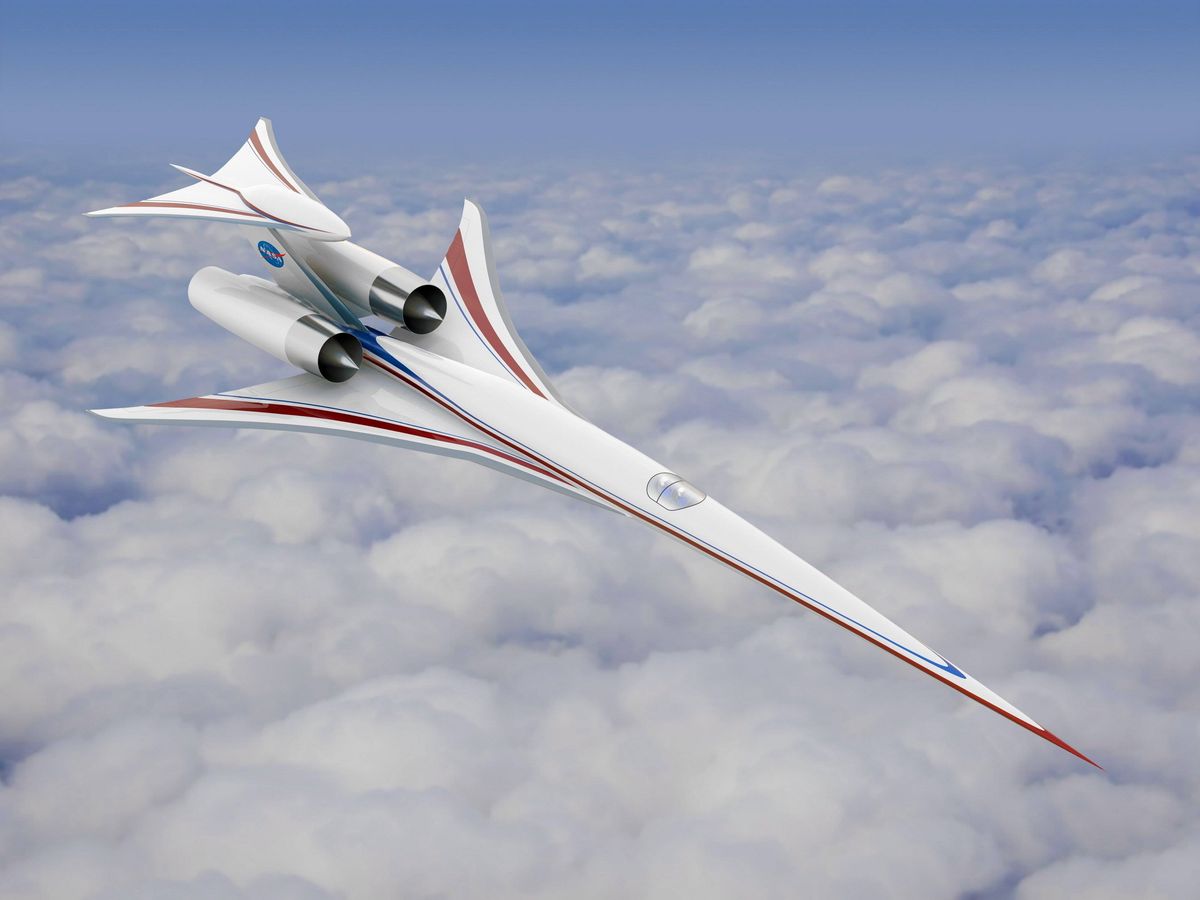
NASA explained that experimental aircraft traditionally conduct their initial test flights with landing gear deployed
Click here to follow the Mirror US on Google News to stay up to date with all the latest news, sports and entertainment stories.
NASA explained that experimental aircraft typically conduct their initial test flights with the landing gear deployed, retracting it only after achieving performance targets. The X‐59 completed its first wheels‐up flight on April 3.
Piloted by NASA test pilot Jim “Clue” Less, the experimental craft took off from its home base at NASA’s Armstrong Flight Research Center in Edwards, California, completing a 90-minute flight and reaching a peak altitude of 20,000 feet. NASA announced on Wednesday: “The X-59 has made eight flights as of April 10 as it continues its test flight envelope expansion campaign. The X‐59 is at the centre of NASA’s Quest mission to enable quiet commercial supersonic flight over land.”
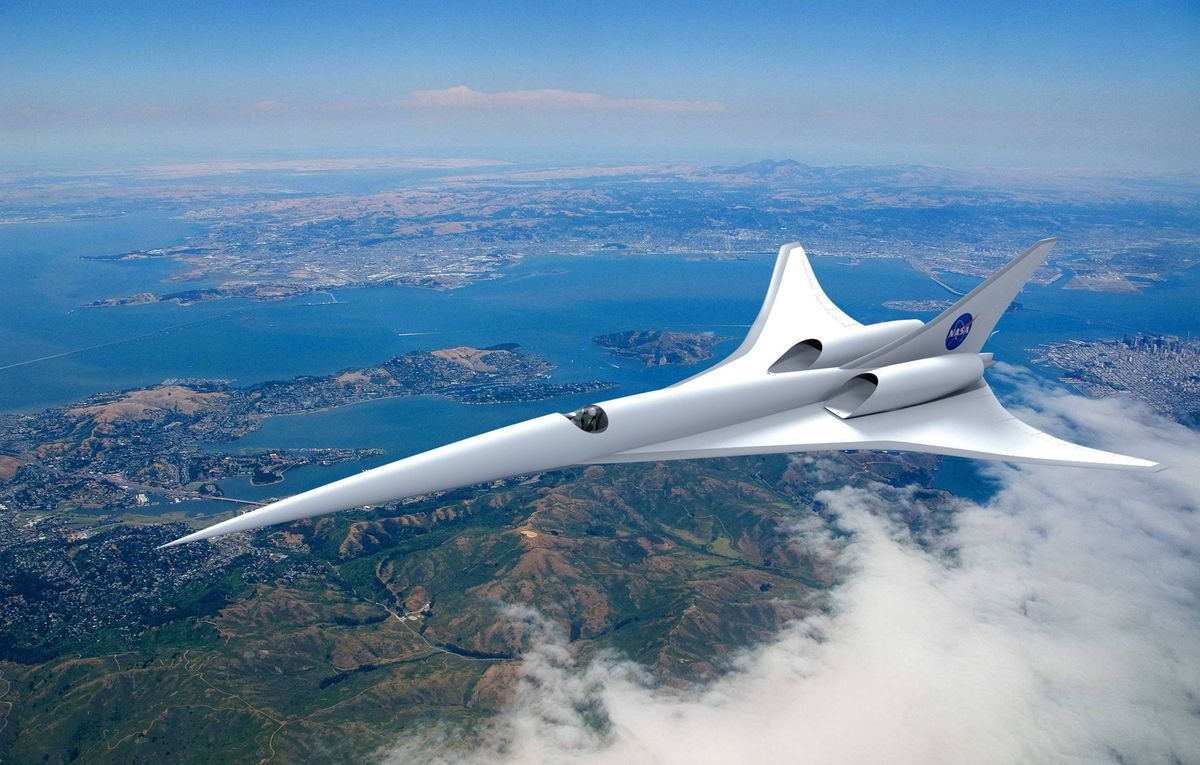
The experimental plane reached a peak altitude of 20,000 feet
It was previously reported that commercial partners, including Boeing, Rolls-Royce, and GE Aerospace, had been contracted to help create non-proprietary designs for concept vehicles. In 2023, Lori Ozoroski, project manager for NASA’s Commercial Supersonic Technology Project, said: “We conducted similar concept studies over a decade ago at Mach 1.6-1.8, and those resulting roadmaps helped guide NASA research efforts since, including those leading to the X-59.”
“These new studies will both refresh those looks at technology roadmaps and identify additional research needs for a broader high-speed range,” Ozoroski added.
Sign up to our FREE newsletter and get the top stories to your inbox
DAILY NEWSLETTER: Sign up here to get the latest news and updates from the Mirror US straight to your inbox with our FREE newsletter.