
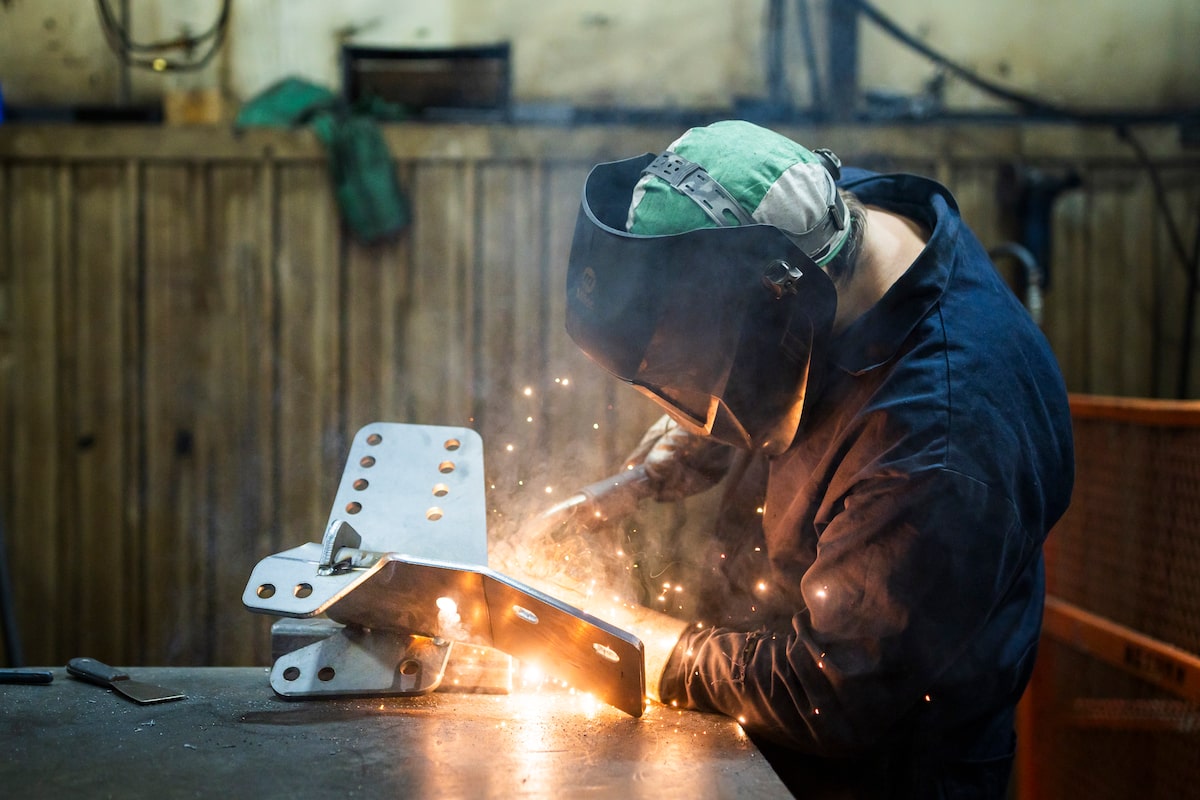
A worker welds a steel part for a snowplow at the Arctic Snowplows facility in London, Ont., last November.Nick Iwanyshyn/The Globe and Mail
Hundreds of Canadian manufacturers are facing a potentially devastating increase in tariffs after a change in how the United States applies metal duties to manufactured goods.
Starting on April 6, the U.S. began to levy a 25-per-cent tariff on the entire value of imported “derivative” goods made of steel, aluminum and copper – a category that includes hundreds of products, from industrial equipment to household appliances.
Previously, it had applied a 50-per-cent tariff to derivative goods, but only on the value of the metal inside the product, which often accounts for a small portion of the total value.
This change, which applies to all countries (with a partial carve-out for Britain), has significantly increased the impact of U.S. metal tariffs on the Canadian manufacturing base, and thrown another curveball at a sector already struggling with a toxic combination of rising costs and uncertain access to the U.S. market.
Jim Estill, owner of Arctic Snowplows, a manufacturer of heavy-duty plows based in London, Ont., said the amendment will increase the tariff bill on a $10,000 snowplow to $2,500 from a fraction of that amount previously.
“This is a huge increase, so big that Arctic Snowplows will lose 90 per cent of its business in the U.S.,” he said in an e-mail. As it was, the company had already seen a 40-per-cent drop in U.S. sales last year because of the previous tariff regime. “The hope is we can pick up more business in Canada, ideally taking business from U.S. plow makers.”
The change largely flew under the radar until this week, when Canadian snowmobile maker BRP Inc. suspended its financial forecast and said it could take a hit in excess of $500-million this fiscal year because of the metal tariff amendment.
BRP’s shares drop by more than a third as it faces $500-million hit from U.S. tariffs
The company’s stock price fell 35 per cent on Wednesday after the announcement, although it regained some ground on Thursday.
“This is one that many people didn’t see coming, and my goodness,” said Dennis Darby, president and chief executive of the industry group Canadian Manufacturers and Exporters. He said that he’s heard from companies over the past two weeks who are staring down a tenfold increase in their effective tariff rate.
“This is not sustainable,” Mr. Darby said, adding that he is lobbying the federal government for additional support measures to help manufacturers weather this latest jump in tariffs.
The amendment appears to be an attempt by the Trump administration to simplify its metal tariffs, which were first imposed last year on raw steel, aluminum and copper products, then expanded to the metal content in hundreds of derivative products. These tariffs were levied under Section 232 of the Trade Expansion Act of 1962, which U.S. President Donald Trump has used to target specific industries like metals, automobiles and lumber.
Attempts to calculate duties on the metal inside derivative products proved to be an administrative nightmare, said Ted Murphy, co-leader of the global arbitration, trade and advocacy practice at U.S. law firm Sidley Austin LLP.
However, the administration’s fix – lowering the tariff rate applicable to derivative products to 25 per cent from 50 per cent but applying it to the entire value of the good – has created a new set of problems, hammering both foreign companies and American manufacturers who rely on imported components.
“I think they miscalibrated this,” Mr. Murphy said. “You have people who are relatively new at this and don’t really understand or care about the implications. And they fixed one problem without a great appreciation for the other problems that would create.”
Tariffs on products that are made entirely of metal – such as steel coil or aluminum sheet – remain unchanged at 50 per cent.
Some Canadian companies may benefit from the change to how duties are calculated for derivative products. Goods that contain less than 15 per cent steel, aluminum and copper by weight no longer have to pay metal tariffs. That removes an administrative headache for manufacturers whose goods contain small amounts of metal.
Opinion: Enough is enough. Canada must fight tariffs with tariffs
Derivative products that source all their metal from the U.S. face a lower 10-per-cent tariff – although for some companies, that still means a higher tariff bill than earlier.
ADF Group Inc., a Quebec-based manufacturer of steel superstructures, said on Thursday that the recent changes mean the company will now be subject to 10-per-cent U.S. steel tariffs, whereas it had been shielded before because it uses U.S.-made steel.
There was no advanced notice, said Jean-François Boursier, the company’s chief financial officer, during an earnings call to report year-end results. “Then all of a sudden, you’ve got coming out of nowhere that 10-per-cent announcement that nobody saw coming.”
The U.S. metal tariffs don’t apply to all manufactured goods, only the hundreds of products that have been added to the Trump administration’s derivatives list.
This list has expanded over the past year based on lobbying efforts by U.S. companies, leading to some strange and arbitrary outcomes.
For CMI Mulching Inc., a Quebec-based manufacturer of forest-clearing machinery, its finished equipment is not on the derivatives list, but its spare parts are. That leads to an odd dynamic where customers aren’t being dinged with a metal tariff when they buy new equipment, but they are when they’re looking to repair it, said CMI president and CEO Charles-Alexandre Vennat.
He said his company was in a relatively lucky position compared with many other Canadian manufacturers. “But luck is not a policy, so I wake up every morning wondering what Truth Social has come out and if it’s going to have an outsized effect on our business,” he said, referring to Mr. Trump’s social-media platform.
It’s unclear whether there is a path toward relief from these Section 232 tariffs. Ottawa and Washington tried to reach an arrangement on steel and aluminum tariffs in the fall, but those talks were called off by Mr. Trump in October in anger over a TV advertisement critical of tariffs that was launched by Ontario Premier Doug Ford.
Further discussion about sectoral tariffs will likely happen in the context of the review of the United States-Mexico-Canada Agreement, which is taking place over the summer.
Jesse Goldman, a partner in the trade group at Osler, Hoskin & Harcourt LLP, said there were aspects of the recent amendment that sets the stage for the USMCA talks – notably, the language around lower tariffs for products made of metal that was melted and poured in the United States.
“I think the administration may be looking at this as part of the effort to really promote U.S. primary metals manufacturing, which seems to be what this administration is very focused on,” Mr. Goldman said.
“Their understanding of manufacturing is sort of 19th century, early 20th century: men with hard hats making big shiny things.”