
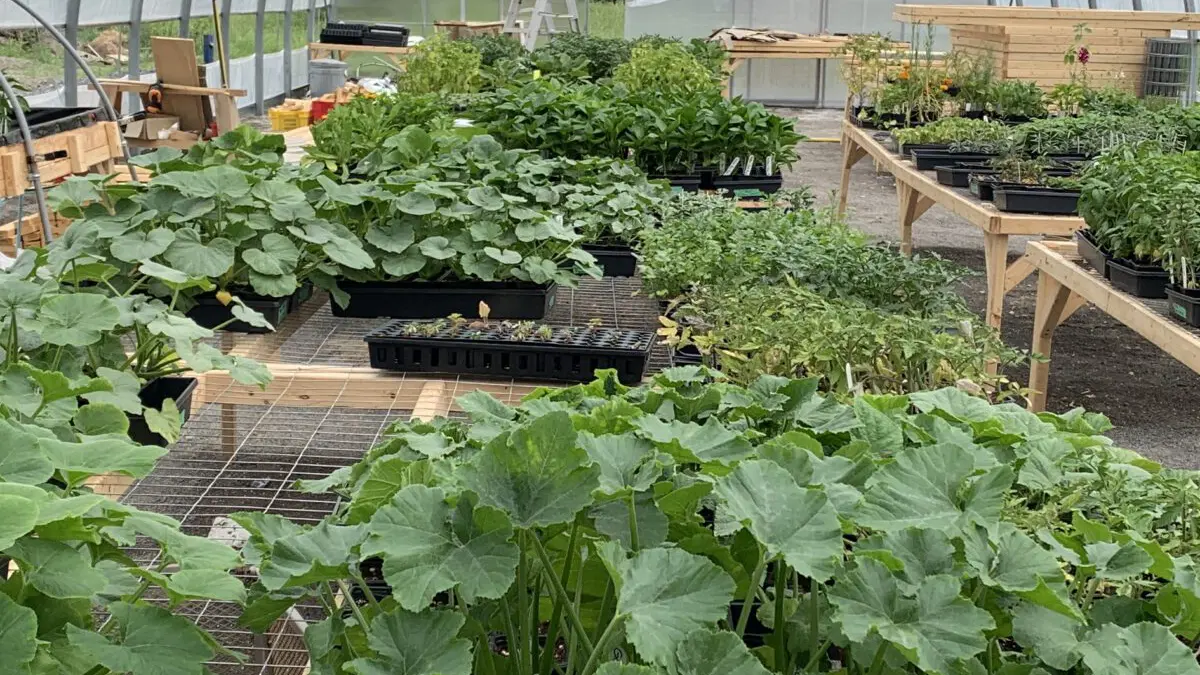
At a community farm in Ottawa’s Greenbelt, residents are learning how to grow their own food, share knowledge and reconnect with what they eat.
Organizations such as Just Food are using urban agriculture, including community gardens and shared farm spaces, to strengthen local food systems and expand how people engage with food beyond the grocery store.
While growing food can’t move the needle much on affordability challenges, urban agriculture can increase access to fresh produce while building skills and strengthening connections.
“We are at a critical point with geopolitical pressures, climate change, farmers aging out. We need to be strengthening our local food systems, not only so people can afford to purchase the food but so they can actually find it and access it in the face of increasing volatility,” said Kate Veinot, a food system planner at Just Food.
Strengthening local food systems is becoming increasingly important as external pressures affect food production and access, she added.
There are structural challenges to growing food, said Coral Sproule, a first-generation farmer and owner of Queen Beet Farm, who emphasizes the importance of land access.
“Access to land and community farming would be integral pieces in making growing food accessible,” Sproule said.
She said growing food can also offer benefits beyond cost savings, including skill-building, community engagement and a stronger connection to food systems.
The work at community farms and gardens helps people get on the land and participate more directly in the food system, said Veinot.
These spaces create opportunities for aspiring farmers when land and infrastructure costs can prevent people from starting. Community farms allow farmers onto smaller plots and share expensive equipment.
For some participants, it creates opportunities to grow culturally relevant foods and take part in food production in ways that are often not accessible through traditional food systems.
Veinot said local food systems require sustained investment from all levels of government, including funding for infrastructure, land access and community-led initiatives.
At Just Food, its 150-acre community farm is a place aspiring farmers can develop the skills needed to grow food for their households or small-scale businesses.
The organization’s broader work includes community gardening networks, food policy advocacy, and local food system development supporting community-led food solutions and working toward a reduction in reliance on food banks.
This work also focuses on building space for people who want to grow their own food, whether for their households or as part of entering the food system as new farmers.
Together, these initiatives aim to support more resilient, community-based approaches to food.
Community-based growing spaces can also reduce barriers for new farmers by providing shared equipment, land, and mentorship.
Ottawa has more than 1,000 farms, but much of the food produced is exported, according to a 2020 City of Ottawa’s Rural Economic Development report.
Strengthening local food systems means creating a environment where farmers can sell food locally and build livelihoods at home. Veinot said systems and supports are needed to make it viable and sustainable for farmers to sell food locally rather than rely on exports.
Expanding urban agriculture is one way.
For many people, learning to grow food creates a sense of confidence and belonging that extends beyond the garden.
“Seeing and hearing people’s sense of accomplishment, community, and belonging when they are part of growing food for themselves and others is truly incredible,” Sproule said.
She says growing food can help build resilience by bringing food production closer to home and reducing reliance on vulnerable supply chains.
Karina Kwong, a public health nutritionist with Ottawa Public Health (OPH), says urban agriculture can help people eat more fruits and vegetables, learn where food comes from and connect with neighbours. It can also support access to fresh produce, local food systems, physical activity and social connection, she said.
However, she says, the gap between income and cost of living drives food insecurity.
“It’s not really a food problem, it’s more of an income problem,” Kwong said.
Food programs need to be combined with policies such as increased social assistance and raising the minimum wage.
Households should have the means to choose nutritious, safe and culturally relevant food in a dignified way through growing it or purchasing it, she says.
Urban agriculture is one part of a broader food system, offering ways for people to build skills, connect with their communities, and take a more active role in how food is grown and shared.
While it does not replace the need for income-based solutions, it provides a different approach to strengthening how communities access and experience food.