
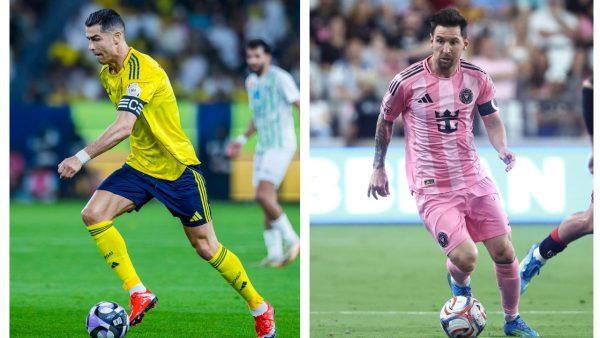
Soccer stars Cristiano Ronaldo and Leo Messi consolidate their business facets by acquiring shares in Spanish clubs such as Almería and Cornellà.
The business model expands globally, with figures like Mbappé and Beckham leading projects in France and the United States.
Investment in youth football and institutional sustainability emerge as the pillars of these new administrations led by athletes.
For the great soccer stars, lifting trophies or breaking scoring records no longer suffices; they now redesign their legacy from the boardrooms. The recent incursion of Cristiano Ronaldo into Almería’s shareholding and the acquisition of UE Cornellà by Leo Messi confirm an unstoppable trend, the elite footballer evolves into an institutional mogul.
Loading video…
Loading Video
Cristiano Ronaldo: From “The GOAT” to major shareholder
True to his inexhaustible ambition, Cristiano Ronaldo fulfilled the promise he made in early 2025. The Portuguese star, who already manages an empire ranging from hospitality to sports health, acquired 25% of the shares in UD Almería. In partnership with the Saudi investment fund, CR7 seeks to apply his winning mentality to a club with “clear growth potential.”
For Ronaldo, the move remains logical. “If I can be a club owner, why would I just be an employee?” he questioned in a recent interview; his arrival in Spanish football injects more than just capital; it brings a global brand value that promises to transform the Andalusian team into a center for high performance and international talent recruitment.
Leo Messi and the bet on Catalan roots
Almost simultaneously, Leo Messi surprised the market with the purchase of UE Cornellà. Unlike large-scale projects, the Rosario native preferred to bet on grassroots football in Catalonia, a region he considers home. Cornellà, known for being one of the best academies in Spain (the birthplace of figures like David Raya and Jordi Alba), fits perfectly with Messi’s vision: the development of young talent.
This move reinforces his commitment to youth football, complementing previous initiatives such as the Messi Cup in Miami. The Argentine’s goal involves institutionalizing the methodology that led him to the top and ensuring that the club, currently fighting for promotion to Segunda RFEF, possesses a sustainable long-term structure.
The owners’ club: A select global group
Ronaldo and Messi join a list of football stars who have successfully reinvested their fortunes to maintain control over the sport they love. These represent some of the most prominent names and their strategies:
Kylian Mbappé: In a power move in his home country, the French star bought 80% of SM Caen, securing his influence in French football beyond the pitch.
David Beckham: The modern pioneer. His involvement with Inter Miami did more than change the face of the MLS; it proved that an iconic image can build a club from scratch.
Ronaldo Nazario: Although he sold his stake in Valladolid in 2025 for nearly $59 million, the “Fenómeno” laid the foundations for an efficient management model, successfully doubling his initial 2018 investment.
Gerard Piqué: Through Kosmos, he transformed FC Andorra, taking them from regional categories to professionalism, demonstrating that business vision can accelerate sporting success.
Why the change of role?
The reason why these soccer stars prefer to be owners instead of coaches lies in control. Being an owner allows them to design a club’s identity, manage assets, and, above all, create a heritage that transcends their physical career. For them, success is measured in titles, but also in share percentages and the social impact of their institutions. The era of “player-owners” is here to stay, redefining the map of world football for the coming decades.