
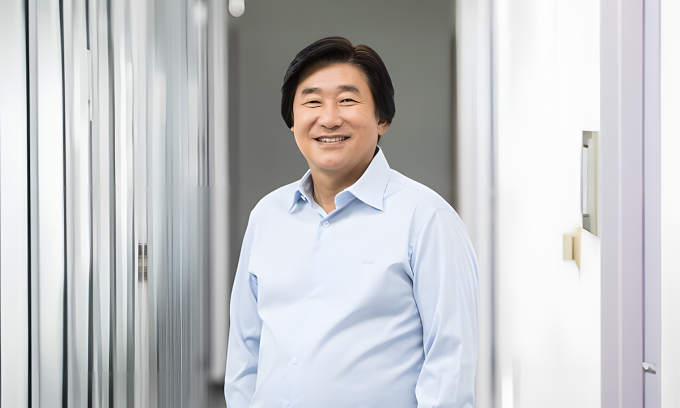
Yoon Dae-in, chairman of Sam Chun Dang Pharm, joined the ranks of the nation’s 50 richest this year at the 10th place after his company struck a deal to develop a weight-loss product.
Dae-in, with a net worth of $5.9 billion, has now surpassed many tech and media tycoons in wealth following the company’s agreement with Japan’s Daiichi Sankyo signed in January to develop a pill that works similarly to the weight-loss injectable Wegovy made by Denmark-based Novo Nordisk, according to U.S. magazine Forbes.
Two additional pharmaceutical entrepreneurs have entered the rankings for the first time. One of them is biologist Lee Sang-hoon with a net worth of $1.4 billion, ranking 39th in the country.
He is the chairman and CEO of ABL Bio, which develops antibodies to improve treatment outcomes for cancer and neurodegenerative diseases.
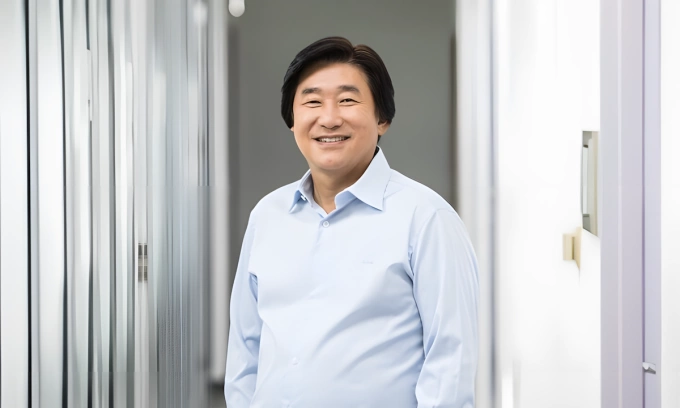
Lee Sang-hoon, chairman and CEO of ABL Bio. Photo courtesy of the company
It signed a $2.6 billion technology-transfer deal with U.S.-based pharma company Eli Lilly in November last year.
Another new billionaire is Hyuntae Kim (with a net worth of $1.3 billion), CEO of Voronoi, which is known for its AI-powered drug discovery platform and has two prospective cancer treatments in development.
These newly created fortunes underscore the growing prominence of South Korea’s healthcare sector, and more specifically biotech, as a pathway to wealth in a country long dominated by industries such as electronics, semiconductors and online gaming.
Six of the country’s 50 richest are in the healthcare industry, with one of them, Seo Jung-jin, claiming the third place with $8.1 billion in net worth.
Ho-Cheol Lee, senior analyst at Shinhan Securities, building credibility with global pharmaceutical leaders has been central to the sector’s rise.
Over the past year, Korean firms have signed more than a dozen joint research agreements with multinational companies, up from seven in 2024.
“This marks a dramatic acceleration,” he told Forbes. “Until 2023, the sector averaged fewer than three such deals annually.”
The increasing global profile of South Korea’s pharmaceutical players reflects a broader transition from domestic manufacturing to advanced research and development, according to Lee.
This shift, he says, has been driven by “several pioneer companies that successfully secured multibillion dollar licensing deals with Big Pharma.”
Among these trailblazers are Jung-jin, co-founder of cancer-treating drugs producer Celltrion and Park Soon-jae ($2.6 billion in net worth), founder of Alteogen.
The latter secured a $450 million licensing agreement with Merck in 2024 for a cancer therapy, sending its shares higher and earning Park a debut on the country’s rich list that year.
“These milestones proved that Korean biotech could move beyond domestic production to high-stakes research and development,” says Lee.