
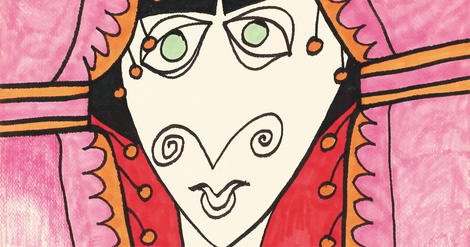
“Practicing an art, no matter how well or badly, is a way to make your soul grow,” wrote the indomitable Kurt Vonnegut in A Man Without a Country. Practicing what he preached, the acclaimed author of 14 satirical novels and countless short stories also dabbled in doodling, often with a felt-tip pen in the margins of his manuscripts. “This isn’t very good, is it?” he once asked his daughter Nanette about a drawing. It wasn’t, she said. He burned it.
We will never know how many doodles were set aflame, but Phaidon has managed to collect 150 survivors. Its coffee-table book Kurt Vonnegut Drawings, published last week, features an introduction by Nanette Vonnegut, an artist in her own right, who explains that her father truly believed that “people worked out their neuroses through art.” And so it goes with his drawings: Vonnegut suffered from chronic depression, survived a suicide attempt in 1984, and carried survivor’s guilt stemming from his experiences as a soldier in the Second World War, the subject of his 1969 breakthrough book, Slaughterhouse-Five. “I thought recounting the death and destruction of World War II was a bit more than working out a neurosis,” Nanette writes. “What I saw growing up was a man fighting for his life.”

Enter your e-mail to read the full story for free
and to receive our weekly e-mail newsletter
Subscribe to AIR MAIL for full access.
Already a subscriber? Sign in here