
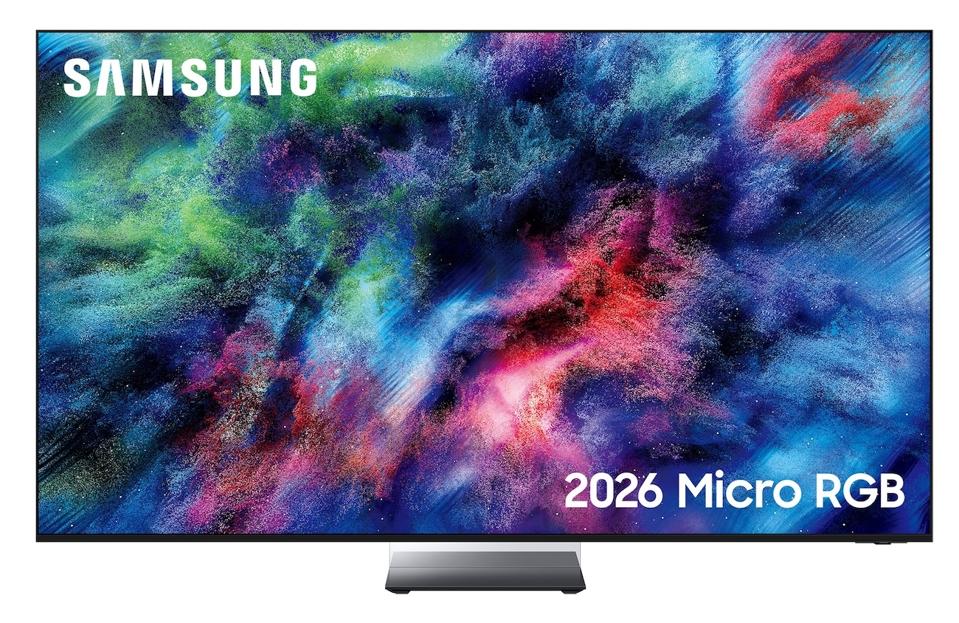
Towards the end of 2025, a couple of huge – literally – things happened in the TV world: First Hisense and then shortly afterwards Samsung unleashed king-sized TVs that used variants of one of the most potentially game-changing innovations in LCD TV history.
Hisense called it RGB Mini-LED technology, while Samsung decided to call it Micro RGB. At their heart, though, both these technologies were built on the same core principle: Replacing the old LCD TV approach of shining white or blue backlights through color filters with actual red, green and blue LEDs in every lighting “unit”. Cutting out the usual filters to deliver color literally at source in TV design terms was promised to deliver ranges of color unlike anything we’ve seen before – and both Hisense’s 116-inch and Samsung’s 115-inch TVs that introduced the technology proved that color point in spectacular fashion.
The only problem was that these two RGB LED tech debutantes were both too big and, with prices well above $20,000, too expensive for regular AV fans to do anything more than dream about. That dream just became much more of a reality, though, with the arrival of Samsung’s new R95H Micro RGB TVs.
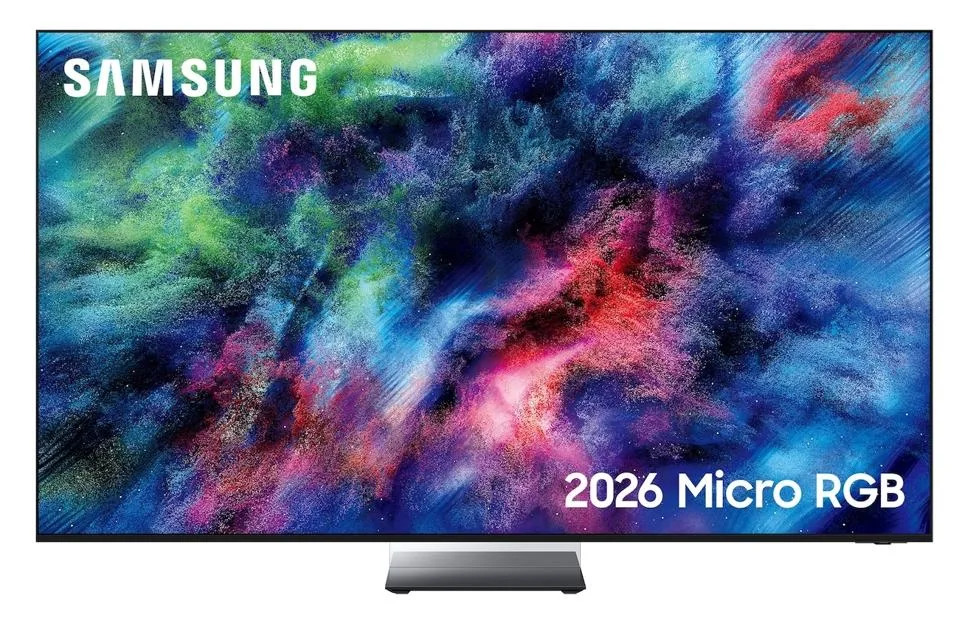
The Samsung 75R95H shows that Micro RGB is already a force to be reckoned with in the TV world.
Photo: Samsung
The R95Hes are the first sets I’ve seen from what promises to be a whole platoon of TVs arriving in 2026 featuring similar RGB technologies from most of the AV world’s biggest brands. Likely helped by the fact that they’re already Samsung’s second generation of Micro RGB TVs, though, the 75-inch R95H model I’ve spent a couple of weeks with suggests that the chasing pack are going to have to go some to keep up.
The 75R95H stands out from the TV crowd as soon as you look at it, thanks to its combination of a super-slim bezel, tidy, compact rear for a TV that uses LCD backlighting technology, and a neck for its provided desktop stand that enjoys a mirrored finish, creating the feeling that the screen it supports is floating in mid air.
It continues to establish a cutting edge feel with its connections. For as well as featuring four fully featured HDMIs built into its bodywork, it can also be partnered with an optional extra Wireless One Connect box that doubles the HDMI support to a remarkable eight. What’s more, the HDMIs on the One Connect box mean you can essentially connect an unprecedented eight HDMI sources to the TV at once. If you can find that many. Or you can use the Wireless One Connect box to stream four sources to the TV without having to add a single cable to the 75R95H’s minimalist chic.
Pictures from the optional Wireless One Connect can be transmitted in the full 4K/165Hz resolution and refresh rate Samsung’s TV can handle. Though gamers attracted by that level of resolution and frame rate should note that the Wireless One Connect boxes add almost 20ms to the time the 75R95H takes to render its images, while attaching a console to one of the HDMIs built into the screen reduces input lag to just 10.4ms in the TV’s Game mode.
The 75R95H carries plenty of the potent AI features covered in this earlier article on the Samsung S99H range, as part of brand’s new and improved Tizen operating system. It also joins the S99Hes in carrying a sound a 70W sound system able to share that power across a 4.2.2 multi-channel sound system. What makes the 75R95Hes ground-breaking, though, is their combination of new Micro RGB hardware with a new AI-driven Micro RGB AI image processing system. A combination that instantly makes the days of older LCD technologies look distinctly numbered.

The Samsung R95H series shows that Micro RGB technology can access color spaces other TVs cannot reach.
Photo: John Archer
The color potential of Samsung’s new screen technology is instantly obvious – provided, at least, that you’re watching using its Standard or Dynamic picture presets. These use the 75R95H’s AI-driven processing to expand today’s typically relatively conservatively mastered high dynamic and standard dynamic range sources so that they take more advantage of the screen’s advanced capabilities. Capabilities that include the ability to cover more almost 150% of the DCI-P3 color spectrum used in most HDR mastering, creating an essentially whole new color world, full of unprecedented vibrancy and dynamism.
AV purists only interested in seeing things “as the director intended” may well be rolling their eyes at this, wondering why any TV would need to stretch its pictures beyond the values and standards used to create them. This was a concern I had myself, in fact, before seeing what the 75R95H could do. The processing Samsung uses to exploit its panel’s capabilities, though, is so intelligent about the way it retains the relative weight between tones and preserves subtle blends, textures and tonal shifts in its expanded color world that for most of the time the expanded Dynamic or, especially, Standard preset picture still looks compelling, immersive and surprisingly natural. Colors don’t usually look alien or forced as I’d feared they might.
There are moments where this exceptionally thoughtful expansion of native color palettes goes too far, especially when it comes to skin tones in dark scenes that feature reddish lighting or mastering with relatively warm tones. But these moments are the exception that proves the rule of just how well Samsung’s TV – and potentially other upcoming TVs that use more or less the same core RGB LED technology – can infuse their new talents into existing content if their image processing systems are good enough. While we wait impatiently for content to start to arrive that might actually use the full range of this new generation of screens’ capabilities.
Samsung’s AI processing even manages to make SDR look like vibrant HDR – especially if you use the surprisingly effective HDR remastering option the 75R95H provides.
If AV purists still aren’t convinced that the extra color level Micro RGB and its like can find are what they want to see, the 75R95H is also very capable of turning its hand to accuracy. Its Filmmaker Mode preset ensures that both color and brightness stay true to the standards the video mastering studios typically use today, recording errors using Portrait Displays’ Calman Ultimate image analysis software that stay below the 3.0 DeltaE 2000 average level you’re looking for from an accurate picture. Filmmaker Mode images don’t just measure well ether; they’re subjectively enjoyable too, retaining more contrast, detail and black level depths than Filmmaker Modes usually do on LCD TVs.
While the 75R95H’s ground-breaking color performance is its biggest headline grabber, it’s not the only reason why Samsung’s TV signifies that we’re entering a new era of LCD TV performance. In particular, it also combines more than 1,700 local dimming backlight zones with the triple extra levels of light control you get when you have separate red, green and blue LEDs at your disposal, resulting in some of the deepest and most consistent clouding-free backlight control I’ve seen. While simultaneously maintaining levels of brightness that push almost to 2,500 nits of intensity. Pictures look almost OLED like at times, in fact – only with a wider color gamut and brighter full-screen HDR performance than OLED TVs can currently deliver.
OLED TVs, of course, still retain the edge when it comes to the pin-point accuracy of their lighting, thanks to each pixel being able to product its own light and color. But the 75R95H sets a new backlight standard for LCD TVs that we can only hope other premium RGB LED-type TVs will be able to follow/get close to given that they too will have the same separate red, green and blue LEDs to work with.
A further useful side effect of the Micro RGB technology used in the 75R95H is that even when backlight blooming does appear to a limited extent around a stand-out bright object, the blooming carries the main color hue of that object, rather than appearing in white or grey as it does with regular LED TVs. This makes the blooming much less distracting, as it can often feel like the natural halo effect your eyes experience when they look at brightly colored objects in the real world.
While other upcoming RGB LED TVs may well struggle to handle their groundbreaking new capabilities as well as the 75R95H does, Samsung’s TV shows already that the new technology can be much more than marketing hype, adding new color dimensions to today’s picture sources without making them look weird, while also being capable of reining itself in to deliver accurate results on movie nights if that’s what you want.
In other words, the 75R95H suggests that far from being another of those flash in the pan technologies the AV world has seen come and go over the years, Micro RGB technology and its like is already looking well set to become the new de facto LCD TV technology. Especially if it turns out that it can scale down well to relatively cheap models rather than just being a success in the premium TV world.
—
Related reading
Samsung’s QD OLED 77S99h Is The Most “Something For Everyone” TV I’ve Ever Seen
Hisense unveils New ULED MiniLED TVs
Sony Reveals More Details Of Its New Flagship RGB LED TVs – Including ‘True RGB’ Branding
This article was originally published on Forbes.com