
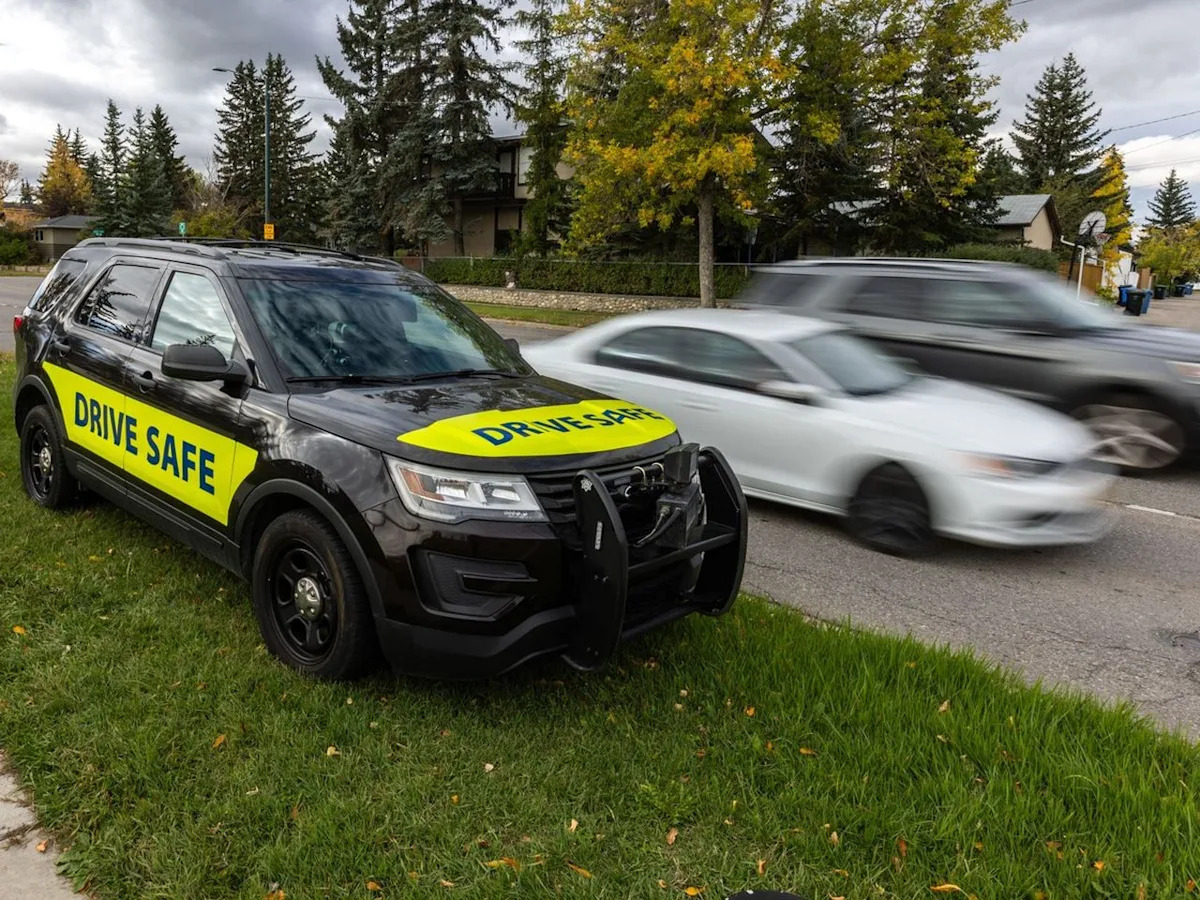
Calgary police say they’ve handed out the equivalent of about one speeding ticket every 10 minutes in the first 10 weeks of this year.
Of those, 123 tickets — an average of more than one a day — have been issued for vehicles going in excess of 50 km/h over the speed limit.
According to most recent data, which reflects totals as of mid-March, 30 per cent of the 10,493 tickets written this year have been officer-issued, while the remainder were through photo radar and cameras. More than 300 officer-issued speeding tickets were given out in construction zones.
Traffic safety continues to be a top concern for the Calgary Police Service but Staff Sgt. Andy Woodward said in a recent press conference that the problem doesn’t seem to be getting any better.
“Currently, we’re trending in the wrong direction,” he said. So far this year, police have responded to 10 fatal collisions, four of which are believed to be speed-related.
Last year, there were a total of 38 fatal collision, with speed believed to be a factor in 15 of them, and in 2024, 10 of the total 29 fatalities were believed to be speed-related.
Related‘The majority of collisions … come from poor choices’
“We’re just asking motorists to slow down, keep their distance from the vehicle in front of them, and be aware of their surroundings,” Woodward said.
“The majority of collisions are preventable. They come from poor choices — driving too fast, glancing at your phone, ignoring traffic lights and signs. These choices, these decisions, can have deadly consequences.”
Though Woodward cited speed and distracted driving as the two top contributors to traffic safety incidents, the number of speeding tickets issued has seen a decline in the past two years.

Sgt. Andy Woodward is seen on March 26, 2026. With a high number of fatal collisions in recent times, many of them due to excessive speed, the Calgary Police Service and City of Calgary are reminding Calgarians that traffic safety is everyone’s responsibility.
In 2025, a total of 99,873 speeding tickets were issued, down from 210,447 in 2024. However, a significant majority of that drop can be attributed to the province’s restrictions on automated traffic enforcement beginning April 1, 2025, which resulted in the removal of speed-on-green cameras.
The city has since received approval from the province to restore speed-on-green enforcement at five high-risk intersections.
870 tickets were issued last year for speeds more than 50 km/h over the limit, which dropped from 1,004 in 2024. However, numbers are still trending upward over the last five years.
City touts Vision Zero plan to cut collisions
“We want to remind everyone that traffic safety is everyone’s responsibility,” Woodward said, adding that although the lack of improvement “does get frustrating,” he remains confident in the partnership with the city on the Safer Mobility Plan, which aims to reduce harm on the city’s roadways.
“We’ve got to keep moving forward with that,” he said. “We’ve got a good relationship with the city in the way that we’re working, and we have to be confident in what we do.”
The Safer Mobility Plan is the city’s strategic plan toward Vision Zero, a global initiative aimed at achieving mobility free of fatalities and major injuries.
The plan aims to reduce fatal and major-injury collisions, as well as pedestrian, bicyclist and motorcyclist collisions, by 25 per cent between 2024 and 2028.
For police, that means a combination of enhanced education around traffic safety and enforcement.
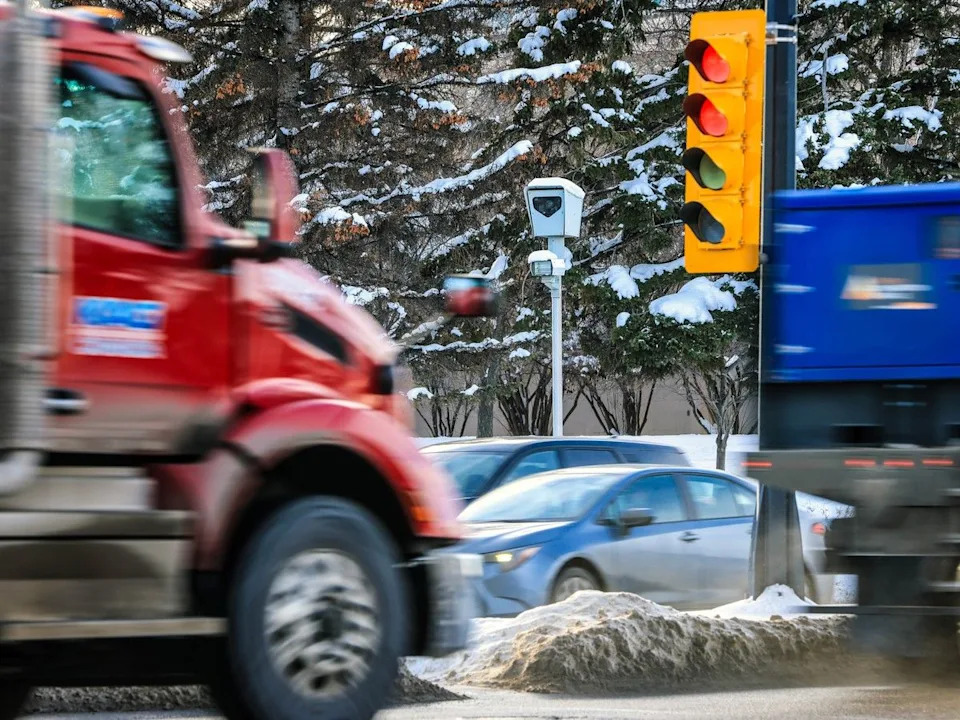
The province has agreed to allow Calgary to restore speed-on-green camera at a number of high-risk intersections.
Police and partners target high-risk driver behaviour
“We are committed to reducing fatal and serious-injury collisions through community safety education and using data and community feedback to guide our enforcement efforts,” the Calgary Police Service said in a statement. “We prioritize high-risk locations and protecting vulnerable road users such as pedestrians, cyclists and motorcyclists.”
That work is a shared effort with the city, the province, school boards and a variety of community organizations, with a focus on high-risk behaviours, namely speeding, impaired driving and distracted driving.
“While we and our partners have identified key areas where we will be looking to improve enforcement, engineering, education and engagement, we unfortunately cannot be everywhere at all times, and we rely on people in our community to watch out for each other, travel with care and caution, and remember that we all need to share the road.
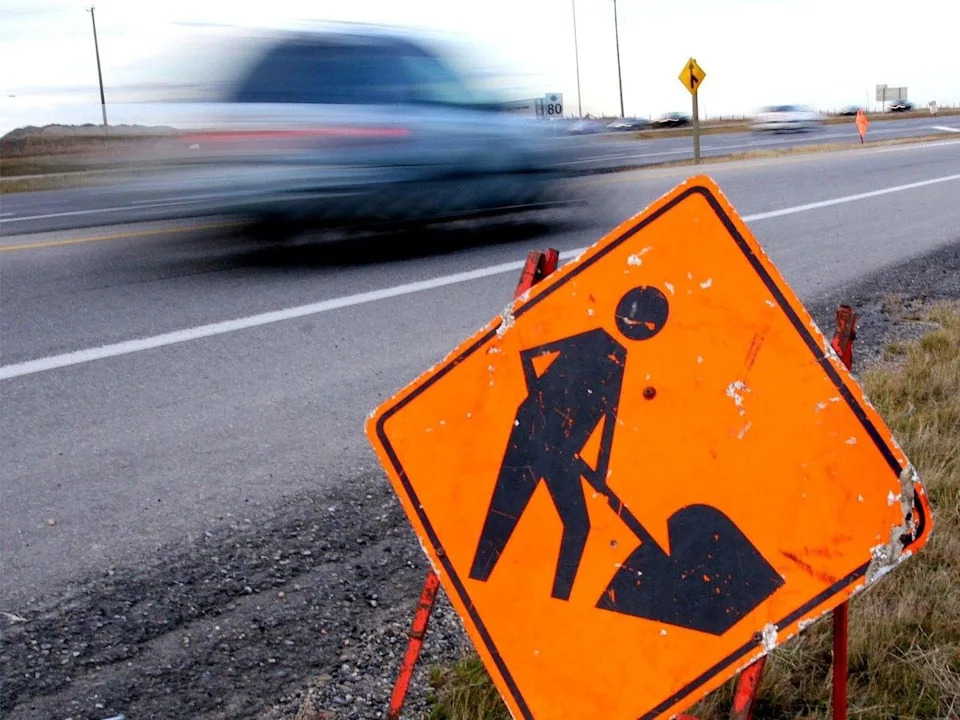
More than 300 officer-issued speeding tickets were given out in construction zones from January to mid-March 2026, Calgary police say.
The city’s role in the Safer Mobility Plan includes improvements to planning and infrastructure such as signal and crosswalk upgrades, curb extensions and speed cushions, as well as community services and partnerships.
Troy McLeod, the city’s director of mobility, said in a recent press conference that recent collision trends have highlighted the need for ongoing improvements.
“We are actively working with partners like the Calgary Police Service, bylaw officers and subject matter experts to review compliance trends, upgrade traffic controls and promote educational campaigns about safe driving and crossing,” he said.
City council has allotted an additional $7.5 million for necessary infrastructure improvements, he said, which is “a significant increase” over the program’s regular budget. However, infrastructure alone won’t solve the problem.
“It’s a welcome addition as far as investment, but the real benefit will be around driver behaviour and just not driving distracted, not walking distracted, just avoiding distraction altogether,” McLeod said.
“We urge everyone — drivers, cyclists and pedestrians — to stay alert, to avoid distraction and look out for one another.”
Bookmark this website and support our journalism: Subscribe now so you don’t miss the news you need to know and sign up for our free newsletters.