

Listen to this article
Estimated 4 minutes
The audio version of this article is generated by AI-based technology. Mispronunciations can occur. We are working with our partners to continually review and improve the results.
As the cost of everything from gas to groceries continues to rise, many British Columbians are choosing to be a little more careful about where they park their hard-earned dollars.
In Kamloops, some business owners say the trend is having an effect on their bottom line.
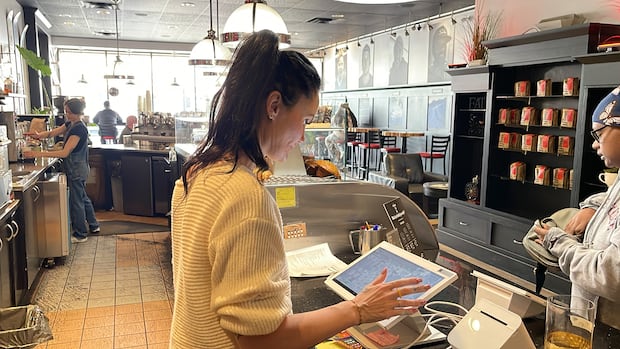
Carine Spiliotakis owns Caffe Motivo in the heart of the city’s downtown.
She said that while the regulars are still coming in, they’re often less willing to pick up a treat to fill out their order.
WATCH | Weak growth forecast for B.C. economy: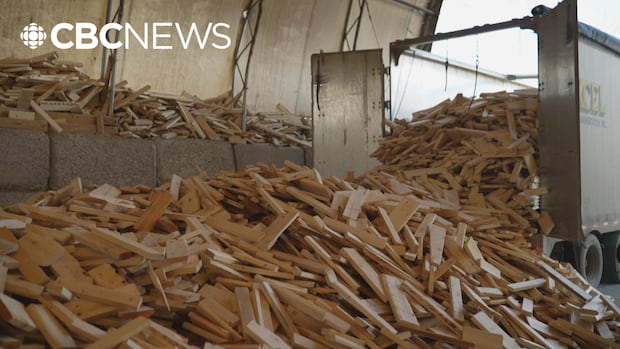
New economic outlook forecasts weak growth for B.C. in 2026
A new report says B.C.’s economy is expected to grow 1.6 per cent this year, a slight uptick from 2025, but a poor increase as considered by experts. As Tanushi Bhatnagar reports, it is due, in part, to pressures on the province’s forestry sector.
“Just being cautious about it, like not just getting whatever they want, kind of thinking about it a little more,” she said.
“This morning somebody came in and they wanted a coffee and a muffin — then they thought, ‘Oh, OK, well maybe I’ll just get the coffee.’”
It’s a trend barber Johanna Marie said she’s noticed as well.
Customers are less willing to splurge on higher-end services, she said, and when they do, visits are fewer and farther between.
 Barber Johanna Marie says fewer customers are willing to spend on higher-end services lately. (Shelley Joyce/CBC)
“It’s classified as a treat because they are more expensive than an average haircut,” she said.
“People used to get haircuts every three weeks. Now it’s turning into a month to every couple of months just because of inflation, prices going up everywhere.”
Carl Arnett, who sells and repairs bikes at Cycle Logic, said people are trying to get more out of the gear they already have.
“People are trying to just do what they can with the bikes they have as opposed to shopping around, trying to get every little niche filled,” he said.
“People are trying to make their one bike be a more ‘do it all’ bike.”
WATCH | People spending less amid rising costs, say Kamloops businesses: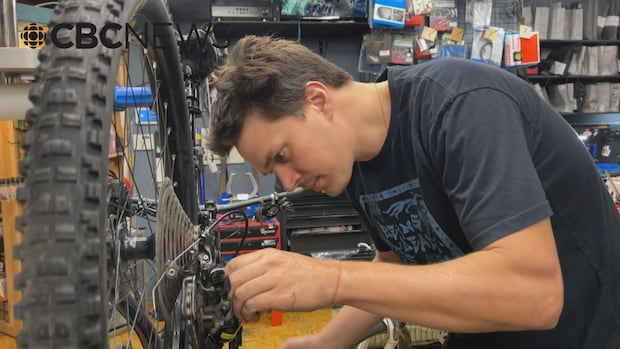
Rising costs impacting discretionary spending, businesses say
Kamloops business owners are changing the way they budget based on consumer anxiety. They say the rising cost of gas and groceries is having a major impact on people’s lifestyles, including how much they’re willing to spend on things like pastries and haircuts.
Data from Statistics Canada suggests British Columbians are paying more to get by than in any other province.
According to what’s known as the “market basket measure,” a metric that looks at the cost of a basket of goods deemed essential for a “modest, basic standard of living,” an average B.C. household would need to spend $56,059 per year to live “modestly.”
The latest data available from the provincial government shows overall inflation eased in February to 1.7 per cent higher than the same month last year.
But key categories, including food (4.5 per cent) and health and personal care (4.4 per cent) saw significant increases.
Dean Prentice, a licensed insolvency trustee with MNP, told CBC News many British Columbians are relying on debt to fuel spending.
“People are making the choices on their day-to-day spending, but they’re still not cutting out or cutting back on larger expenses,” he said.
“Car loans, lines of credit, credit cards, these debt amounts are rising. So people are still using credit and still spending.”
Prentice said MNP’s latest consumer debt index found 37 per cent of British Columbians said they were $200 away from not being able to pay their bills.
Despite that, Prentice said British Columbians have shown more optimism than other parts of the country like Ontario, which has been battered by auto tariffs.
“The economy has been a bit more stable, that’s given people some confidence that it’s not getting worse,” he said.
“They still have their jobs, they still have their income … they find that they have a little bit more money left at the end of the month.”