
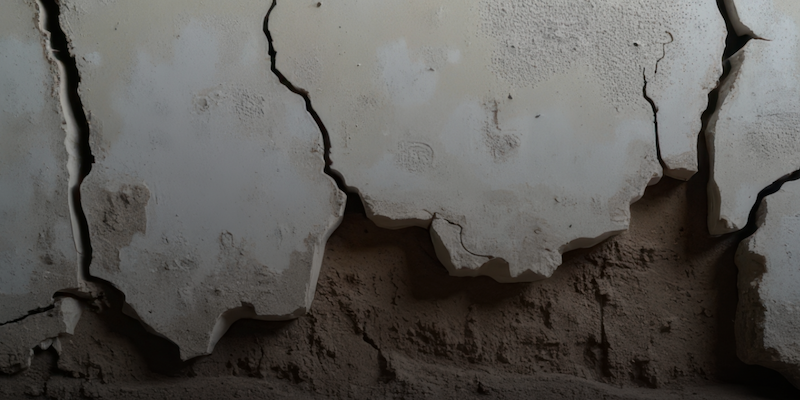
Photo courtesy HKA.
Water is Earth’s most dynamic force – it is a shapeshifter governed by celestial mechanics and geological constraints and it requires a vigilant approach to engineering for construction projects, large and small. When it comes to the impacts of rainfall and groundwater, there is much more than meets the eye. Water can act as both architect and stealth saboteur, with the power to support or destroy foundations, infiltrate the bones of buildings and compromise structural integrity if not factored into site planning, design and construction with thorough technical expertise and foresight.
From weather systems shaped by solar heat and planetary motion to the fundamental laws of water’s underground behaviour, understanding water dynamics and the silent implications for engineering is crucial for avoiding costly, destructive issues and rectifying failures alike.
Understanding how water moves: From atmospheric currents to underground flows
Earth’s weather is a vast, interconnected machine powered by two primordial forces. The sun’s radiant energy warms the planet unevenly, creating temperature gradients that force air and water to move as nature attempts to redistribute heat. At the same time, the Earth’s rotation generates prevailing wind patterns and shapes ocean currents, affecting climates and distinct microclimates in which buildings and infrastructure must withstand specific weather conditions.
While understanding weather patterns, especially those related to precipitation, for any given site is necessary for sound engineering, they must be assessed in the context of how water behaves at the Earth’s surface. Rainfall can sheet across city streets, erode bare hillsides and swell creek beds into torrents. A downtown block may shed 90% of rainfall as runoff, but a less developed landscape with more vegetation might absorb 90% of it back into the Earth. The latter prevents floods, whereas the former creates them.
Soil science matters
Not all ground absorbs water equally. Scientists classify soil by texture and infiltration rates. These properties affect three critical engineering criteria: the soil’s bearing capacity, the soil’s impact on structural settlement, and the soil’s behavior when subject to groundwater migration.
The ideal soil composition for structural bearing capacity is a mixture of various soil types called engineered granular fill. A well-distributed range of soil particle sizes blends the strengths of each soil classification to provide strength, drainage, and resistance against settlement. See the table below for the features of the multiple soil types.
Soil types and features
Soil type
Particle size
Permeability
Where found
Water impact
Gravel
>2 mm
Lightning fast (10+ in./h)
Riverbeds, construction fill
Drains instantly
Sand
2.0-0.05 mm
Fast (6 in./h)
Beaches, deserts
Water slips away, causing drought-prone conditions
Silt
0.05-0.002 mm
Moderate (0.2-0.6 in./h)
Floodplains, midwestern farms
Holds moisture, but erodes easily
Clay
<0.002 mm
Slow motion (0.02 in./h)
Urban wetlands, southern states
Water pools, causing swelling/shrinking
Loam
Balanced sand-silt-clay
Controlled
(0.6-2 in./h)
Healthy forests, vineyards
Stores water, yet drains excess
Water’s underlying structural implications
Beneath every building, unseen tension is constantly at work as soil and water conspire to uplift, crack and damage built structures. These conditions, specific to individual locations and climates, create obstacles that can seriously undermine a building’s stability and incur hefty remediation costs. Some of the most common water-related challenges builders face—and engineering solutions that address them—include:
Seasonal shifts. Beneath the surface, water wages seasonal battles that reshape landscapes and infrastructure. When saturated soils freeze in winter, they expand by 9%, generating enough force to snap concrete footings at 2,000+ pounds per square inch (PSI) and lift fence posts by 4 in. in a single season. Ad-freezing, where frozen soil bonds to foundations, creates uneven uplift and additional engineering challenges. Conversely, clay soils shrink as they dry in the summer, forming deep desiccation cracks and causing buildings on shallow foundations to tilt several degrees. In fact, the Leaning Tower of Pisa owes its famous tilt in part to seasonal fluctuations in groundwater levels.
Engineering solutions: It is imperative to ensure the underlying soil can withstand seasonal changes in groundwater and temperature. Deep foundations can mitigate the effects of surface soil drying, and foundations must be constructed beneath the frost penetration depth to avoid frost heaving. Installing a drainage layer against the foundation wall can also mitigate frost heaving. Additionally, adequately reinforcing footings can help resist uplift forces from a rising groundwater table.
Rising water tables. Water that is absorbed back into the Earth does not sit still. It percolates down until it hits bedrock or the water table, then flows sideways, often for years, through what hydrologists call “the unsaturated zone.” Water tables are rising in many coastal areas due to rising sea levels. This occurrence can exert 62.4 lb/ft³ of uplift, enough force to cause structural damage to a building foundation without proper drainage or waterproofing systems, or to a concrete slab built on clay soil.
Engineering solutions: Designing appropriate stormwater site and foundation drainage is key to managing groundwater. The use of a clear drainage layer beneath the foundation can also be considered. To combat uplift, a building foundation can be designed with adequate reinforcement and size to resist the force or deep foundations can be used to increase uplift resistance using either anchorage to bedrock or frictional resistance. Alternatively, structures can be designed and built above the high water table or groundwater flow by raising the grade or elevating the structure.
Ground sinking or settling. In contrast to rising water tables, pumping large amounts of groundwater for irrigation, industrial purposes or human consumption compresses the Earth’s aquifer layers. This causes subsidence, the gradual sinking or settling of the ground. As aquifers compress, Mexico City sinks almost two inches each year, Venice sinks 1 to 2 mm annually and Bangkok’s skyscrapers require hydraulic jacks to remain level.
Engineering solutions: In addition to managing groundwater, the building design should incorporate appropriate measures to prevent subsidence-related issues. For example, a building can be supported on deep foundations resting on firmer, denser soils. Another option is to inject grout or cement into the soil to provide a stronger and stiffer base to support the building.
Hydrostatic pressure. Underground water at rest exerts hydrostatic pressure on building foundation walls and slabs, which must be anticipated and accounted for by construction engineers, especially in areas with rising water tables or heavy rainfall. This pressure can exert 9.81 kilonewtons (kN)/m² per meter of depth and cause horizontal cracks at approximately one-third of the wall height where the bending stress peaks. It can also cause inward bowing of cinder block walls at sustained pressures of 15+ kilopascal (kPa) and shear failure at wall corners when pressure exceeds 35 kPa.
Engineering solutions: Reinforcing foundation walls and creating a clear drainage layer against the exterior face of the foundation walls allows groundwater to drain down toward a foundation drainage system, alleviating hydrostatic pressure. Internal reinforcement with buttress walls, shear walls or other horizontal assemblies, such as floors, can also assist with lateral resistance against hydrostatic pressure.
Premature deterioration. Water’s physical properties attract it to porous materials due to capillary action. This means water can climb concrete pores up to 15 feet, rusting rebar from within and leading to the premature deterioration of masonry or concrete. In regions with winter weather, repetitive freeze-thaw cycles can significantly worsen damage to building materials, particularly concrete or masonry that is not adequately protected against moisture and freezing.
Engineering solutions: To combat this challenge, crystalline waterproofing can be used to fill the capillaries of porous building materials, creating a watertight barrier that helps uphold structural integrity. Additional solutions include other forms of waterproofing, extending foundations above finished grade (ground level), and intentionally using less permeable building materials. For concrete, adding air entrainment of 5% to 8% (essentially small air bubbles) also mitigates the adverse effects of repetitive freeze-thaw cycles.
Ultimately, each building demands its own careful technical analysis and engineering measures to safeguard against the effects of water, which can be disruptive at best and catastrophic at worst. Even seemingly minor miscalculations or oversights can stress or strain structural systems, emphasizing the need for rigorous evaluation and planning.
Working with water, not against it
From the moment rain touches the ground to its slow journey through soil and rock, water follows the relentless laws of physics—seeping through cracks, expanding when frozen, and pushing against anything in its path. The difference between a flooded basement and a stable foundation, or between structural supports eroding or remaining intact, often comes down to one principle: understanding how water moves.
Modern engineering must design buildings to coexist with water’s natural behavior. Whether it is directing runoff away from foundations, choosing the right soil for proper drainage, or protecting concrete against freeze-thaw cycles, the best solutions work with water’s forces, not against them. As climate change brings heavier rains and more extreme droughts, these strategies are not just smart—they are essential for building resilient, long-lasting structures.
Edward Poon is a forensic engineer and director with HKA. He has more than 20 years’ experience in the construction industry.