
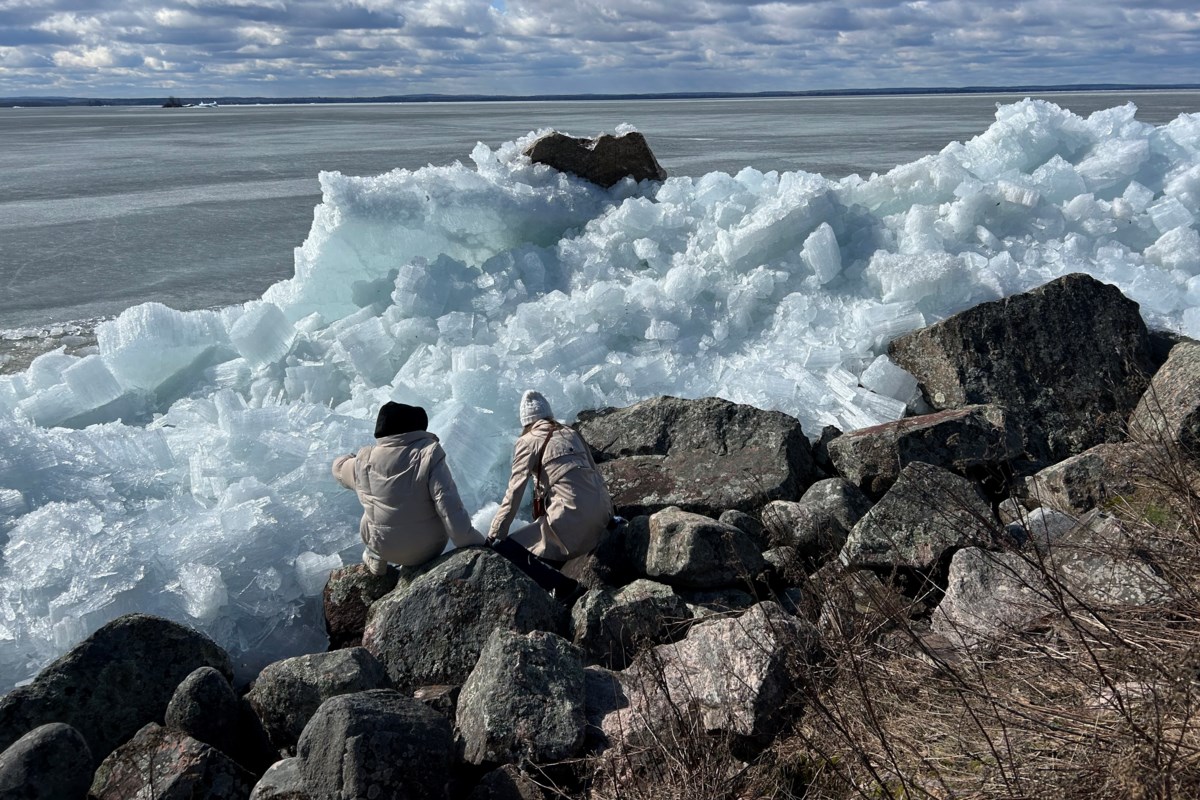
As temperatures climb in North Bay, a different kind of spring hazard is taking shape on Lake Nipissing: an “ice tsunami,” or ice shove, capable of piling jagged slabs into towering ridges and pushing them onto shore with little warning
As spring slowly returns to North Bay, residents are witnessing a formidable natural spectacle along the shores of Lake Nipissing.
The “ice tsunami,” known scientifically as an ice shove, creates massive walls of jagged ice that can reach heights of 40 feet in minutes, bulldozing everything from docks to lakefront cottages.
It doesn’t happen every year, as ice conditions and wind direction vary from year to year, but conditions are now ripe, especially with the high water levels threatening flooding.
See: Lake Nipissing already reaches summer navigational levels and continues to rise
They can be dangerous, attracting thrill seekers to climb on the unstable ice mounds, prompting police to warn residents to stay off the ice. Warmer daytime temperatures create weak points that can easily break or crumble, creating dangerous situations.
According to meteorologists, the phenomenon is triggered by a “perfect storm” of three specific conditions: rotting ice, high winds, and open water fetch.
The process begins during the spring thaw when the lake’s solid winter lid begins to “rot,” breaking into large, free-floating pans. This creates a frictionless environment where the ice is no longer anchored to the shoreline.
When a powerful low-pressure system moves over the region, sustained winds, in North Bay’s case from the west, act like a sail against the surface of these ice sheets. Because large lakes like Nipissing provide a long “fetch” (the distance wind travels over open water), the wind builds immense momentum. The water beneath the ice also shifts, creating a surge that lubricates the shoreline, allowing the ice to slide effortlessly onto land.
Temperature fluctuations play a secondary, stealthy role. When temperatures rise rapidly after a deep freeze, the ice sheet expands. If the lake is “landlocked” with no room for the ice to grow outward, the pressure must be released upward and inland.
As the ice hits the shore, it doesn’t just stop. The sheer mass of the lake’s ice cover behind it acts as a piston, forcing the leading edge to stack vertically. The result can be a slow-motion disaster, a grinding, tinkling sound of breaking glass that carries the force of a freight train, reminding residents that even as winter fades, the Great White North still has teeth.
See: Winds driving ice tsunamis onto North Bay shoreline
And: Police warn to stay away from giant ice piles on the waterfront
Lake Nipissing is usually ice-free around May 1.