
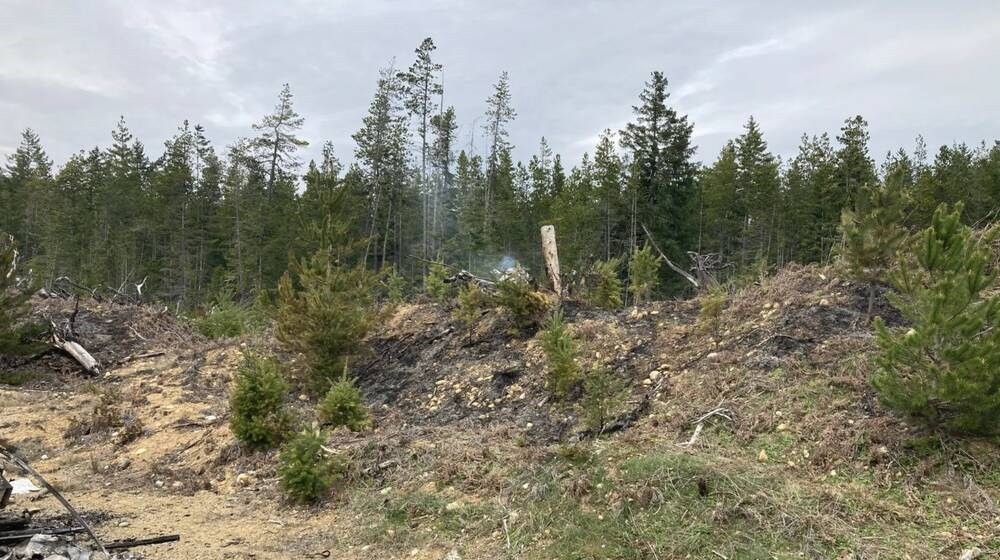
The fire near Horne Lake comes just days after the B.C. Wildfire Service warned of an elevated risks of fires due to drought this spring and into the summer.
A wildfire sparked by a burning vehicle scorched a small area near Horne Lake on the weekend, just days after the B.C. Wildfire Service warned of an elevated risk of fires this spring and into the summer due to warmer temperatures, reduced snow pack and prolonged drought.
The wildfire southwest of Qualicum Beach, estimated at 0.1 of an hectare, is the first of the season on Vancouver Island. It was considered under control and was not expected to spread outside the existing burn area.
The RCMP are investigating the cause of the vehicle fire.
The Bow Horn Bay Fire Department initially responded to the scene, but advised wildfire officials after determining the blaze was outside its response area.
The B.C. Wildfire Service dispatched a response officer and three firefighters to douse small fires that spread to surrounding vegetation.
Most of Vancouver Island and the South Coast are currently rated as “low” or “very low” for fire risk.
However, North Cowichan currently has a “moderate” rating, which is an indication that materials on the forest floors are drying, causing an increased risk of surface fires, said the wildfire service.
Temperatures on the Island and the province are also warming, with many areas seeing highs of 20 C over the weekend.
Port Hardy broke a decades-long record on Sunday when the temperature hit more than 19 C, breaking a record in place since 1950.
Comox recorded 20 C, tying with its previous high-temperature record reached more than a century ago in 1915.
The Interior town of Cache Creek hit a high of 27 C on Sunday, breaking its previous high mark of 25 C set in 1981. In Clinton, the temperature reached 21 C, edging out a record set in 2010.
The B.C. Wildfire Service said in its seasonal outlook last week that there is an elevated risk for wildfires in some parts of the province — chiefly in the Chilcotin and South Thompson regions — and that the severity of fires throughout the province will depend on how much rain falls in May and June.
There are also concerns about the snow pack in some areas. The provincial snow pack was 92 per cent of normal as of April 1, which was higher than the same period a year ago.
However, the Island had a much lower snow pack, at 44 per cent of normal.
A reduced snowpack is increasing drought hazard in the Cariboo, South Interior, Okanagan and Boundary area and extending across to the South Coast and on Vancouver Island.
“Areas of below-normal snowpack show early concerns for drought conditions which could amplify fire behaviour this spring and summer,” said the B.C. Wildfire Service.
— With files from The Canadian Press