
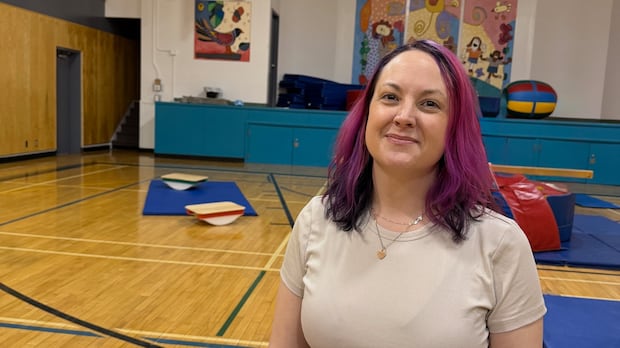

In March of 2020, Amanda Rintisch and her colleagues in Parkland School Division stood in a silent, shocked huddle near the secretary’s desk at the end of the school day.
Most of the world was focused on the looming pandemic. Rintisch was trying to wrap her mind around something more personal — a set of provincial government funding cuts that would profoundly change Alberta’s support for pre-school kids with behavioural, language and learning challenges.
Five years — they said to each other.
“In five years, the results of these cuts are going to be so glaringly obvious, no one is going to be able to ignore it,” said Rintisch, recalling that moment in an interview years later.
Language, learning and behaviour problems that aren’t corrected will continue, she predicted.
What has been your experience with Alberta schools? Whether you’re a teacher, parent or student, we want to hear from you. Send an email to ask@cbc.ca. Read our Inside the Classroom series atcbc.ca/inside.
“It will hit kindergarten first. Then Grade 1. In five years, you won’t be able to ignore it anymore. It won’t just be a little kid problem.”
The cuts to the Program Unit Funding (PUF), which supports kids who are two to five years old, took effect in fall 2020. Today, five and a half years later, classroom complexity is dominating education news. It was a central issue in the teacher strike last fall, and since then, the provincial government has promised to fund hundreds of new teaching teams to intervene in the hardest hit schools.
The complexity and chaos in today’s classrooms is also part of why teachers are now deeply divided on the long-held vision of inclusive education — teaching students with disabilities within mainstream classrooms — something Alberta proudly promoted for decades.
But this is not a simple story.
Alberta’s kids have lived through a pandemic, and schools here are still accommodating a historic surge in enrolment. Those are reasons why complexity has grown. And even as Alberta’s early-learning support for kids with disabilities stumbled, school districts have been trying to find other ways to support kids with severe learning challenges.
How pre-kindergarten changed
Rintisch’s story is a piece of the puzzle. She’s been teaching special education for kids, ages two to five, since she started working almost 20 years ago.
She says, for years, the model worked really well. Her old classes had a couple of kids with severe learning needs, maybe one in a wheelchair and another struggling to speak, plus half a dozen kids with mild or moderate challenges and a few neighbourhood kids who paid a small fee and came just for inexpensive pre-school.
The kids who could hold a pencil and join a sing-a-long inspired the others to try, and the class had daily visits from specialists — speech language pathologists, physical therapists and educational psychologists.
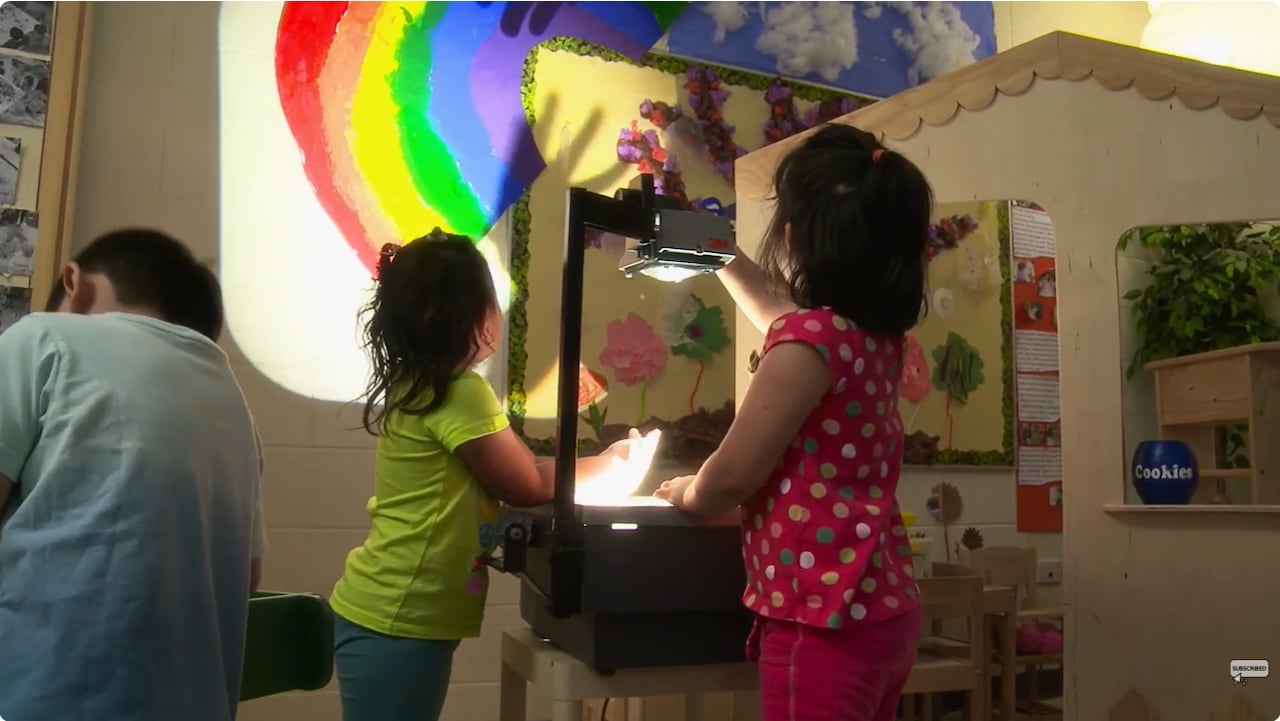 Children play with light in the 100 Voices pre-school program in the Edmonton Catholic School Division prior to the provincial government spending cuts. (YouTube/Edmonton Catholic School Division)
Then came the cuts. The provincial government cut back funding for mild and moderate disabilities, cut the number of years kids could access help ahead of grade school, reduced targeted funding for kindergarten kids, and reduced co-ordination funding for specialists, especially for publicly-run pre-school programs.
In jurisdictions where pre-k childhood support had been delivered mostly by public school districts, programs were slashed or cancelled.
Edmonton Public School Division closed 26 early learning sites when the cuts hit and still have only six sites operating, according to officials. Edmonton Catholic officials said they closed 42 sites, leaving 10 in their 100 Voices Program in fall 2020. In years that followed, they closed further sites and are only now increasing again to seven sites next year.
Lethbridge School Division dropped from 19 sites to 10; Calgary public dropped from 16 pre-school sites to just three. Calgary Catholic officials said they have never had a large PUF-funded program, and have always relied more on private operators such as Renfrew Education and Providence.
Rintisch moved from the Parkland School Division to a school in Edmonton and says she started seeing many kids show up for school unprepared.
‘Oh my God, no one has diagnosed you yet’- Amanda Rintisch
“I taught kindergarten many times and these kids would come in. They have never set foot in a daycare. They have never set foot outside of their houses, in some cases. They walk into kindergarten and you look at them and you go, ‘Oh my God, no one has diagnosed you yet.’”
“We are talking about thousands … of young children going into kindergarten every year who received either minimal support or no support whatsoever before stepping into that school.”
Loss of faith in classroom inclusion
CBC News reached out to Rintisch after she responded to a CBC teacher questionnaire in January. We asked if there are children in regular classrooms today who would be better served in a specialized program for kids with needs similar to their own, and 89 per cent of more than 6,000 respondents either agreed or strongly agreed.
Then we tried to understand levels of support for inclusive education. We asked if teachers agreed or disagreed with the statement: The vast majority of kids with complex needs, even severe needs, should be included in regular classrooms. Inclusion just needs better funding and support.
The results were split down the middle.
Rintisch still strongly supports the idea of inclusion. She says kids with exceptional needs and everyday needs benefitted from that model before the cuts, and even kids who started out non-verbal often went on to speak, read and graduate because they were included.
But she also says Albertans need to understand the impact of today’s lack of resources, and the “severe harm being caused to disabled students, other students and staff by the horrifying conditions in schools.”
A brief history of Alberta’s efforts on inclusion
Inclusion officially started in Alberta in 2003, when the province adopted the Standards for Special Education.
Lorraine Stewart worked with Alberta Education at the time. She says parents had been increasingly asking for their kids to be included, and some school districts were trying to accommodate. The province was one of the first in the country to set a province-wide standard, specifically committing to welcome children with disabilities into neighbourhood classrooms.
It defined “inclusive education as the first placement option that we look at, until that’s not the option that works best,” said Stewart, who is now president of the Alberta School Boards Association.
To support the new effort, the province directed funding to follow specific students with “codes,” like mild, moderate or severe.
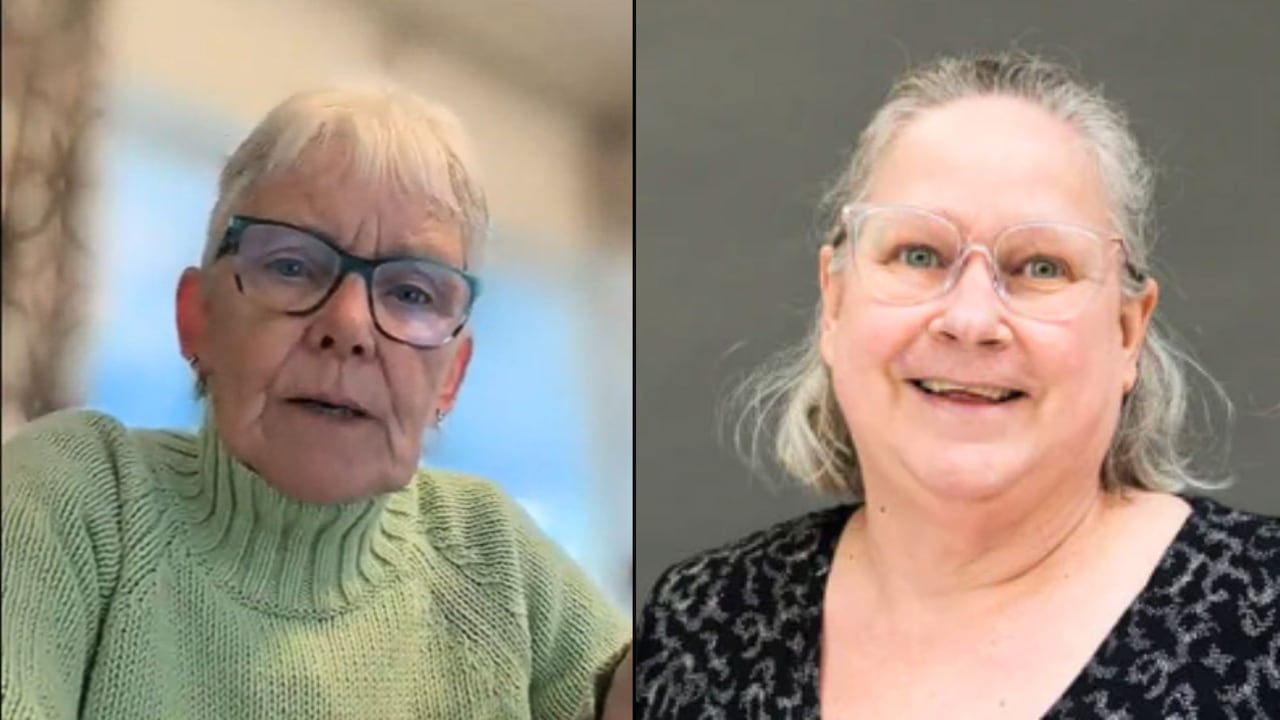 Lorraine Stewart, left, worked for Alberta Education in the past and in now president of the Alberta School Boards Association; Monica Braat, right, lives in Medicine Hat and is past president with Inclusion Alberta. (Elise Stolte/CBC)
The province moved even further to inclusion around the early 2010s. A new provincial plan called Action on Inclusion called for teachers to see all students on a continuum of needs and to change the classroom environment and how teachers teach rather than “changing the student.”
Alberta also changed the funding model to give a lump sum directly to school districts to support complexities, rather than tying it to individual students with identified needs, said Stewart. And it created cross-ministry teams of education, health and child family services experts to co-ordinate support, so teachers didn’t have to also be nurses and social workers. That was called regional collaborative service delivery (RCSD).
Many different efforts to support and include all kids grew under that framework. But then came 2020.
Funding for the cross-ministry teams (RCSD) was cut or shifted elsewhere, and the simultaneous cut to early education (PUF program) had a huge impact, said Monica Braat, past president of Inclusion Alberta.
“You ended up with these kids who weren’t getting those early interventions,” she said. “Those kids are now coming through the grade school system.”
At the same time, pandemic shutdowns interrupted in-person schooling, friendships and normal socialization for kids across the system. And after the pandemic eased, immigration and the “Alberta Is Calling” campaign led enrollment in Alberta schools to surge.
On top of all that, support from other government agencies has become more difficult to access, said Braat. She said Alberta’s Family Support for Children with Disabilities, which also used to help families in those early years, now has a waiting list of three years.
Assisted Living and Social Services declined to comment on the time it takes to secure help for kids with disabilities except to say demand is high.
Families are missing that help, Braat said.
“The social emotional regulation, speech and language — those are the things that are really focused on in those early years. So if we don’t have those foundations, how do you keep moving forward?”
Minister says he boosted the funding
CBC invited Education Minister Demetrios Nicolaides to speak to this issue on The Eyeopener. He wouldn’t say if the 2020 cuts to early learning support by his predecessor had been a mistake, but said since he became minister he’s made significant investments.
“I’ve directed substantial investments to early intervention programs. We’ve made significant investments to the PUF program that supplies some of that early intervention,” he said.
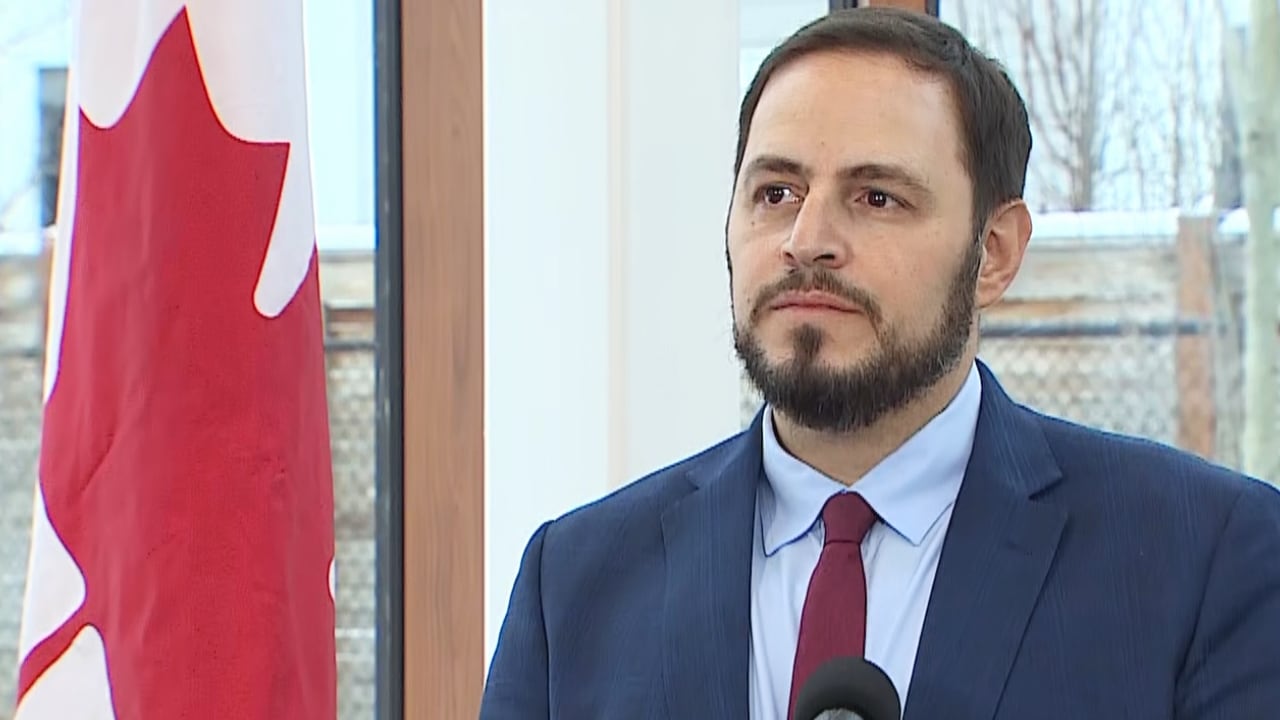 Demetrios Nicolaides says he substantially boosted funding for early education since becoming Alberta’s education minister. (CBC)
“I’ve also mandated literacy and numeracy screening for every student to help identify students that require additional support with their reading, writing and basic numeracy skills. I’ve also created the literacy and numeracy support grant, which is a specific grant to help those students that need additional assistance in reading and writing.”
He said the overall education budget increased this year by seven per cent, and called that a “historic level of investment.”
Later, his office provided the total funding awarded through PUF by year from 2019-20. The numbers show funding has increased during Nicolaides’s years as minister, but is still significantly less than it was before 2020.
In Calgary, board of education Superintendent Jennifer Turner cautioned against blaming one budget line for the level of complexity schools are seeing today.
She oversees school improvement and said new programs such as the early elementary screening for literacy is also significant.
“That’s work that we’ve been doing consistently over five years, but has been reinforced and enhanced by the province with the screening program. We have been working in a similar iterative fashion to be able to have six- to 10-week cycles of intervention for children with English as an additional language need.”
“Those things are a robust addition to support that would be different post 2020.”
Edmonton Public declined to make anyone available for an interview, but provided statistics on grant funding by year specifically for supporting students with a variety of complex needs. The total for those grants dropped between 2019-20 and 2022-23, then recovered.
During that same time period, total student enrollment grew to 119,360 from 104,930, and the percentage of kids with learning disabilities grew to 15 per cent, from 13 per cent of the student body.
Teachers see a lack of support in the classroom
In the CBC Teachers’ Questionnaire, teachers said students in their classes need far more support than is available, and many said cutbacks mean that people who used to be there to help aren’t any longer.
“There are zero supports compared to years earlier,” said one elementary school teacher. “In Alberta, inclusion looks a lot more like neglect,” said a high school teacher.
“We would need so much extra funding to support the large number of these students that it does not feel like that would even be a possibility,” said another elementary school teacher in the Calgary area.
“Everyone has the right to education, but needing to meet so many distinct needs at once, actually dilutes learning and is a detriment for learners who are at grade level,” said a principal of a middle school.
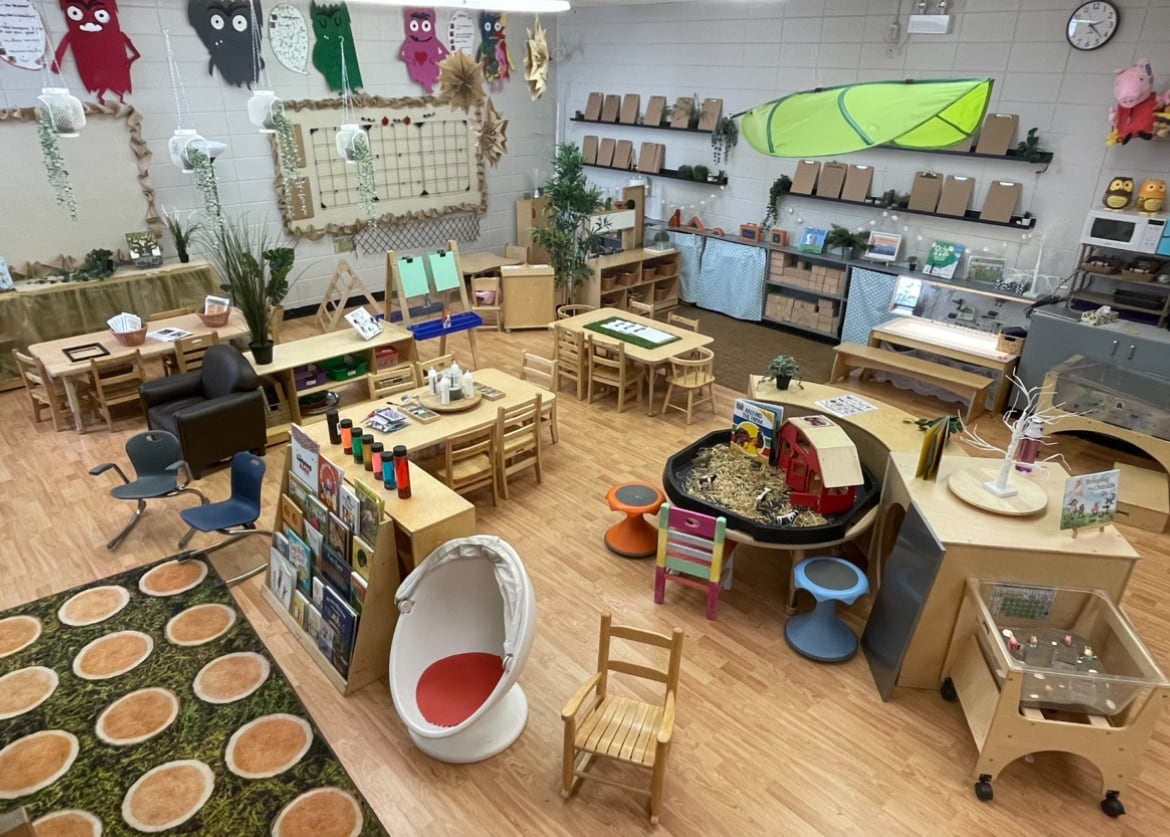 Government-funded public pre-school programs used to welcome children with a wide-variety of needs who could learn from each other. This image is from St. Vladimir in Edmonton. (Edmonton Catholic School District)
Rintisch says she understands why her peers feel this way. Overcrowded classrooms, pandemic behavioural and learning challenges plus fewer kids getting early help — “it was a literal perfect storm of awfulness.”
But she says there’s a beauty in inclusive education done well — when kids challenge each other, are supported and succeed.
“My very first pre-k class I ever taught, several of those kiddos graduated high school last year,” she said. “When I had them [I thought], ‘Oh, man, I don’t know if you’re ever going to make it to Walmart safely.’”
“I had a non-speaking little guy who we helped get diagnosed with autism when he was three years old.”
“Years later, I happened to be in a different school on the day of the talent show, and there he was. He was playing the piano and singing.… I still cry just thinking about it. When these kiddos get the support they need, the sky is the limit for them, just like it is for any other child.”
That’s what she’ll miss, she said. Because the cuts and continuing lack of resources has been too much. She’s looking for a different job in education next year.
What do you think about our reporting on Alberta schools? What would you like to see us report on next? Send an email to ask@cbc.ca.