
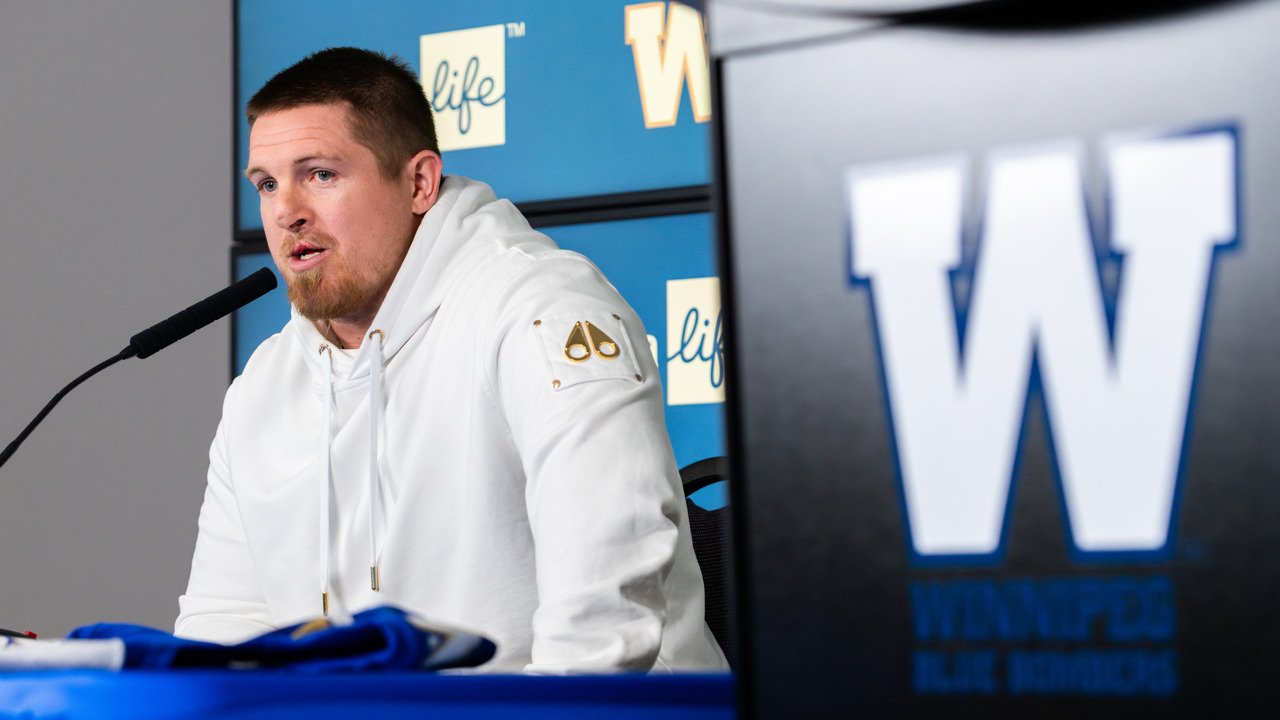
Even today — just two days into retirement following a hall of fame career which includes a football resumé that positively glows — Adam Bighill still traces everything back to one cornerstone:
A ginormous chip on his shoulder that is still driving him every morning.
“How do you sum up 16 years in roughly five minutes?” began Bighill in a press conference Tuesday morning after signing a one-day contract on Monday to officially retire as a member of the Winnipeg Blue Bombers.
“I guess I’ll start with this: I grew in small town Washington. I grew up with a cleft lip palate. I grew up with a chip on my shoulder. I grew up in a great family with great parents.
“And at seven years old I told my parents I wanted to play professional football.”
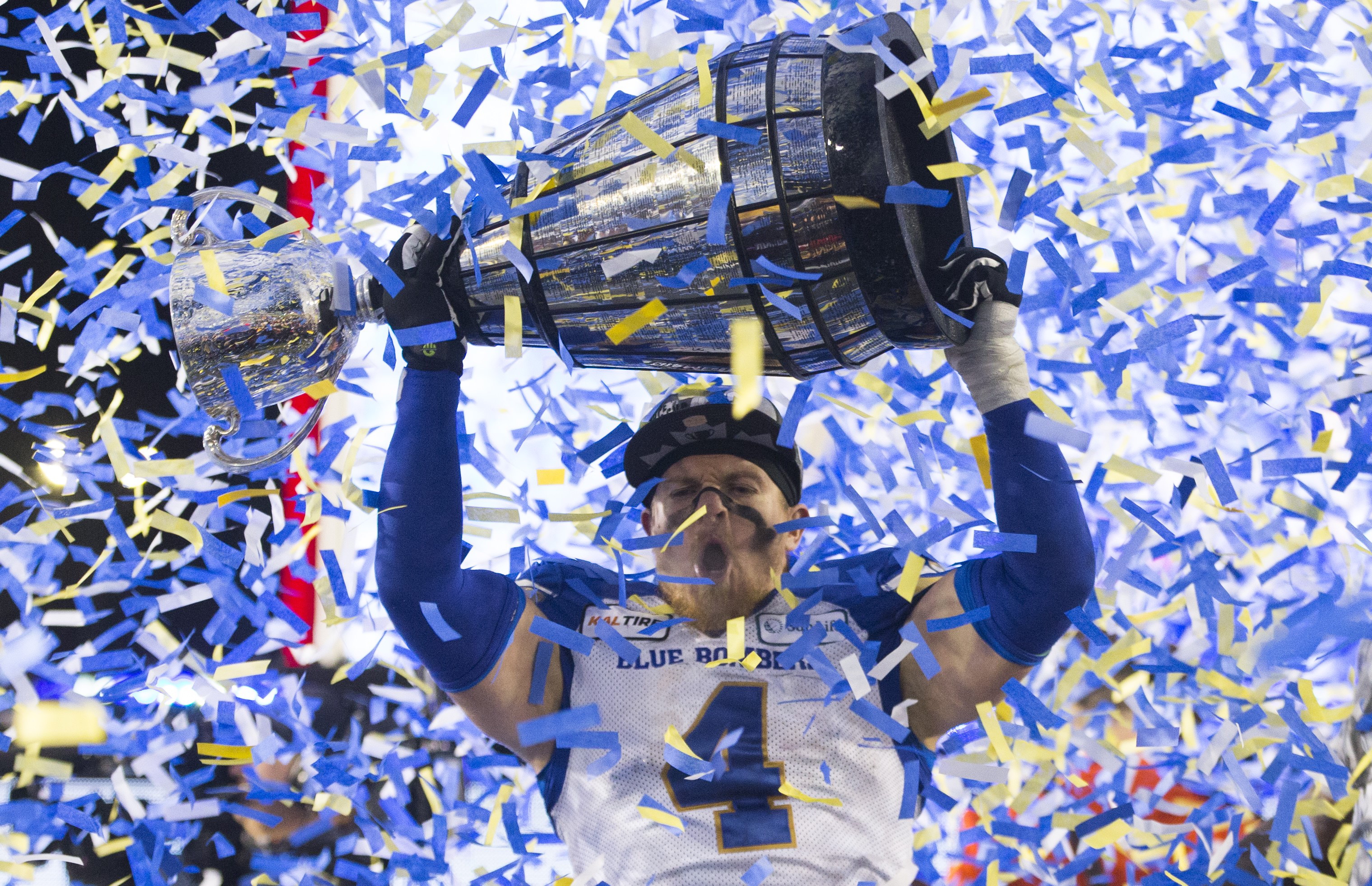
He ultimately not only accomplished that goal but became one of the most decorated players in Blue Bombers and Canadian Football League history over a 13-year career that began with the B.C. Lions, ended with the Calgary Stampeders and featured six seasons (2018-24) here in blue and gold.
Now 37, Bighill was part of two Grey Cup championship teams in Winnipeg, winning in 2019 and 2021 and won two of his three CFL Most Outstanding Defensive Player awards here, in 2018 and 2021.
He met with the media for about 35 minutes on Tuesday and the entire session can be found here:
And here are the main takeaways…
THE RETIREMENT DECISION
Bighill spent the 2025 season with the Stampeders and said the difficulty in being away from his family — wife Kristina, daughter Leah and sons A.J. and Beau — played a significant role in his decision to retire.
It was while mentioning Kristina on Tuesday that Bighill broke into tears for her support over the years.
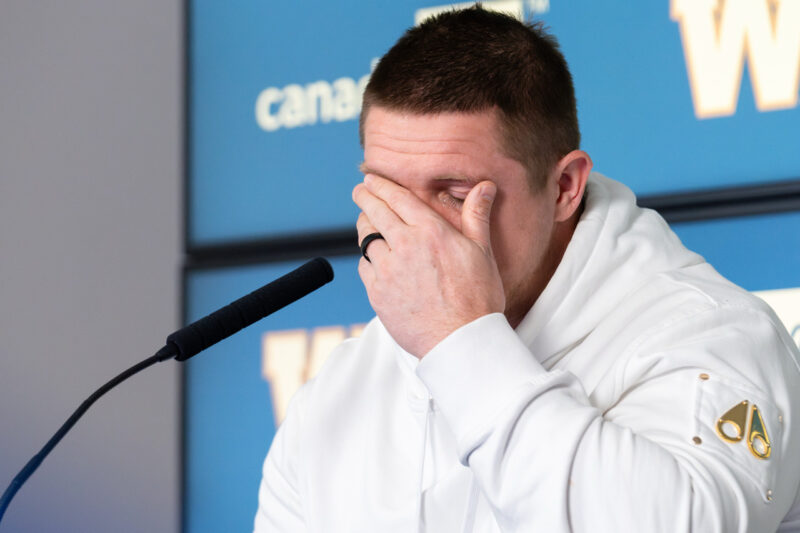
“I don’t know how guys do it where they come up here and they’re away from their families and then they’ve got to go back,” he said. “That’s always something I took for granted because I never had to do it. Being in Calgary — it was a decision where we talked as a family. The kids wanted me to go play, I wanted to go play, Kristina was good with it. It was a handful of months of sacrifice.
“Credit to Kristina to holding it all down with three kids and I’m gone and not one word of, ‘Hey, I don’t think you should do it because it’s too hard on me.’ Totally selfless on here and it speaks to everything she is as a strong, powerful woman.
“It took me awhile to officially say that I was retiring,” he said, later. “It’s easy to say to myself but it’s hard to say to the world, if that makes sense. It took a while to get to this point but it’s something I’m definitely at peace with.”
WHY HE CHOSE TO RETIRE AS A BLUE BOMBER
Bighill came north to Canada with the Lions in 2011 and, after a stint with the New Orleans Saints in 2017-18, signed with the Blue Bombers in May of ’18. He was asked about why he opted to retire as a Blue Bomber and not as a member of the Lions.
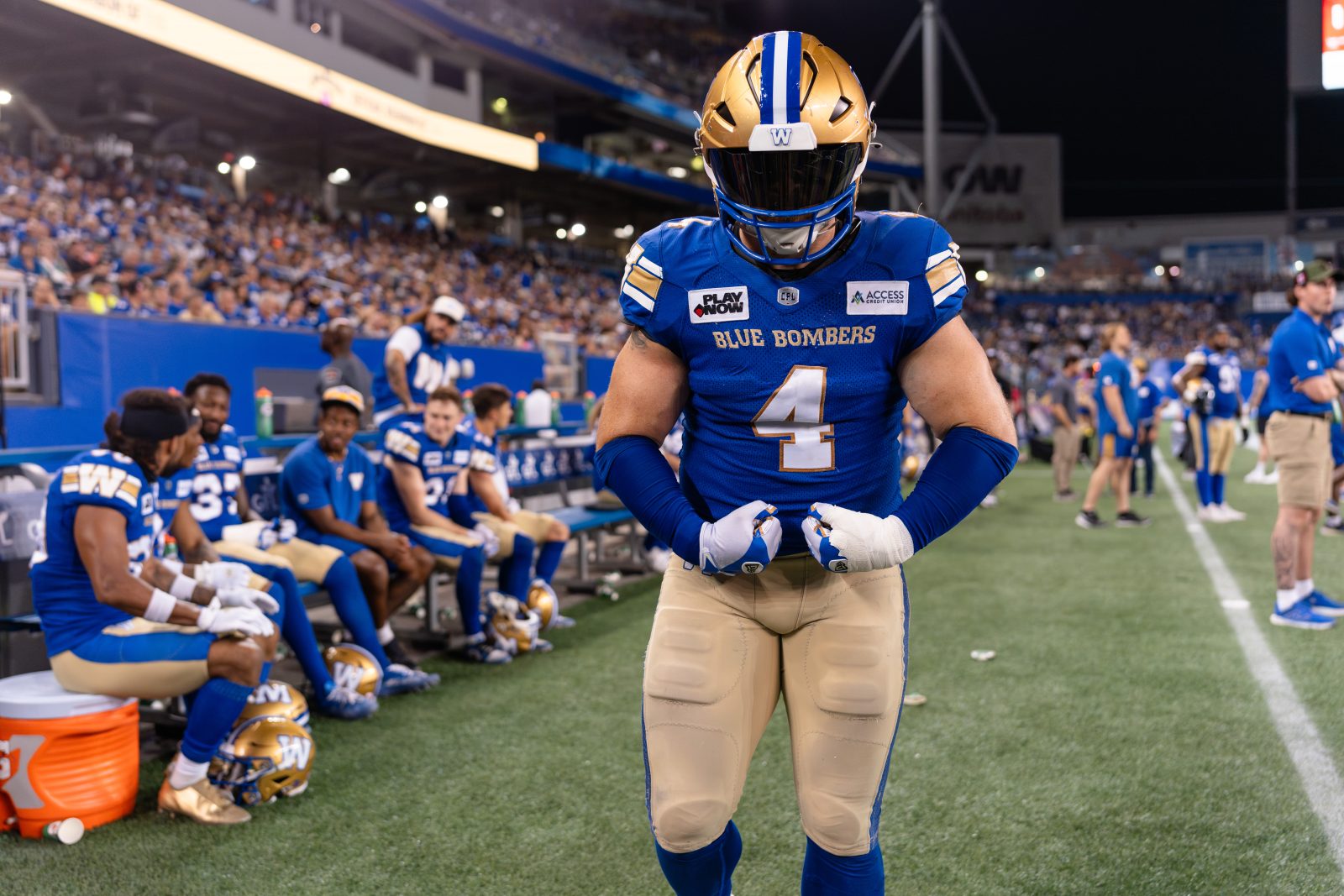
“We won two championships here, went to the Grey Cup five years in a row,” he said. “My family really grew up as Blue Bombers fans. It’s the most fun I had playing professional football here. It’s a first-class organization and the guys I’m around. It was, for me and where I’m at, a no brainer. I’m happy to say that and that’s no discredit to B.C. They gave me an opportunity and there were so many amazing things we did out there and so many amazing fans in B.C. that still follow me. I’m so thankful and will love them forever.
“… Just because I didn’t retire for them doesn’t mean I don’t have any respect for them. That’s not the case at all. It’s even more credit to Winnipeg and the impact they had on me and my family in my team here.”
Bighill, who now works in the finance industry, said he and his partners have a suite at Princess Auto Stadium.
“We will be around. We will be at the games and supporting,” he said with a smile. “We are Bomber fans and a Bomber family.”
MORE ON ‘THE CHIP’
Bighill’s secret to success isn’t complicated: work harder than the other guy, lift more than the other guy, study more than the other guy. Couple that with his athletic gifts and, well, it’s a dangerous combination.
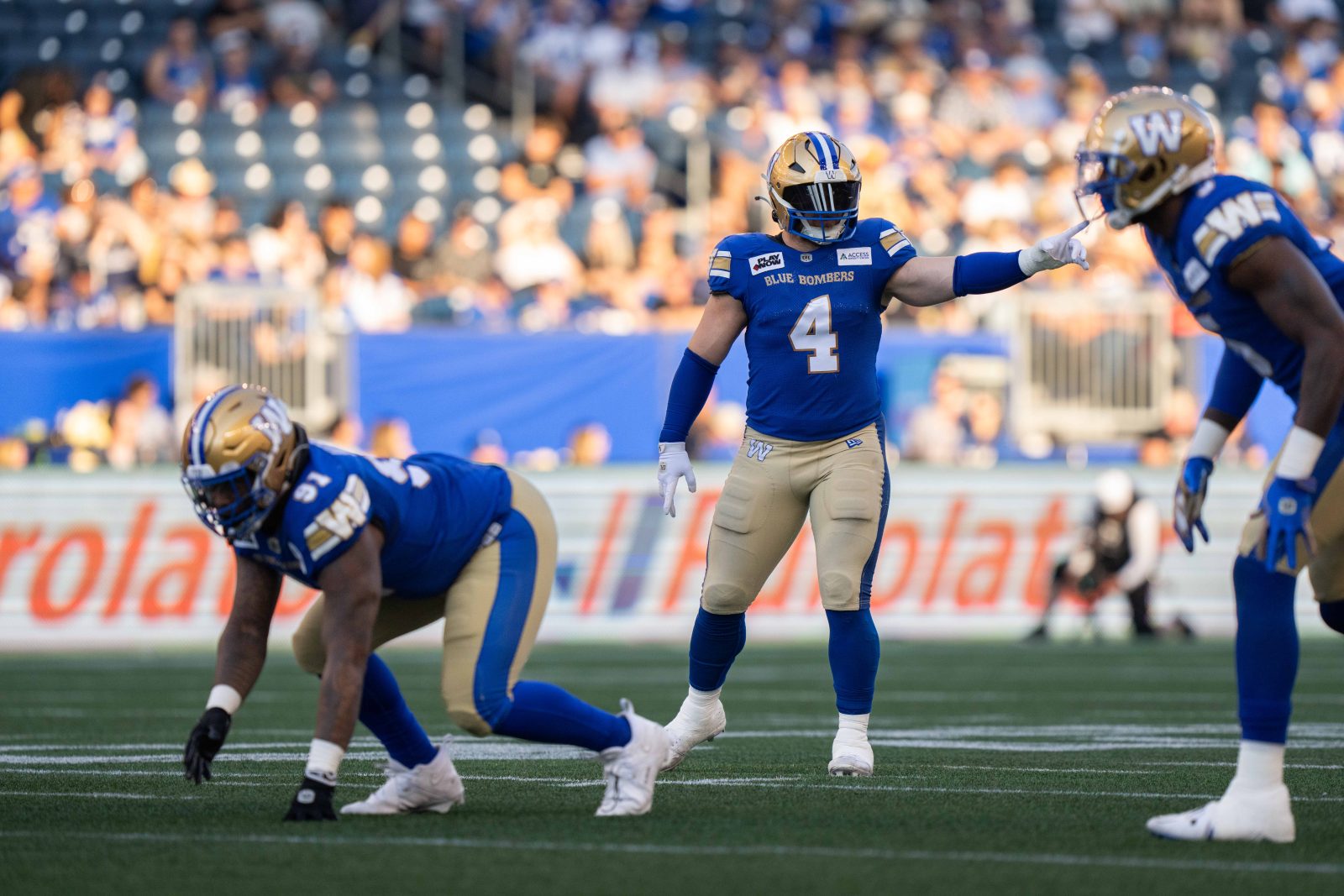
“I would say that’s been my superpower through everything,” he said. “I’ve been willing to go through more pain, more sacrifice, more uncomfortableness, more time with less sleep. As the ultimate competitor I will do what I need to do to beat you. That’s what my mindset has always been — I’ve been willing to do more.”
Bighill also spoke of how that also applied to the work off the field. He wasn’t just a student of the game, he has a PhD in what to look for, how to react and how to influence a play.
“The way I see the game, it’s like the most-violent game of chess there can be,” Bighill explained. “I always wanted to be more than a piece on the board. I wanted to be able to affect all of the entire game and the only way you can do that is by knowing how the game works. Knowing how the other side thinks, knowing how to move your pieces in a way that affects the entire game.
“I just understand the game at a deep level and that’s because I knew if I was going to become a professional athlete I can’t have any weaknesses. You can’t be a great athlete and maybe not know the playbook and maybe you’re not going the right way and making the right play.”
THE O’SHEA ENDORSEMENT
Blue Bombers head coach Mike O’Shea first came across Bighill when he arrived in the CFL in 2011 and the Winnipeg boss was then the special teams coordinator with the Toronto Argonauts, trying to come up with ways to scheme against this dynamo on kick returns.
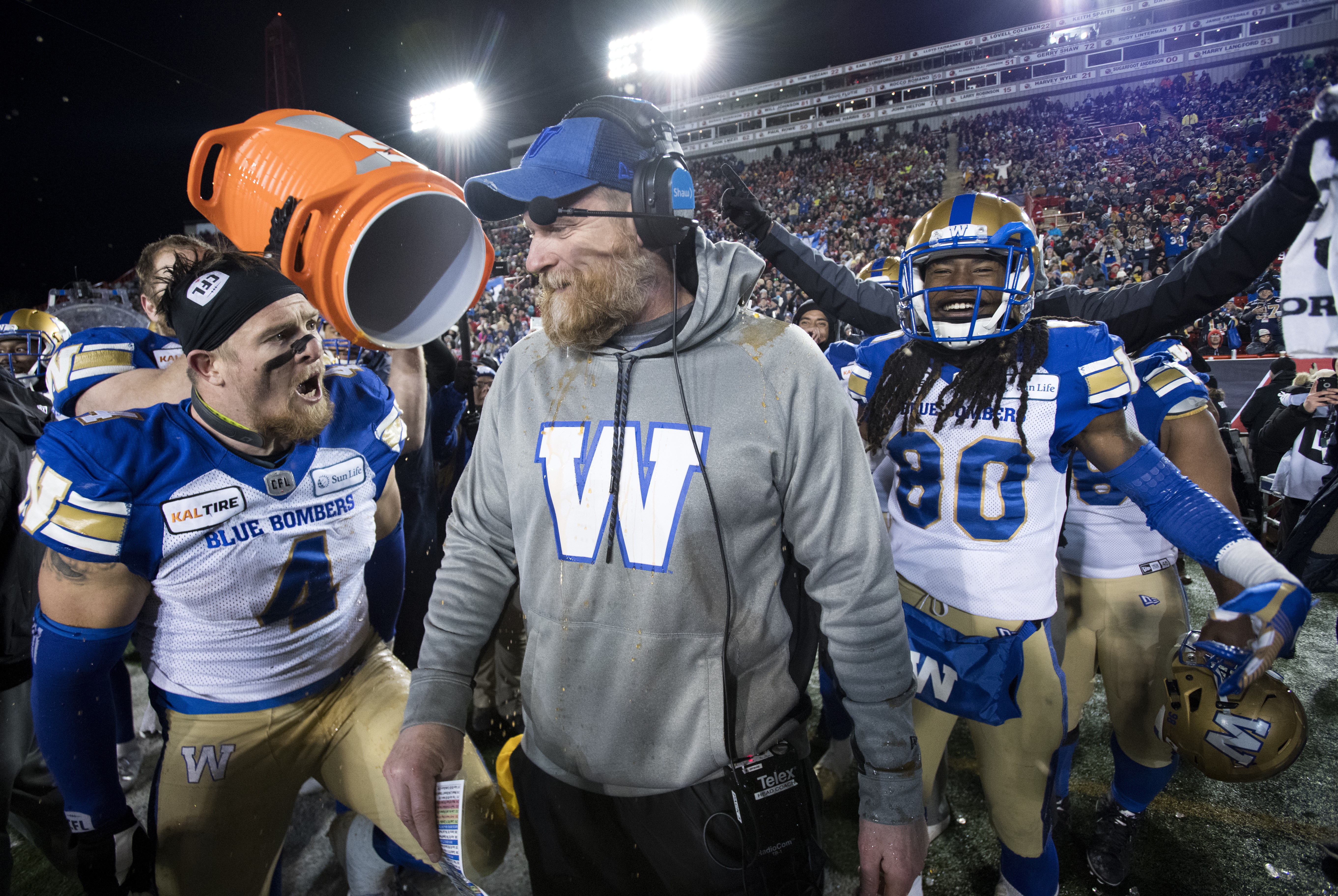
A Canadian Football Hall of Famer himself who played middle linebacker, O’Shea forever raved about Bighill’s skills, but also what he brought to the building after joining the Blue Bombers.
“He’s one of the best to ever play our game and as a coach it was certainly made easier by the amount of work he put in,” said O’Shea on Tuesday after the Bighill press conference. “He mentioned the word ‘capacity’ and it’s something I’ve always said: he is always working that capacity, and not in a negative way that is going to burn him out or overload him. He’s just always getting the most out of everything he’s doing every single day and he still does it.
“I’ve said this before: it’s inspiring as a head coach with him being around. He inspired me on a regular basis just to have him in my office and listen to what’s going on in his life and how much he’s actually doing in a day and what that means for him in terms of when he has to get up and when he goes to bed. He’s always going to be excellent at everything he’s trying to do.”