
PHOENIX – When the WNBA was approved for launch in 1996, the league made a clear statement with its official slogan: “We Got Next.”
Almost 30 years later, the WNBA and women’s basketball have backed that boast.
In 2024, the league became the fastest growing brand in professional sports, according to an annual sports marketing report. As of 2026, interest and engagement around the WNBA and women’s basketball continue to rise, but reaching this point didn’t come easily.
As one of the eight original WNBA franchises, the Phoenix Mercury have witnessed it all, and they’ve made sure to leave their mark on the league through its first few decades, qualifying for the playoffs 19 times and winning three championships.
Jerry Colangelo, the Mercury’s first owner, was present when the league was just a thought being bandied about by NBA power brokers.
“I was in New York with David Stern, the former commissioner of the NBA, and he said, ‘What do you think about having a women’s league?’” Colangelo recalled. “I said, ‘I kind of like the sound of it … it’s time for them to have this opportunity.’ And now they’re approaching 30 years … they’ve come a long way, baby.”
Cheryl Miller, a member of the Naismith Memorial Basketball Hall of Fame who is widely considered one of the greatest women’s basketball players of all time, was the first coach of the Mercury. Under Miller, Phoenix enjoyed considerable success through its first few seasons, making the playoffs multiple times and falling just short of a championship in 1998 to the Houston Comets, who won the league’s first four titles.
“I think the Mercury kind of had the table set with all of the best things in terms of the great community that embraced them from day one and Cheryl Miller and all that,” former ASU women’s basketball coach and current Mercury scout Charli Turner Thorne said. “They led the league in attendance in the beginning, and I think a lot of that came from just really good leadership.”
Miller resigned from her position at the conclusion of the team’s 2000 season, and from there, several other coaches filtered in and out. The Mercury hit rock bottom in 2003 when they finished with a league-worst record of 8-26.
The following year was the turning point for Phoenix. The Mercury acquired forward Penny Taylor with the first pick in a dispersal draft, and just a few weeks later, they selected guard Diana Taurasi first overall in the 2004 WNBA Draft.
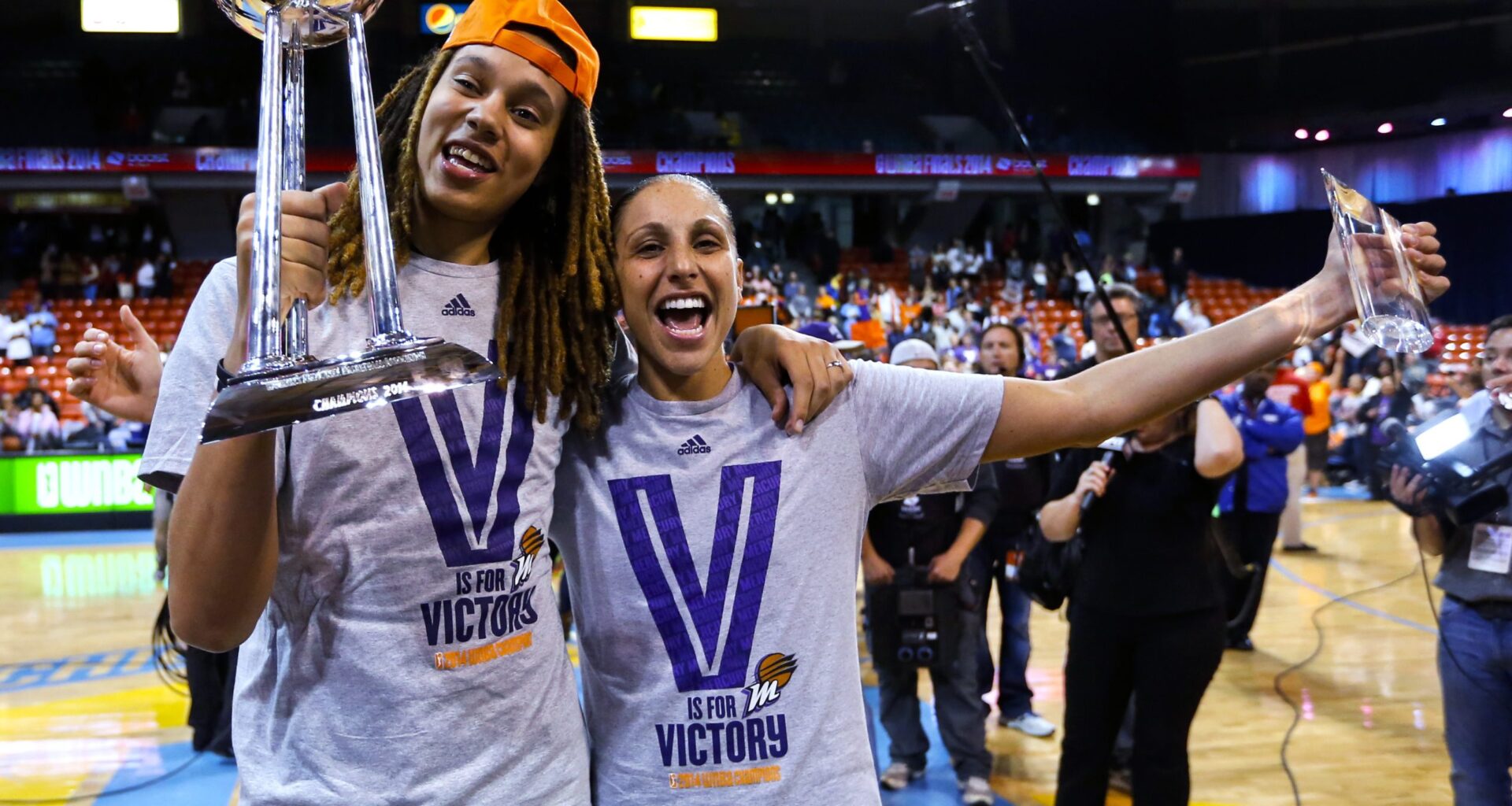
With the help of other key additions through the years such as guard Cappie Pondexter and center Brittney Griner, the Mercury went on to win three WNBA championships in 2007, 2009 and 2014.
“Diana, that’s all you need to say is Diana,” former Mercury president and general manager Ann Meyers Drysdale said. “For 20 years, she was just a stabilizing force and then Penny Taylor came in and Cappie Pondexter, Tangela Smith, (coach Sandy) Brondello and Brittney Griner – they were all such a big part of it and so were several others. Those three championships really kind of solidified women’s basketball here.”
Following Taurasi’s departure from the team after 20 seasons, the Mercury returned to the Finals in 2025 behind the play of their new Big 3 – Alyssa Thomas, Kahleah Copper and Satou Sabally. They came up short of a fourth title, getting swept by the Las Vegas Aces in the best–of-seven series.
A few weeks later, the Mercury unveiled a new logo in celebration of their 30th season, aiming to honor their rich history while looking forward to the future.
 The Phoenix Mercury unveiled a comprehensive rebrand on November 24, 2025, ahead of their 30th season. (Logo courtesy of Phoenix Mercury)
“We take a ton of pride in being one of the original franchises, not only because we were a team that helped found this league, but it takes a lot to get to season 30,” Mercury president Vince Kozar told USA Today in November 2025. “To be in the same city with the same name in the same arena for 30 years, that’s not something that any other WNBA team can claim.”
“It was important to us to honor being one of the original eight. It was important to us to honor 1997, and it was important to us to keep the ‘M,’ but modernize it in a way that feels like the next 30 years, not the last 30 years.”
Drysdale believes big things are in store for the Mercury.
“The Mercury are here to stay,” Drysdale said. “The Mercury are going to rise again.”
As of late, WNBA players have more than just the 30-year milestone to celebrate.
The WNBA and the Women’s National Basketball Players Association (WNBPA) recently reached an agreement on a new collective bargaining agreement. As a result, the league’s salary cap has increased from $1.5 million to $7 million, and over $1 billion is projected in players salaries and benefits over the agreement’s seven-year span.
“It’s fantastic that the players get paid enough money now where they can play in just one league,” Turner Thorne said. “That is one of the absolute highlights for me. I feel like the quality of our product is just going to get better and better.”
As the game continues to grow, Turner Thorne is excited to see what’s next for women’s basketball. She’s grateful to have watched and contributed to the game’s expansion so far.
“It’s been very rewarding, because I came up in a time where we weren’t on TV,” Turner Thorne said. “It’s really fun and exciting, and it took a lot of work to get here. But I always like to say we’re not there yet, we’re still getting there.”
This <a target=”_blank” href=”https://cronkitenews.azpbs.org/2026/04/21/wnba-women-basketball-anniversary/”>article</a> first appeared on <a target=”_blank” href=”https://cronkitenews.azpbs.org”>Cronkite News</a> and is republished here under a <a target=”_blank” href=”https://creativecommons.org/licenses/by-nd/4.0/”>Creative Commons Attribution-NoDerivatives 4.0 International License</a>.<img src=”https://i0.wp.com/cronkitenews.azpbs.org/wp-content/uploads/2026/02/favicon1.png?resize=85%2C85&ssl=1″ style=”width:1em;height:1em;margin-left:10px;”>
<img id=”republication-tracker-tool-source” src=”https://cronkitenews.azpbs.org/?republication-pixel=true&post=102372″ style=”width:1px;height:1px;”><script> PARSELY = { autotrack: false, onload: function() { PARSELY.beacon.trackPageView({ url: “https://cronkitenews.azpbs.org/2026/04/21/wnba-women-basketball-anniversary/”, urlref: window.location.href }); } } </script> <script id=”parsely-cfg” src=”//cdn.parsely.com/keys/cronkitenews.azpbs.org/p.js”></script>
Canonical Tag:
Copy Tag
Article Content:
‘It took a lot of work to get here’: WNBA, Phoenix Mercury approach 30th anniversary
Ethan Holtzinger, Cronkite News
April 21, 2026
PHOENIX – When the WNBA was approved for launch in 1996, the league made a clear statement with its official slogan: “We Got Next.”
Almost 30 years later, the WNBA and women’s basketball have backed that boast.
In 2024, the league became the fastest growing brand in professional sports, according to an annual sports marketing report. As of 2026, interest and engagement around the WNBA and women’s basketball continue to rise, but reaching this point didn’t come easily.
As one of the eight original WNBA franchises, the Phoenix Mercury have witnessed it all, and they’ve made sure to leave their mark on the league through its first few decades, qualifying for the playoffs 19 times and winning three championships.
Jerry Colangelo, the Mercury’s first owner, was present when the league was just a thought being bandied about by NBA power brokers.
“I was in New York with David Stern, the former commissioner of the NBA, and he said, ‘What do you think about having a women’s league?’” Colangelo recalled. “I said, ‘I kind of like the sound of it … it’s time for them to have this opportunity.’ And now they’re approaching 30 years … they’ve come a long way, baby.”
Cheryl Miller, a member of the Naismith Memorial Basketball Hall of Fame who is widely considered one of the greatest women’s basketball players of all time, was the first coach of the Mercury. Under Miller, Phoenix enjoyed considerable success through its first few seasons, making the playoffs multiple times and falling just short of a championship in 1998 to the Houston Comets, who won the league’s first four titles.
“I think the Mercury kind of had the table set with all of the best things in terms of the great community that embraced them from day one and Cheryl Miller and all that,” former ASU women’s basketball coach and current Mercury scout Charli Turner Thorne said. “They led the league in attendance in the beginning, and I think a lot of that came from just really good leadership.”
Miller resigned from her position at the conclusion of the team’s 2000 season, and from there, several other coaches filtered in and out. The Mercury hit rock bottom in 2003 when they finished with a league-worst record of 8-26.
The following year was the turning point for Phoenix. The Mercury acquired forward Penny Taylor with the first pick in a dispersal draft, and just a few weeks later, they selected guard Diana Taurasi first overall in the 2004 WNBA Draft.
With the help of other key additions through the years such as guard Cappie Pondexter and center Brittney Griner, the Mercury went on to win three WNBA championships in 2007, 2009 and 2014.
“Diana, that’s all you need to say is Diana,” former Mercury president and general manager Ann Meyers Drysdale said. “For 20 years, she was just a stabilizing force and then Penny Taylor came in and Cappie Pondexter, Tangela Smith, (coach Sandy) Brondello and Brittney Griner – they were all such a big part of it and so were several others. Those three championships really kind of solidified women’s basketball here.”
Following Taurasi’s departure from the team after 20 seasons, the Mercury returned to the Finals in 2025 behind the play of their new Big 3 – Alyssa Thomas, Kahleah Copper and Satou Sabally. They came up short of a fourth title, getting swept by the Las Vegas Aces in the best–of-seven series.
A few weeks later, the Mercury unveiled a new logo in celebration of their 30th season, aiming to honor their rich history while looking forward to the future.
“We take a ton of pride in being one of the original franchises, not only because we were a team that helped found this league, but it takes a lot to get to season 30,” Mercury president Vince Kozar told USA Today in November 2025. “To be in the same city with the same name in the same arena for 30 years, that’s not something that any other WNBA team can claim.”
“It was important to us to honor being one of the original eight. It was important to us to honor 1997, and it was important to us to keep the ‘M,’ but modernize it in a way that feels like the next 30 years, not the last 30 years.”
Drysdale believes big things are in store for the Mercury.
“The Mercury are here to stay,” Drysdale said. “The Mercury are going to rise again.”
As of late, WNBA players have more than just the 30-year milestone to celebrate.
The WNBA and the Women’s National Basketball Players Association (WNBPA) recently reached an agreement on a new collective bargaining agreement. As a result, the league’s salary cap has increased from $1.5 million to $7 million, and over $1 billion is projected in players salaries and benefits over the agreement’s seven-year span.
“It’s fantastic that the players get paid enough money now where they can play in just one league,” Turner Thorne said. “That is one of the absolute highlights for me. I feel like the quality of our product is just going to get better and better.”
As the game continues to grow, Turner Thorne is excited to see what’s next for women’s basketball. She’s grateful to have watched and contributed to the game’s expansion so far.
“It’s been very rewarding, because I came up in a time where we weren’t on TV,” Turner Thorne said. “It’s really fun and exciting, and it took a lot of work to get here. But I always like to say we’re not there yet, we’re still getting there.”
This article first appeared on Cronkite News and is republished here under a Creative Commons Attribution-NoDerivatives 4.0 International License.
Copy Content
Tracking snippet:
Copy Snippet