

Listen to this article
Estimated 5 minutes
The audio version of this article is generated by AI-based technology. Mispronunciations can occur. We are working with our partners to continually review and improve the results.
UPDATE: At Tuesday’s meeting, the urban planning committee directed administration to explore a different hybrid option that would keep the Coliseum lands slated for housing development and give the Expo Centre more outdoor event space to the south where its parking lot sits. City administration was also asked to look into retrofitting the Borden Park expansion for multi-use event space and renewal of the Coliseum LRT station.
Over the next 20 years, development could reduce the Exhibition Lands’ capacity for hosting large events like KDays by more than half.
A report prepared by city administration for Edmonton’s urban planning committee meeting on Tuesday puts a few options on the table for city councillors to consider as the city strives to develop a new neighbourhood and maintain the Expo Centre as a space that can attract large events.
One proposal could see part of the KDays summer fair move north of 118th Avenue.
Explore Edmonton, the city’s tourism marketing organization, operates the Expo Centre and uses 55 hectares of land on the Exhibition Lands, which is set to be reduced to about 16 hectares in the coming two decades because of housing development, according to the report.
It notes the city hired a consultant to do a land assessment after Explore Edmonton raised concerns about festival use of the land alongside development. The consulting firm found the Expo Centre needs at least five to six more hectares of land to continue hosting large events.
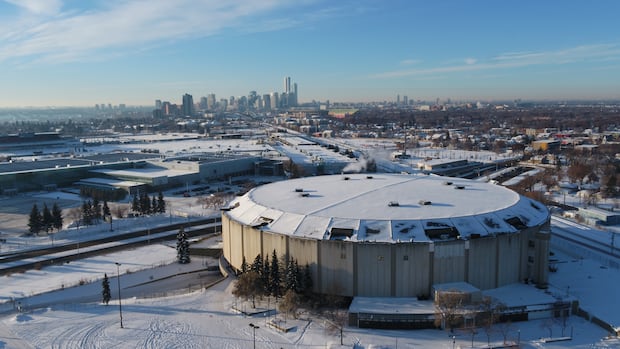
That space could be found on the 6.4-hectare Coliseum site, with demolition scheduled for this summer. The province gave the city a $55-million grant to knock the building down, contingent on development and an event park going into the Ice District.
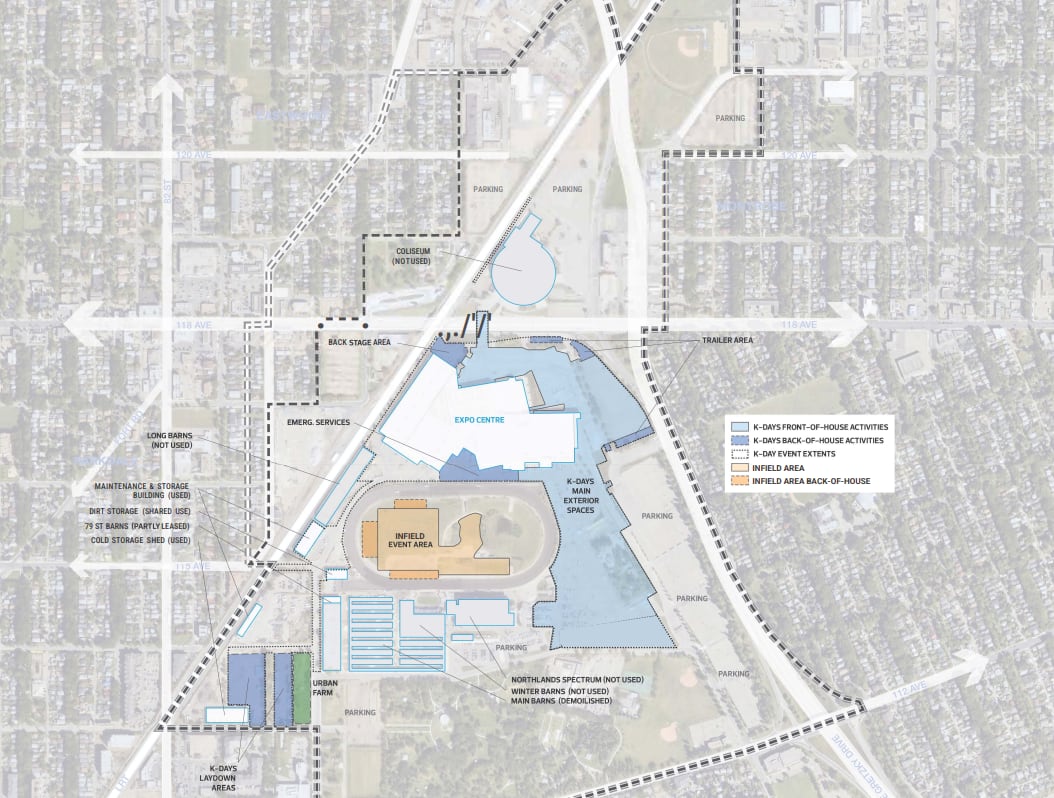 Explore Edmonton currently uses 55 hectares of the Exhibition Lands. The current plan is to have that reduced to 16 hectares, which would compromise its ability to host large events like KDays. (City of Edmonton)
The report says that grant is also being used to turn the Coliseum site into an interim event space until future development starts, which could take upwards of 20 years.
“We’re really excited for the development of those Expo lands,” Traci Bednard, president of Explore Edmonton, said in an interview Monday.
She said the Exhibition Lands are big enough that entertainment venues and residential development can coexist, especially with the Coliseum coming down.
“We’re really looking for that vision that drives both of those in a complementary way,” Bednard said.
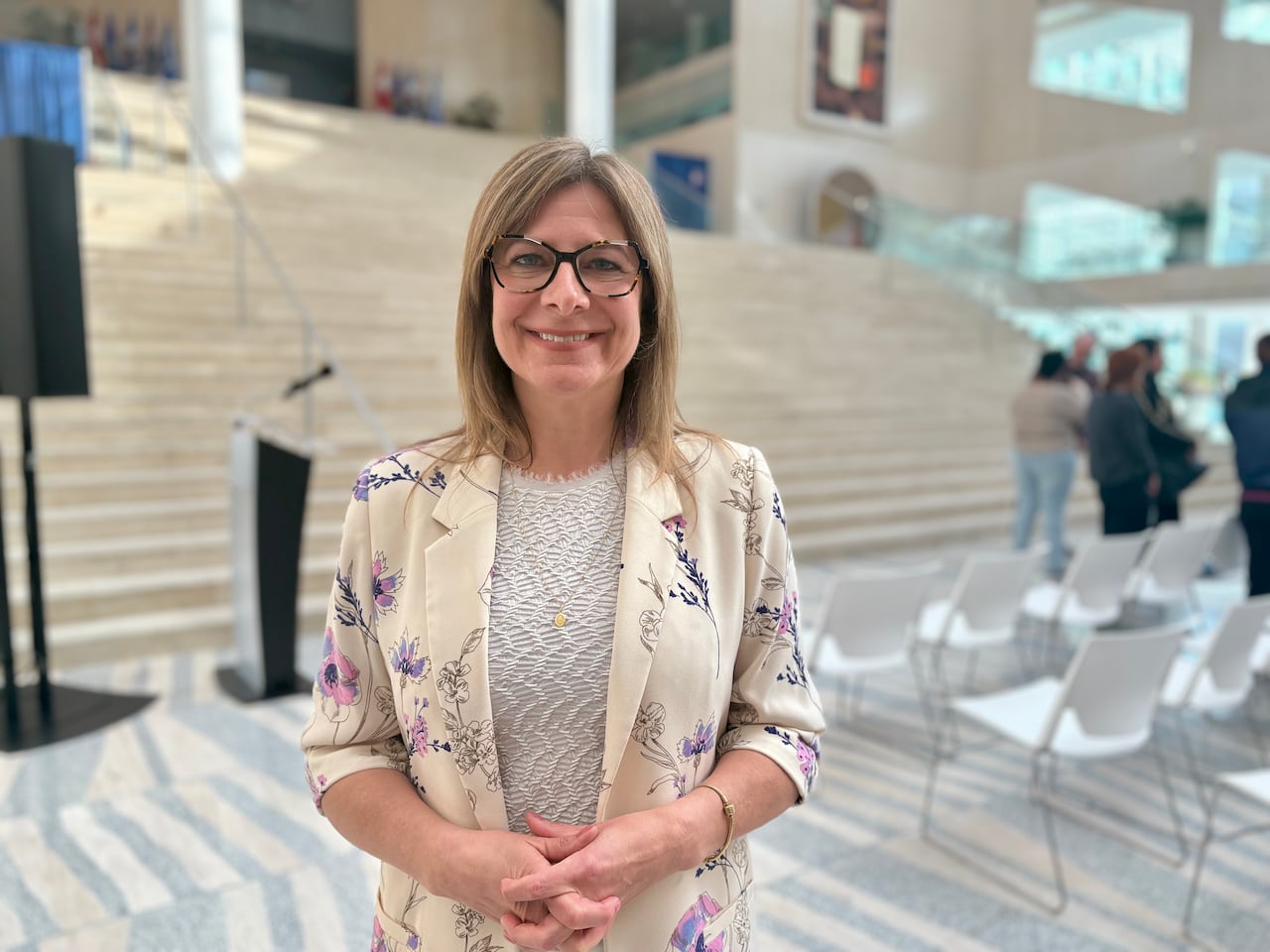 Traci Bednard, president of Explore Edmonton, said there’s enough space in the Exhibition Lands for both housing and entertainment. (Emily Williams/CBC)
The report says much of the Exhibition Lands is infrequently used outside of major events like KDays. The city’s current plan would build the maximum amount of housing, with the Expo Centre’s footprint significantly reduced over time.
“At full build out, there would be no available space within the area to host major, large-scale outdoor events,” the report says.
But other options include maintaining the Expo Centre’s current operating area, or a middle ground where development still occurs but 21 hectares are set aside so KDays can still work on the site.
Mayor Andrew Knack said he prefers the hybrid option.
“It still allows for new residential development, … but also recognizing how important those larger events are to our overall economic development as a city,” he said.
Knack pointed out Explore Edmonton has had success in attracting big events to the city.
“The last thing I want to do is shrink that opportunity for them.”
The report notes the hybrid option would pay the biggest long-term dividends for the city, balancing land sales, jobs, new tax revenue and preserving a large event space.
The trade-off is it would mean 505 fewer housing units being developed. The original design planned for 2,811 residential units.
Most of the residential units are planned for the western side of the site, to be close to transit stations. In its report, the consultancy group says that in the current market, apartment rentals, single-detached homes and rowhouses would be best suited for the area.
Some work is already underway, including demolition of horse barns in the southwest corner of the Exhibition Lands site seven years after a casino and racetrack closed their doors there. Cantiro Homes has bought some of the land to the south along Borden Park and construction is set to begin soon.
The report outlines noise and parking as being some of the considerations the city and its partners will have to manage as the site gets developed over the next two decades.
“We’re able to manage that, we’ve been in that neighbourhood for decades,” Bednard said.
“On the other side, having something like the Expo Centre there also drives economic value for that region and … continues to add value for all of those neighbourhoods.”