
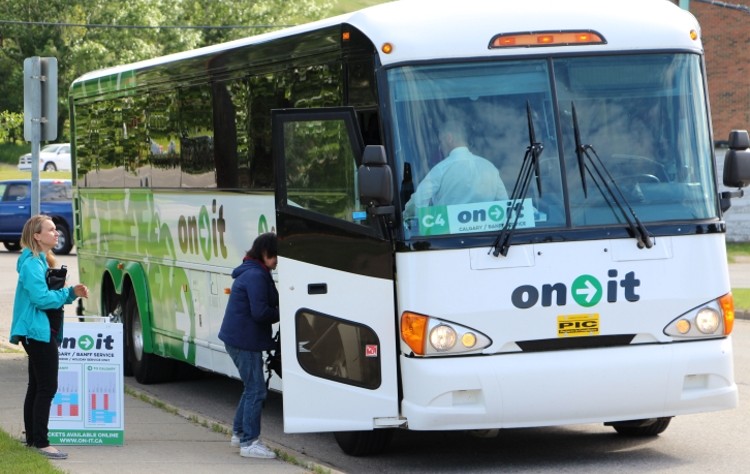
About 50 daily commuters to Calgary will be heavily impacted by the end of the On-It commuter transit service between Cochrane and Calgary as early as June 1, 2026.
The town will be assisting in informing commuters displaced by the service and will pursue potential private-sector operators, but beyond that, it has no intention at this point to operate the service.
Southland said the decision is driven by its two coach buses reaching end of life this summer, combined with low profitability in commuter operations and no plans to replace the fleet. The operator has also confirmed it will end its Okotoks-to-Calgary commuter route, along with its summer shuttle service between Calgary, Canmore and Banff.
The Cochrane service currently operates two weekday routes — to downtown Calgary and to Brentwood, serving the LRT station and University of Calgary — with one morning and one afternoon trip each. About 50 riders use the service daily, including roughly 30 on the downtown route and 10 on the Brentwood run in peak direction.
Commuters depart Monday to Friday from The Station, 360 Railway St. W., at 6:30 a.m. and return to Cochrane at 5 p.m.
When Southland Transportation took over the service from the Calgary Regional Partnership in February 2018, it was reported to carry about 100 commuters daily on weekdays.
RELATED STORIES
Adam Mildenberger, town transit program lead, said administration examined alternatives, including a municipal-operated system.
“The out-of-the-gate, best case scenario, we can expect that maybe fare revenues could cover the daily operating costs, the most basic daily costs, which is essentially the hourly service rate that an operator would charge us to have their employees driving our buses, and it could potentially be profitable during peak seasons.”
He said the big elephant in the room is the big capital investment required. The town would need to acquire two to three coach buses — estimated at $2 million to $3 million — with the requirement to replace every 10 to 12 years.
Maintenance costs and storage with in-house capability to keep them at an appropriate state of repair.
“The financial reality is the fares will not cover the asset costs of purchasing the buses. It would require significant capital funding and reserve contributions over time.”
It would also have to fully fund the purchase of the buses as well as a plan for long-term replacements, overhauls and maintenance facilities.
Town officials say they are committed to supporting residents through this transition and to working within its role and resources to help identify practical options.