
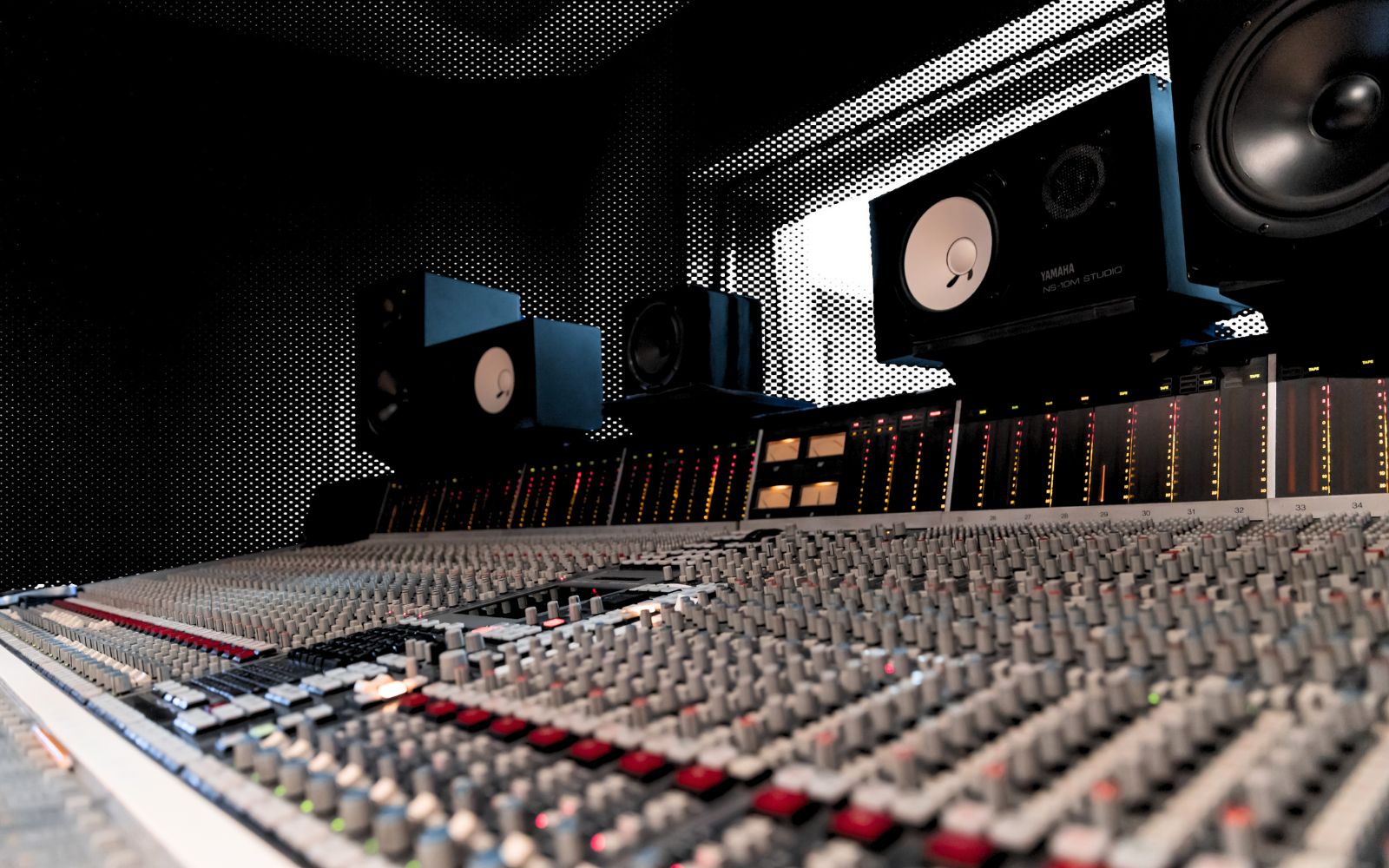
It feels intentional. But as Jonathan Simkin is quick to point out, his multipurpose compound on the outskirts of Railtown in East Vancouver didn’t start that way.
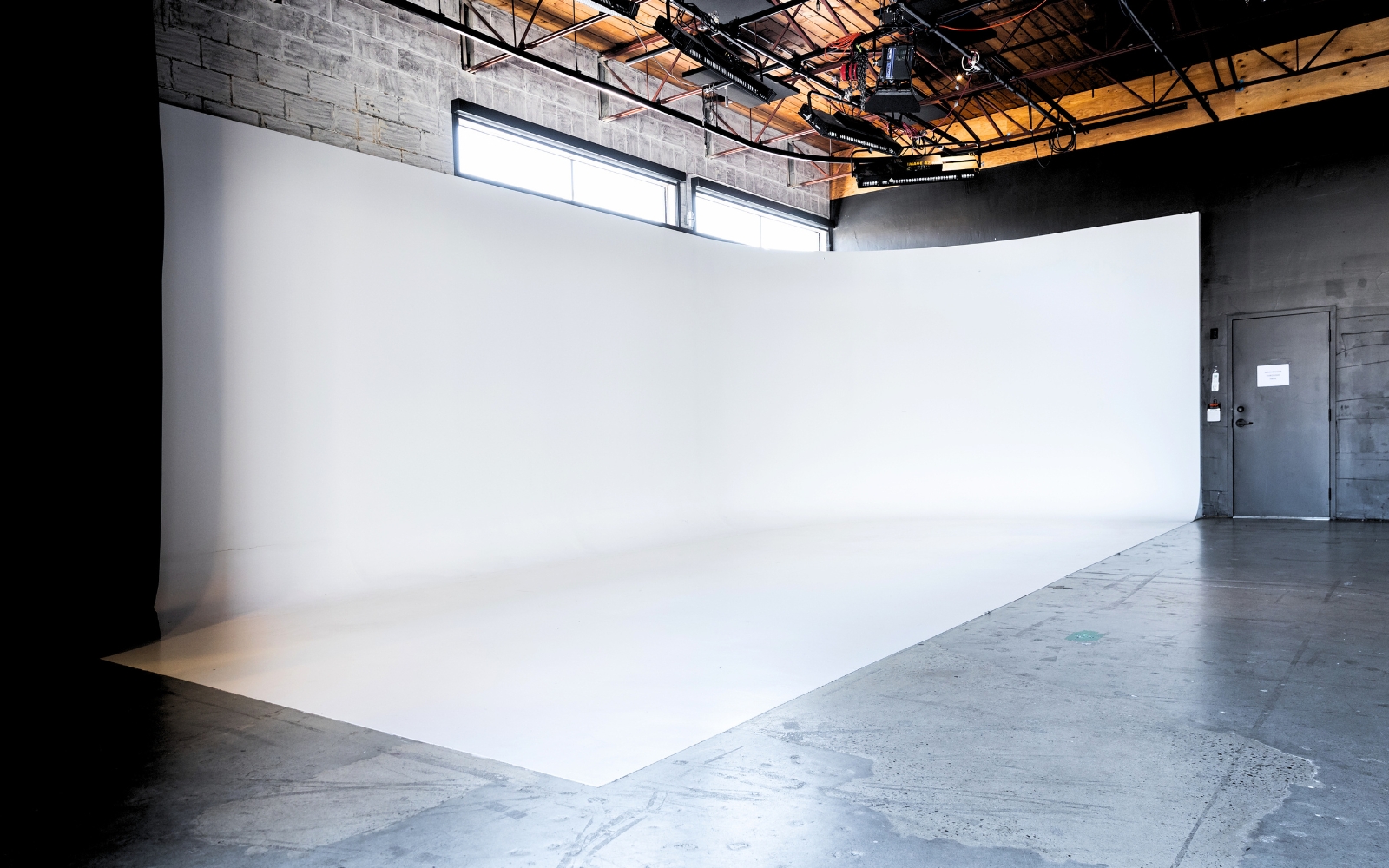
The 604 Soundstage.
“So we sort of accidentally built a studio,” he says, laughing with RANGE in the studio’s newly renovated soundstage.
Before Railtown, before the sound stage, before the idea of a fully integrated content hub, 604 Records operated out of a rental space on East 3rd and Ontario. In the back of that office was a large, mostly empty room—storage more than anything. That changed when one of the label’s earliest signings, The Organ, ran into a problem.
“They made this record… and they came to me and said, ‘We hate the record. We threw it away,’” Simkin recalls. “I said, ‘What the fuck are you talking about?’”
With no other option, the band proposed recording something new in that empty back room. No soundproofing, no formal setup—live off the floor and DIY. The result was Grab That Gun, a record that would go on to define the band and, quietly, reshape how Simkin thought about releasing music.
“That process really affected me,” he says. “By making a record in our building where everybody could hear it, the staff really got close to the records. You’d come in and people would be like, ‘Shh—listen to that song.’”
What started as necessity became philosophy. The room turned into a studio. More records followed. And the idea began to take shape: what if creation, production, and distribution could all live under one roof?
Simkin traces part of that thinking back to an old documentary about Berry Gordy and the original Motown headquarters in Detroit. “He says, ‘It’s not complicated. We make the music down there, and we sell it right over there.’ And that really stuck with me.”
The vision for 604 Studios was simple: eliminate friction. Cut out unnecessary middle steps. Build something self-contained.
Then came “Call Me Maybe.”
“‘Call Me Maybe’ happens, and suddenly I had the money to buy the building,” Simkin says of Carly Rae Jepsen’s viral single that spread like wildfire and is probably now stuck in your head (you’re welcome). “I’d been saving, but that’s what made it possible.”
It’s a line he delivers with a bit of disbelief—half joke, half origin myth. “The house that ‘Call Me Maybe’ built”. But walking through 604 Studios now, the scale of that moment becomes clear.
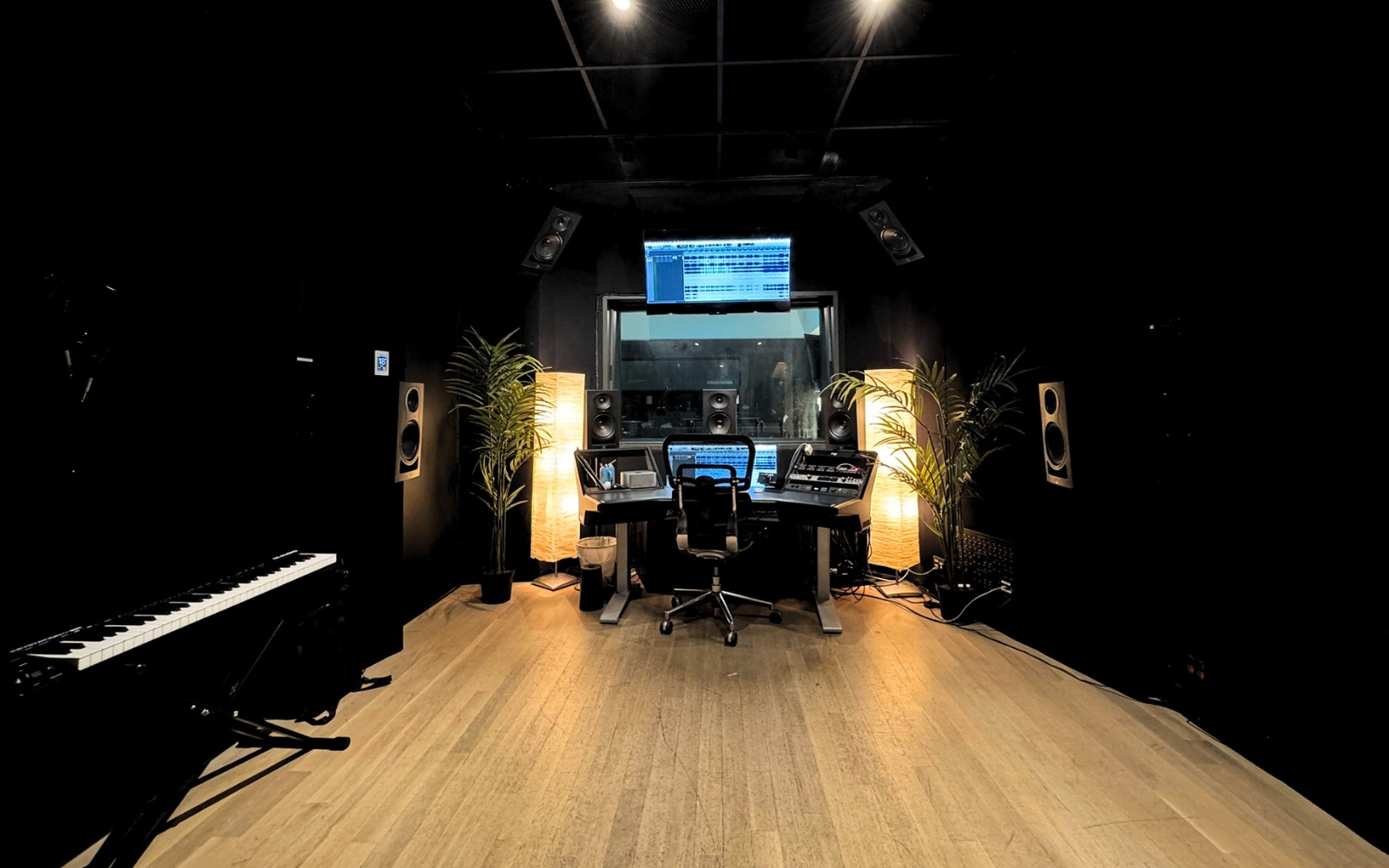
The Atmos studio.
The East Van compound that houses 604 Studios and 604 Records, Simkin’s label that he co-founded with Nickelback’s Chad Kroeger, unfolds in layers.
There’s the recording studio—clean, flexible, designed to accommodate everything from full band tracking to more intimate sessions. There’s the soundstage, a cavernous, adaptable space that can pivot from a live performance setup to a film shoot without missing a beat. And then there are the connective tissues: the control rooms, editing suites, open areas where ideas are tested and reworked in real time.
“I wasn’t trying to get into the studio business,” Simkin explains. “I was trying to avoid having to pay other studios to do things.”
That distinction matters. This isn’t a commercial studio built to maximize outside bookings—it’s infrastructure, first and foremost, for the artists on the roster. A place where experimentation doesn’t come with a ticking clock.
“I can’t paint the masterpiece,” he says. “But I can provide the canvas and the palette.”
That ethos carries through every corner of the building. The wiring between rooms. The way live performances can be captured and routed directly into the studio. The ability to generate “pristine content,” as Simkin puts it, without the usual costs or logistical hurdles.
“If we’re doing a show in this room, it all patches into our studio right there,” he says. “We can make pristine content here basically at no cost.”
Of course, the space hasn’t gone unnoticed beyond the 604 orbit.
Over the years, the studio has quietly doubled as a production hub for film and television. David Suzuki has filmed interviews here. Jason Alexander once spent weeks in the building shooting a pilot.
“That was weird—having George Costanza here every day,” Simkin says, grinning.
More recently, 604 has begun opening parts of the facility to outside rentals—carefully, and on their own terms.
“This side of the building has always been open for rent,” Simkin says. “The studio is harder, because I built it for our artists. But if there’s a couple weeks where nobody’s using it… why not?”
It’s a measured expansion, not a pivot. The core function of the space remains unchanged.
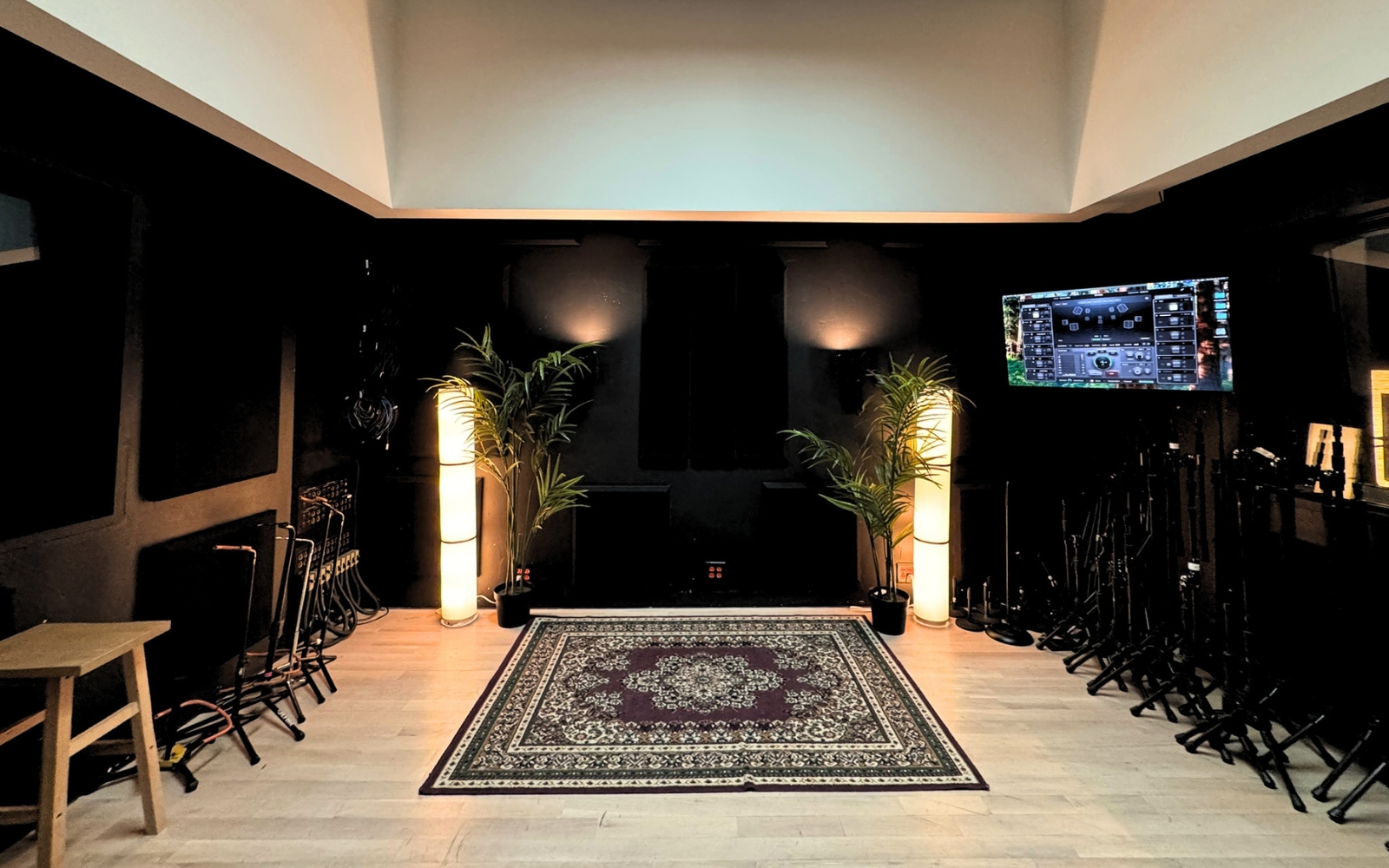
The live room.
If anything, 604 Studios feels like a response—to an industry that’s grown increasingly consolidated, increasingly abstracted from the artists themselves. And Simkin doesn’t hide his skepticism of that system.
“I’ve always wanted to create it here and disseminate it into the world from here,” he says. “That was the mission.”
That mission extends beyond the physical space into how the label operates. Shorter deals. Clearer terms. A conscious effort to stay independent in a landscape where many Canadian labels have been absorbed by larger, often American-owned entities.
“I don’t want to be Universal Music,” he says plainly.
Instead, 604 occupies a middle ground—large enough to offer real infrastructure, but lean enough to stay nimble.
“I think we’re in an interesting spot,” he says. “We’re big enough that we can really do things for our artists, but we’re not so big that we’re sinking under the weight of our infrastructure.”
And that infrastructure—arguably—now lives and breathes inside this building.
Walking through 604 Studios, it’s hard not to notice how little friction there is between idea and execution. A rehearsal can become a recording session. A recording session can become a live video. A live video can be edited, packaged, and sent out into the world—all without leaving the premises.
It’s not flashy. It’s functional. And maybe that’s the point.
What started as a storage room workaround has evolved into something closer to a DIY blueprint — one where the distance between making music and sharing it is as short as possible.
Or, as Simkin puts it: “We make it here… and we send it out from here.”