
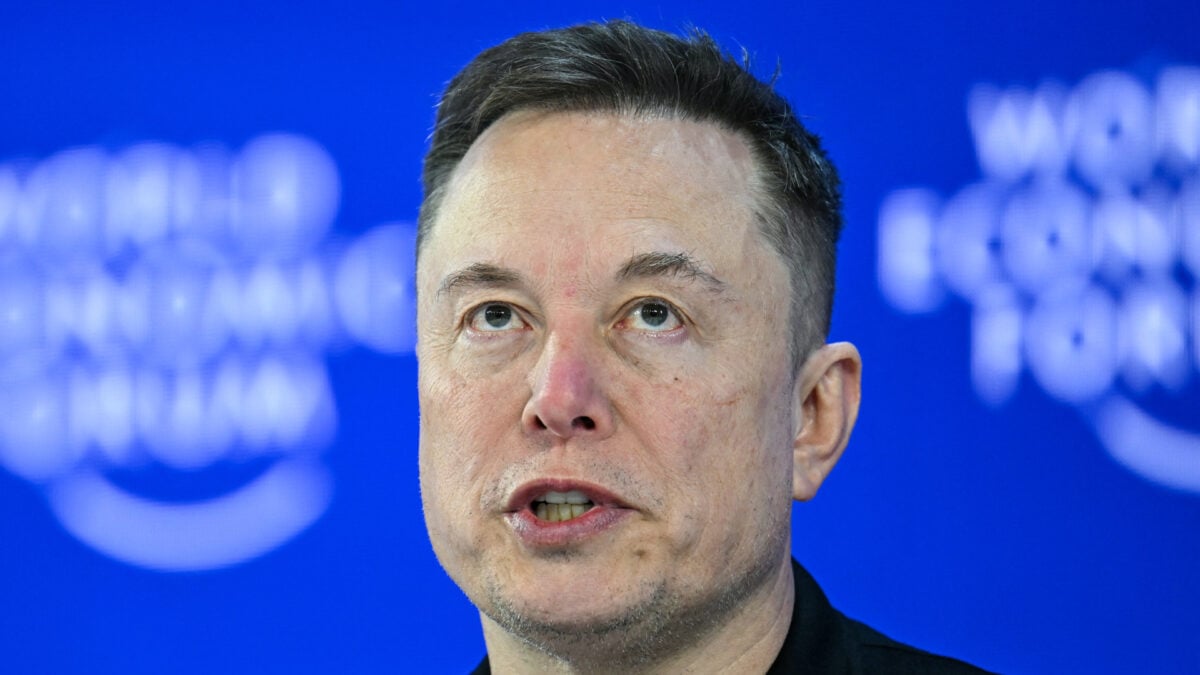
For more than a year, Elon Musk has been prophesying a new era for AI. The SpaceX CEO has said that building AI data centers in space is a “no brainer,” and that it would be the cheapest place to put AI within two to three years. But the company’s pre-IPO filing presents a much more conservative outlook.
SpaceX is preparing to make what could be the largest initial public offering in history, targeting a valuation of roughly $1.75 trillion with a $75 billion raise. The U.S. Securities and Exchange Commission (SEC) requires companies to submit an S-1 statement before going public, in part to inform potential investors of the risks. SpaceX’s S-1 filing, reviewed by Reuters, reportedly admits that orbital data centers may never be commercially viable.
“Our initiatives to develop orbital AI compute and in-orbit, lunar, and interplanetary industrialization are in early stages, involve significant technical complexity and unproven technologies, and may not achieve commercial viability,” the filing states, according to Reuters.
Gizmodo was unable to view the document or verify its contents, and SpaceX did not respond to a request for comment by the time of publication.
Reality check
This cautious filing is a far cry from the lofty ambitions SpaceX outlined in a late-January FCC application. The company requested permission to launch an orbital data center constellation of up to 1 million Starlink satellites, claiming that harnessing the “near-constant” solar power available in orbit will reduce operating costs, energy demands, and the environmental impacts associated with terrestrial data centers.
“Launching a constellation of a million satellites that operate as orbital data centers is a first step toward becoming a Kardashev Type II civilization—one that can harness the Sun’s full power—while supporting AI-driven applications for billions of people today and ensuring humanity’s multiplanetary future among the stars,” the application stated, according to SpaceNews.
Of course, a key purpose of an S-1 is to disclose risks to investors, so it’s not surprising to see a more cautious tone emerge in the pre-IPO filing. Beyond questions of commercial viability, SpaceX acknowledges major technical hurdles, warning investors that any future orbital data centers will operate “in the harsh and unpredictable environment of space, exposing them to a wide and unique range of space-related risks that could cause them to malfunction or fail.”
Indeed, scientists, satellite experts, and SpaceX competitors have openly criticized the plans outlined in the FCC application, arguing that current technology and capabilities are not sufficient to build and operate orbital data centers—much less a constellation of 1 million. For SpaceX, part of the problem is that the satellites and the rocket it would use to launch them aren’t even ready yet.
Musk has said that SpaceX could build orbital data centers by “simply scaling up Starlink V3 satellites,” which the company has yet to debut. SpaceX will launch them using its Starship rocket, which has yet to demonstrate the full rapid reusability and launch cadence that building an orbital data center would require.
“Any failure or delay in the development of Starship at scale or in achieving the required launch cadence, reusability and capabilities thereof would delay or limit our ability to execute our growth strategy,” the S-1 filing reportedly states.
It’s refreshing to see SpaceX finally acknowledge the enormous challenges and risks that stand in the way of its orbital data center dream. There’s a chance this could scare away some prospective investors, but at the end of the day, SpaceX’s longstanding dominance over the commercial launch industry and willingness to venture into the booming AI market still make it an attractive investment.
Whether the risks will outweigh the potential rewards remains to be seen.