

Listen to this article
Estimated 4 minutes
The audio version of this article is generated by AI-based technology. Mispronunciations can occur. We are working with our partners to continually review and improve the results.
River-adjacent communities in the greater Montreal area were largely spared from flooding this past weekend, but they’re still on high alert as a second wave of potential flooding is expected at the beginning of May and water levels remain high.
“Some locations, it’s been going up 30 centimetres, which is a feat in only 24 hours,” Interior Security Minister Ian Lafrenière told CBC’s Daybreak Wednesday morning. “So cities and people have got to react fast.”
Waters were still rising in Rigaud, about 70 kilometres west of Montreal, where a pair of homeowners could be seen using a boat to carry themselves and their pet dog to safety.
The Île Mercier bridge, in the borough of L’Île-Bizard–Sainte-Geneviève, was shut down to vehicle traffic for the forseeable future on Monday, due to high water levels in the Rivière des Prairies.
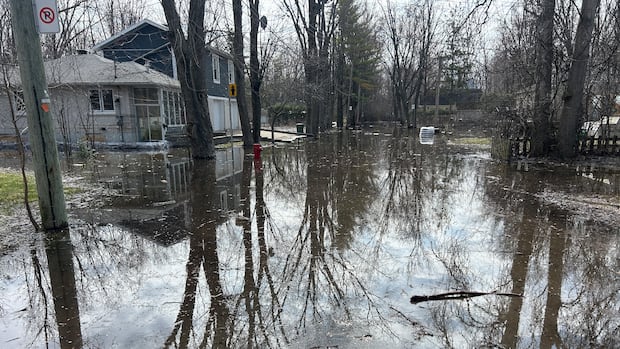
“It’s a stressful situation that every citizen needs to live with every year,” Montreal Mayor Soraya Martinez Ferrada said Wednesday morning from the Pierrefonds-Roxboro borough, where at least one street was flooded with ankle-deep water. The sandbag-surrounded homes were reportedly still unaffected.
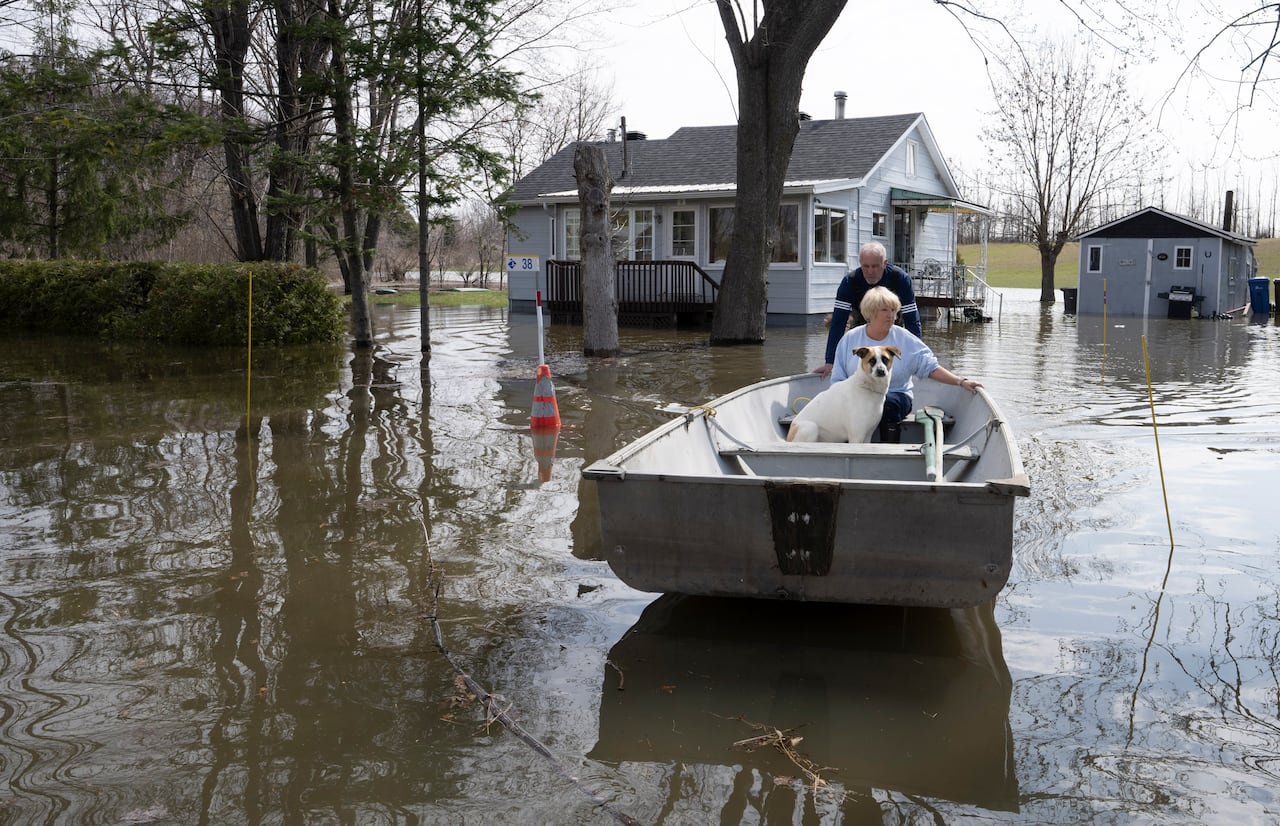 Homeowners Chris and Sue evacuate from their home with their dog Buddy as flood waters rise in Rigaud, Que., on April 22, 2026. (Christinne Muschi/The Canadian Press)
The borough has been in flood preparation mode since mid-March to avoid the kind of damage that the community experienced during the 2017 floods.
Dozens of residents sued the city for negligence after having their homes damaged that year due to what they claimed was a lack of preventive action.
“[Those] historic floods caught everyone by surprise,” said Pierrefonds-Roxboro borough mayor Jim Beis.
“Not only us, but communities across Quebec. So what we learned was we had to adapt to the reality of this happening again.”
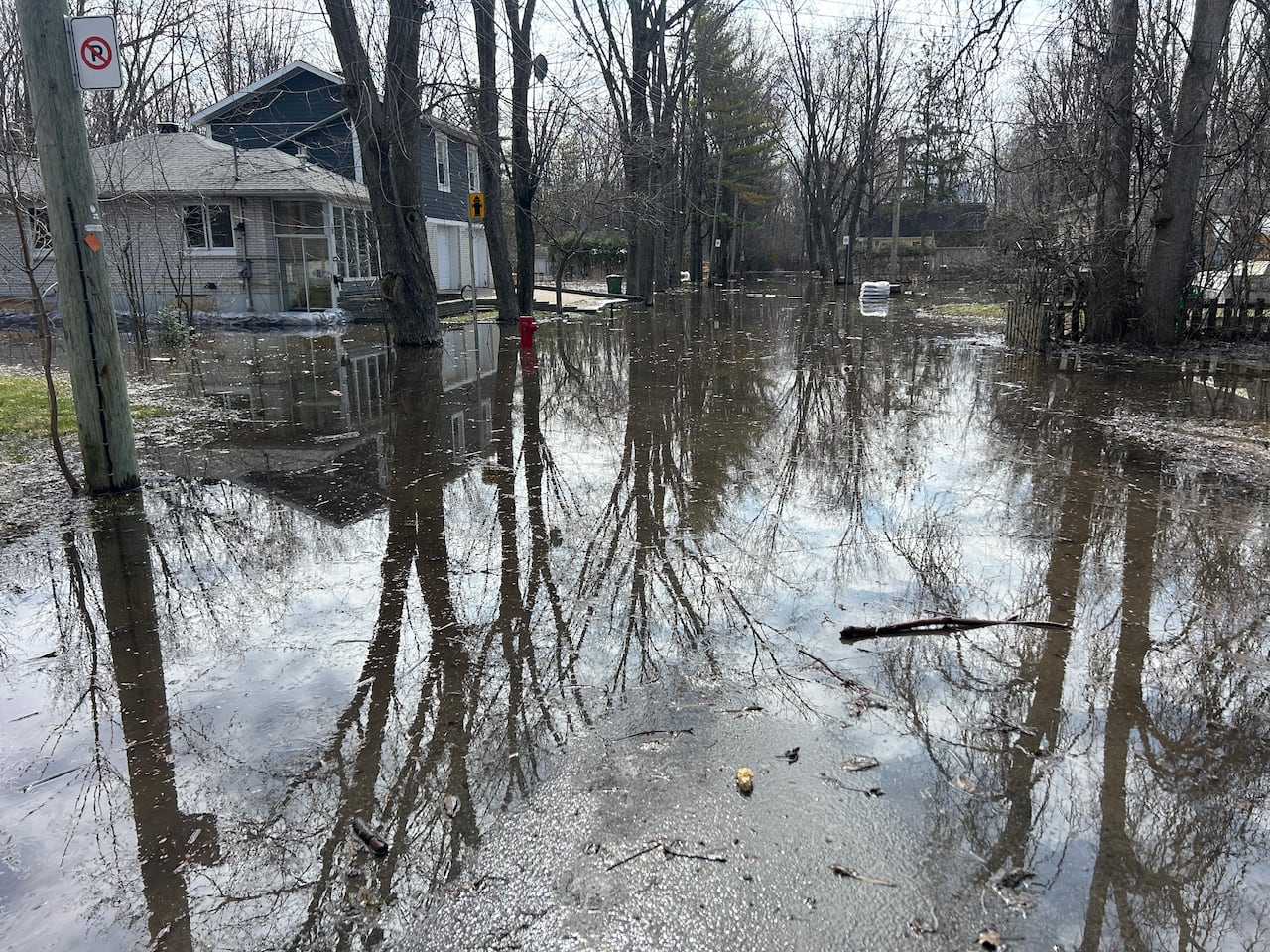 Lauzon Street in Montreal’s Pierrefonds-Roxboro borough was flooded on April 22, 2026. (Kwabena Oduro/CBC)Preventive measures
Beis said that before 2017, the area hadn’t experienced a flood since the mid 1970s. And since 2017, he pointed out there have been “four major episodes.”
Both he and Martinez Ferrada say this shift is due to climate change, and that the region has to mitigate its impacts by adapting accordingly.
This year, there have been several anti-flood protective measures put in place, including a 1.5-kilometre dike that winds its way through the borough’s backyards.
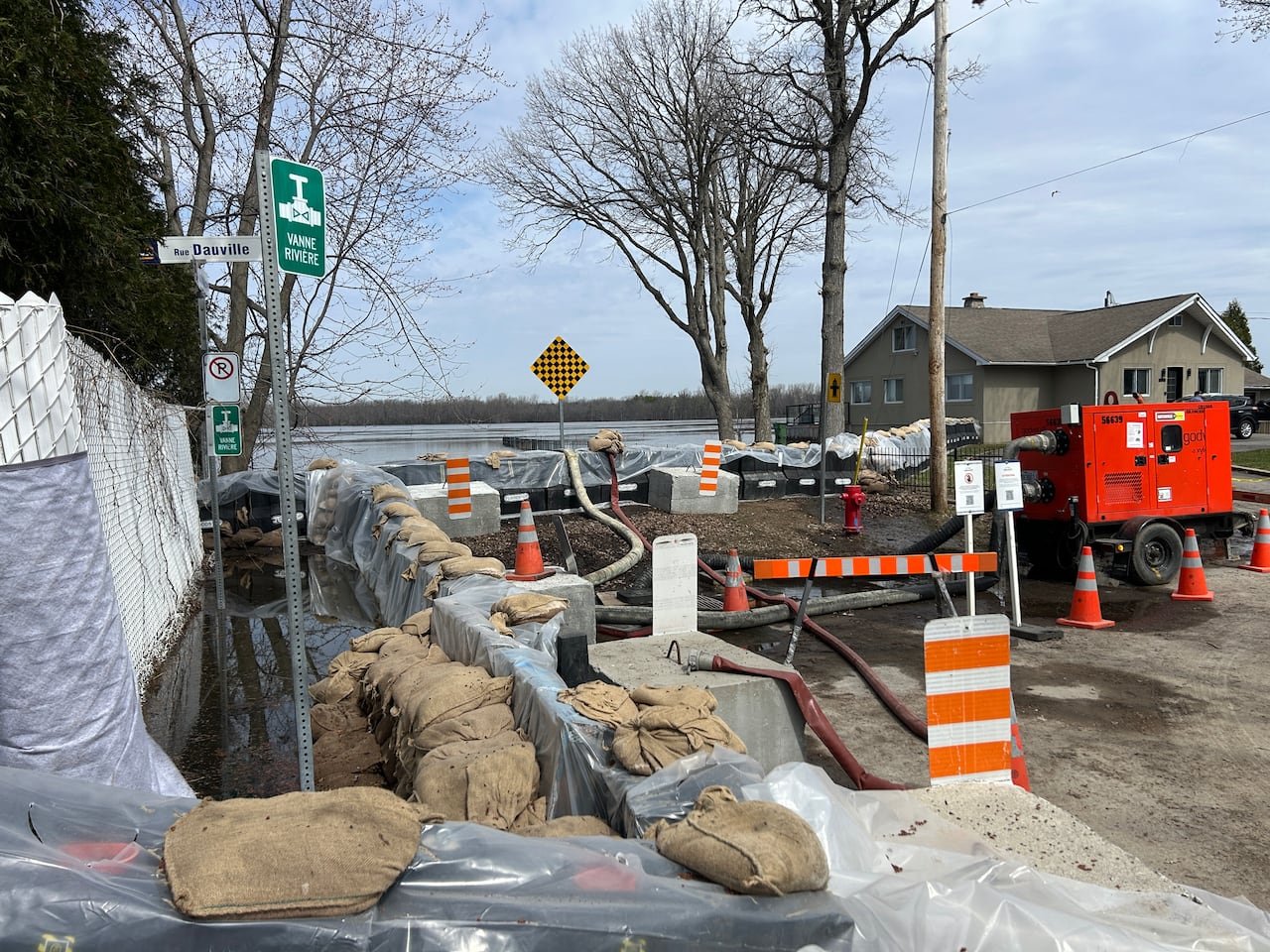 Pierrefonds-Roxboro is using multiple flood mitigation methods to protect the borough. (Kwabena Oduro/CBC)
It’s a technique Beis picked up in New Orleans, after he went there to learn more about flood mitigation methods. He said that if the current installations weren’t in place, the area would’ve been again severely flooded over the weekend.
Meanwhile, in Pointe-Fortune, which Mayor Sandra Lavoratore describes as “the last town before you enter Ontario on the 40,” the area is on high alert as the Ottawa River keeps rising. There are at least 30 homes in the town that are considered to be at risk.
Part of the issue there is riverbank erosion due to waves created by a nearby hydroelectric dam, according to Lavoratore. She explains that when the level of the water rises, the water pressure rises as well, which can create strong waves up to one metre high.
“Those waves pound on our shores for days, if not for weeks,” Lavoratore said.
The province has commissioned a study focusing on how this situation could be mitigated.
Flooding in Gatineau as water levels stabilize
Farther west, in Gatineau, officials said Wednesday that a dozen residents had voluntarily been evacuated, while more than 100 had requested services from the Red Cross.
Nearly 200 buildings have flooded, the city said, and about 300 more are at risk.
Meanwhile, the province’s flood monitoring website suggested water levels are stable or going down in many of the most heavily-impacted areas, including the province’s single major flood in Fort-Coulonge in western Quebec.
Martinez Ferrada, who’s also the president of the Communauté métropolitaine de Montréal (CMM) that represents 82 municipalities, said the province wants a flood map developed for the region, along with a plan for more permanent infrastructure to help better protect the area from recurring floods.
WATCH | Officials in Montreal, Gatineau ready to respond: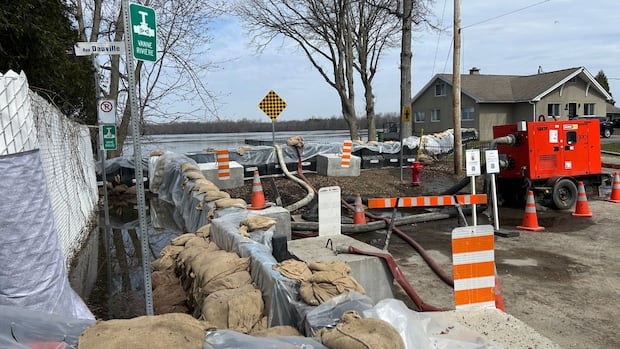
Montreal, Gatineau, Que., on guard as water levels continue to rise
Both cities are asking people who live in at-risk zones to be on alert. Officials in parts of Montreal and Gatineau, Que., are monitoring the nearby rivers, ready to respond in the event of flooding.
For now, dozens of pumps have been installed across the island of Montreal to help drain excess water and prevent additional flooding. Thousands of sandbags are being used as well.
The Montreal fire department also has rescue teams on standby, in the event the situation becomes more critical.
In the meantime, residents in at-risk municipalities are being asked to remain vigilant and to take proper precautions, including using sandbags that are being provided to them.