
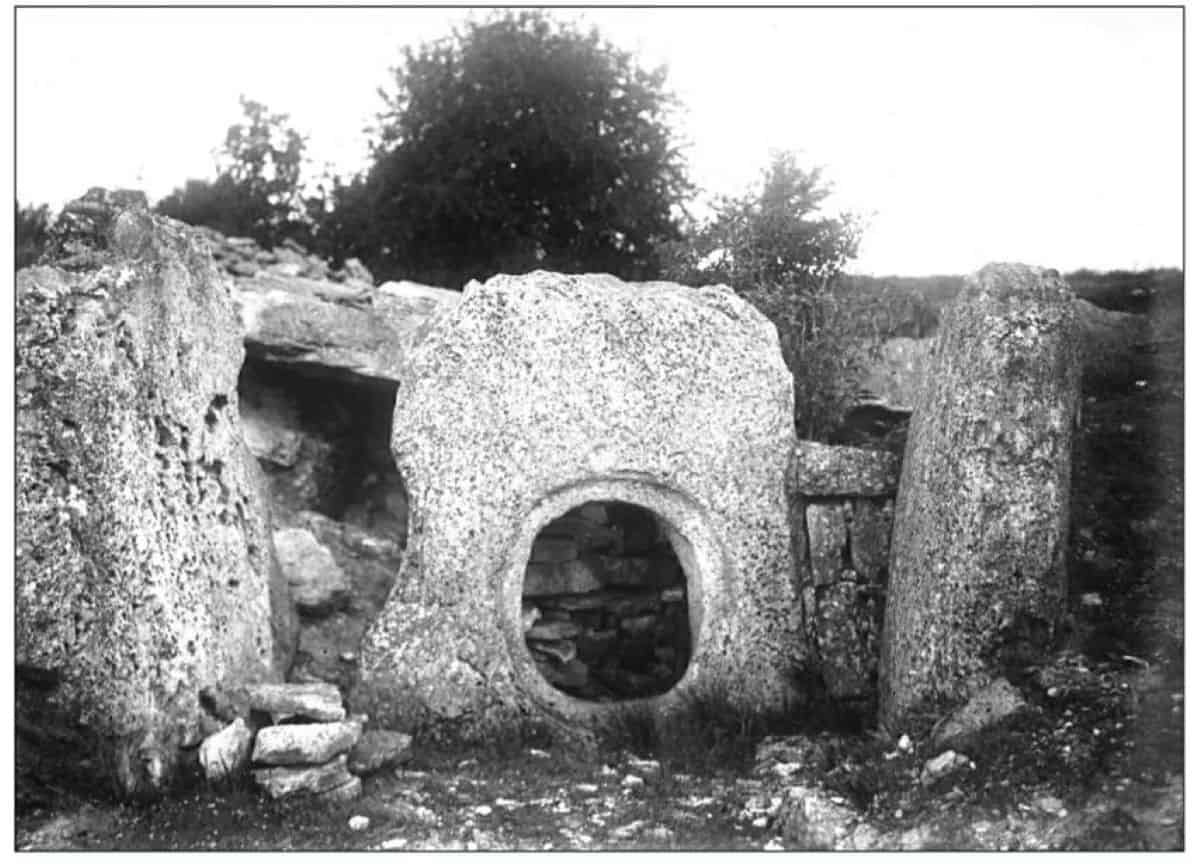
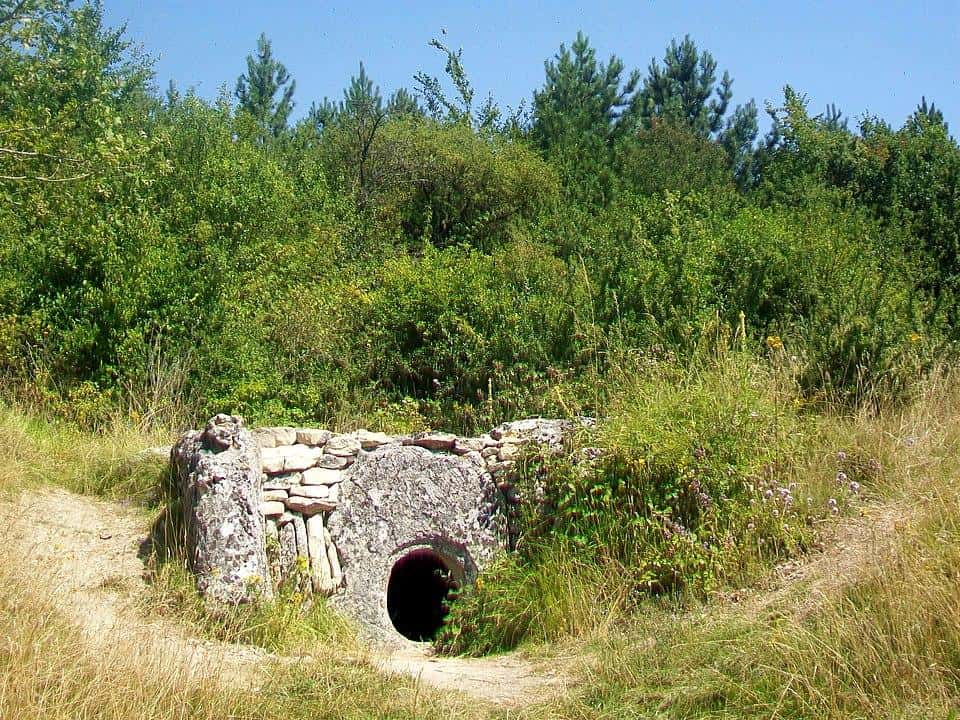
 Neolithic grave known as the Bois Couturier, similar and geographically close to the Bury grave. Credit: P. Poschadel
Five thousand years ago, the thriving farming communities of northwestern Europe fell into a mysterious demographic slump. Megalithic tombs that had held generations of the dead were abandoned, and across the region, wild forests slowly crept back over the once cultivated fields.
Archaeologists have debated the nature of this so-called Neolithic decline, but ancient DNA extracted from a collective tomb near Paris is finally bringing the crisis into sharp focus. By sequencing the genomes of 132 individuals from a single common grave, scientists have uncovered a startling biological timeline. The bones reveal that this was a complete population turnover: a vast, deeply interconnected local clan was fractured by high mortality and disease, leaving a centuries-long silence before an entirely new, genetically distinct people arrived from the south to claim the empty landscape.
The Precursors
Just 50 kilometers north of Paris, a large stone tomb at Bury holds the bones of hundreds of early Europeans. At first glance, this jumble of skeletons looks like a single, crowded graveyard. But DNA from their teeth reveals the tomb was actually used in two separate instances, divided by centuries.
“We can see a clear genetic break between the two burial phases. The people who used the tomb before and after the collapse appear to be two completely different populations,” Frederik Seersholm, a researcher at the University of Copenhagen, said in a statement. “This tells us that something significant happened, like a major disruption that led to the decline of one population and the arrival of another.”
During the first phase of the tomb’s use, around 3200-3100 BC, the people burying their dead were a tight-knit clan. Genomic reconstruction reveals sprawling family trees spanning up to five generations.
Yet, this extended family was struggling. The bones from this period show an alarming number of young people dying prematurely.
“This kind of mortality pattern is not what we expect in a normal, healthy population,” said Laure Salanova of the French National Center for Scientific Research. “It suggests that some catastrophic event may have occurred, such as disease, famine, or conflict.”
That catastrophic event may have been the result of a disease that has been decimating human populations in waves for thousands of years. In the teeth of several individuals from this first phase, scientists detected the DNA of Yersinia pestis, the plague bacterium. They also found Borrelia recurrentis, a microbe that triggers louse-borne relapsing fever.
×
Thank you! One more thing…
Please check your inbox and confirm your subscription.
“The presence of pathogenic DNA shows that infectious diseases were affecting human populations at this time,” Martin Sikora, a genomicist at the University of Copenhagen, added. “While there is no strong case to say that plague alone caused the population collapse, the total disease load could have been one of several contributing factors.”
A New People and a Reclaimed Forest
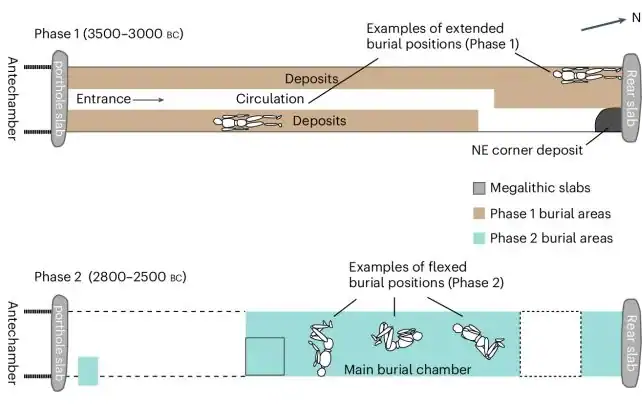 A diagram illustrating the layout of the Bury grave, and the two phases of burial. Credit: Seershom et al.
Following the plague and population collapse, the Bury tomb fell silent. Pollen records from the Paris Basin point to forest regrowth, consistent with reduced human activity and the abandonment of fields and grazing land.
When the tomb finally reopened centuries later, the people laying their dead to rest were complete strangers to the original builders. Their DNA was consistent with a long migration from southern France and the Iberian Peninsula.
This new society brought fundamentally different traditions. Instead of laying their dead out straight, they buried them in curled, flexed positions. The second wave of inhabitants discarded the complex kinship networks of their precursors. They favored smaller patrilineal lines and a larger share of the buried individuals were unrelated to one another.
For these newcomers, it seems shared culture or social status had become just as important as strict biological bloodlines when deciding who and where they belonged in the communal grave.
Archaeologists could only guess why northwestern Europe’s early farmers suddenly abandoned their massive stone graves. The DNA from the Bury teeth now provides hard data for the Neolithic decline. The sudden end of the megaliths now points to a major population turnover, perhaps driven by disease, which left large parts of Europe depopulated, only to be replaced by new people.
The study was published in the journal Nature Ecology & Evolution.