
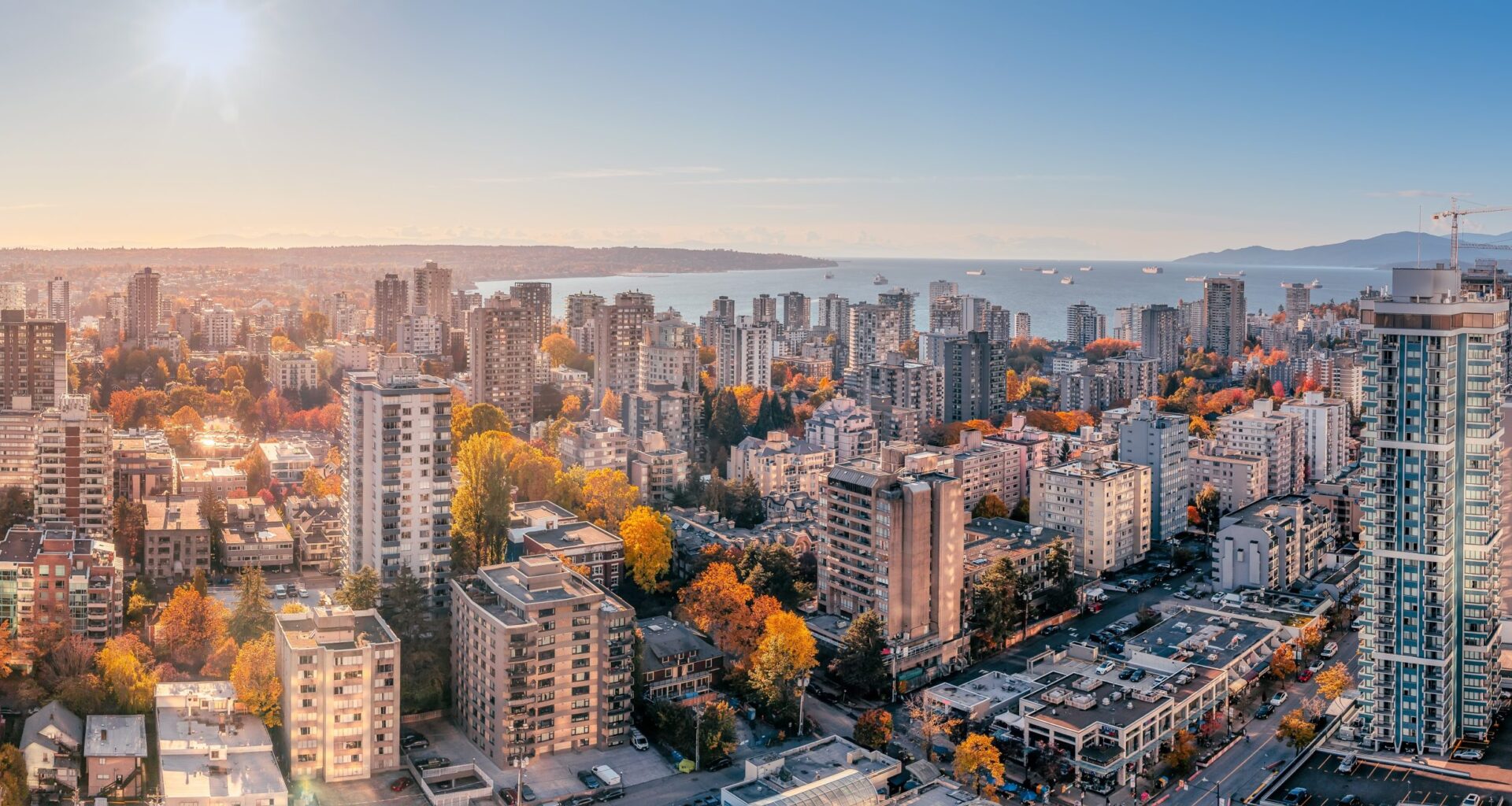
Vancouver City Council recently passed its Official Development Plan (ODP), a policy document that maps out land use for neighbourhoods across Vancouver.
The ODP brings together a diverse collection of policies, plans and strategies the city says will create a cohesive vision of the future.
The ODP builds on and replaces the Vancouver Plan.
It includes all the content of the Vancouver Plan, plus council updates and additions needed to meet B.C. government legislation.
All future development, from where highrise towers can be built, to what kind of businesses are allowed in which areas, must be consistent with the ODP.
The plan also incorporates recent planning principles, such as increased density around SkyTrain stations, multiplex neighbourhoods throughout the city and villages of walkable communities.
Neil Hrushowy, Vancouver’s director of community planning, says the ODP is a codification of the Vancouver Plan.
“The Vancouver Plan was a long-term, visionary and strategic policy document,” says Hrushowy. “The ODP translates that into a statutory policy plan.
“Adoption by bylaw gives the ODP formal legal status to guide land use decisions such as rezonings.”
Under new provincial legislation (Bill 18), the city is not allowed to hold public hearings for projects that are consistent with the ODP and have at least 50 per cent residential floor area.
“This is intended to speed up the delivery of housing and is consistent with procedures in other municipalities,” says Hrushowy.
Existing and future area plans – such as the Broadway Plan and the Cambie Corridor Plan – will continue to be developed in consultation with affected communities and shape neighbourhood-specific planning, ensuring growth responds to each area’s unique context, says Hrushowy.
After the ODP was announced, a group of 29 urbanists, urban planners and academics in the region wrote to the City of Vancouver to express their dissatisfaction with it.
Its main complaint is that the ODP is based on an overestimation of population growth in the city.
“This does not adjust for the reduction in immigration and the severe economic downturn cycle with ballooning existing supply of new units that are not being absorbed,” wrote the group.
“The proposed development in the plan is far beyond actual population growth, while not addressing the needs for housing affordability, especially not larger livable units for families.
“Basically, build it and they will come. So the tail is wagging the dog, with the development pipeline dictating the expected population growth.”
Developer and retired architect Michael Geller says although in principle the ODP is “a good step forward,” there needs to be more discussion on projected population growth and the capacity of the existing neighbourhood plans to accommodate that growth.
“Vancouver neighbourhood plans will be accommodated and the Broadway Plan and the Cambie Corridor Plan will stay in place, but there remains uncertainty about what all the ramifications of adopting ODP are,” says Geller.
Mary Pynenburg, former director of planning in New Westminster and Kelowna, says the ODP is likely to reshape the structure and predictability of construction activity in Vancouver.
Looking into her crystal ball, Pynenburg suggests a few ways in which the ODP could affect construction in Vancouver.
“In the near term – one to three years – I wouldn’t expect a dramatic spike in construction starts,” she says. “The ODP creates entitlement capacity, but it doesn’t necessarily override fundamentals, such as high construction costs and financing rates, softening pre-sale condo markets and possible labour constraints.”
In the medium-term (three to 10 years), however, the ODP could derisk and broaden the development pipeline, particularly if it reduces the need for site-by-site rezonings.
“If the ODP is implemented effectively, we may see a shift from bespoke projects to more standardized, repeatable building forms, such as mid-rise wood frame, mass timber and modular or prefabricated systems,” says Pynenburg.
“That could improve construction productivity, but only if approval timelines actually compress.”
In the longer term, Pynenburg expects to see a more stable, but more complex industry.
“If the (ODP) policy holds and is paired with infrastructure investment, the long-term outcome could be a larger and more stable construction pipeline and fewer boom-bust cycles tied to rezonings,” she says.
It could also mean, however, a more complex delivery environment, with higher expectations around public benefits, sustainability and design performance.
“If it is implemented well, it could lead to steadier, more diversified ICI construction over time,” Pynenburg adds. “If not – particularly if land values rise faster than feasibility improves – it risks becoming a plan that looks expansive on paper but delivers more slowly on the ground.”