
Life on Mars has been a recurring theme in the early sci-fis and even Hollywood movies that showed hostile Martians dwelling under the rocks of the red planet. The fascination even spawned comic book heroes like Martian Manhunter, aka J’onn J’onzz, in the DC Universe, among other similar characters, including John Carter in Edgar Rice Burroughs’ Barsoom series. In 1656 Mars was first mentioned in German Jesuit Athanasius Kircher’s Itinerarium exstaticum, where the planet is described as a volcanic wasteland deprived of life. The fascinating account is a fictional dialogue between Cosmiel, an angel and the narrator, Theodidactus, who explores the cosmos. By and large, the depiction of Mars evolved through the centuries with the latest finding. But we haven’t found life on Mars yet. Have we?
NASA has 3 orbiters and 2 active rovers on the planet that are relentlessly at work trying to dig into the past (quite literally). The fourth planet from Earth, it is inhospitable to terrestrial life as we know it. But did it ever support life? The clue is in organic molecules.
Last year NASA’s Curiosity Rover discovered the largest organic molecules ever found on Mars—decane, undecane, and dodecane, which are made of 10, 11, and 12 carbons, respectively. These long-chain hydrocarbons are presumed to be fragments of fatty acids that are only produced by living beings during various biological functions. Do these “biosignatures” confirm life on the red planet, past or present?
In its latest drill, the Curiosity Rover has bumped into more organic molecules, exciting exobiologists and Mars enthusiasts even more—21 carbon-containing molecules, to be precise!!! The molecules have been analyzed from the sample collected in 2020 from a rock sample named “Mary Anning 3.” It is speculated that the region “Mount Sharp” from where the rock sample was drilled was an oasis but dried several times over millions of years ago.
NASA, in its blog, highlighted the detection of a “nitrogen heterocycle” that is considered a predecessor of RNA and DNA which are key to genetic information.
Lead author of the paper entitled “Diverse organic molecules on Mars revealed by the first SAM TMAH experiment,” Amy Williams of the University of Florida in Gainesville quipped
“That detection is pretty profound because these structures can be chemical precursors to more complex nitrogen-bearing molecules. Nitrogen heterocycles have never been found before on the Martian surface or confirmed in Martian meteorites.”
Another exciting detection was the presence of benzothiophenes, which are found in meteorites carrying organic molecules.
After years of lab work, the results are in: A rock that our Curiosity rover analyzed has the most diverse collection of carbon-containing molecules ever found on the Red Planet. Of 21 organic molecules found, 7 were detected for the first time on Mars https://t.co/6HErTdbF3U pic.twitter.com/8U4VhucJGE
— NASA Mars (@NASAMars) April 21, 2026
Drill into the details:… pic.twitter.com/GsIjgWTnWW
— NASA Mars (@NASAMars) April 21, 2026
See Also: How Will Astronauts Get Oxygen On Moon Without Waiting 5 Days For Cargo? Blue Origin Has A Solution
See Also: NASA Will Give Rs 6 Crore If You Can Make A Menu For Mars For Their Next Mission; Know How To Enter
See Also: More Content On Mars At Mashable India Here
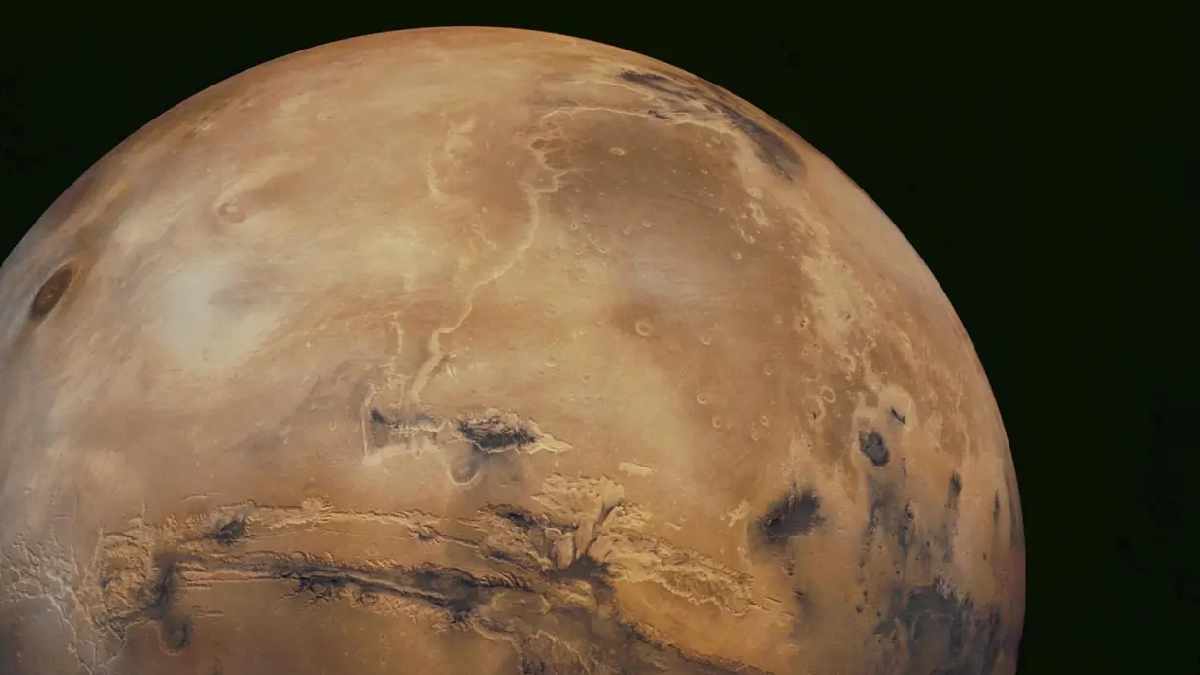
Cover: Mars by NASA