
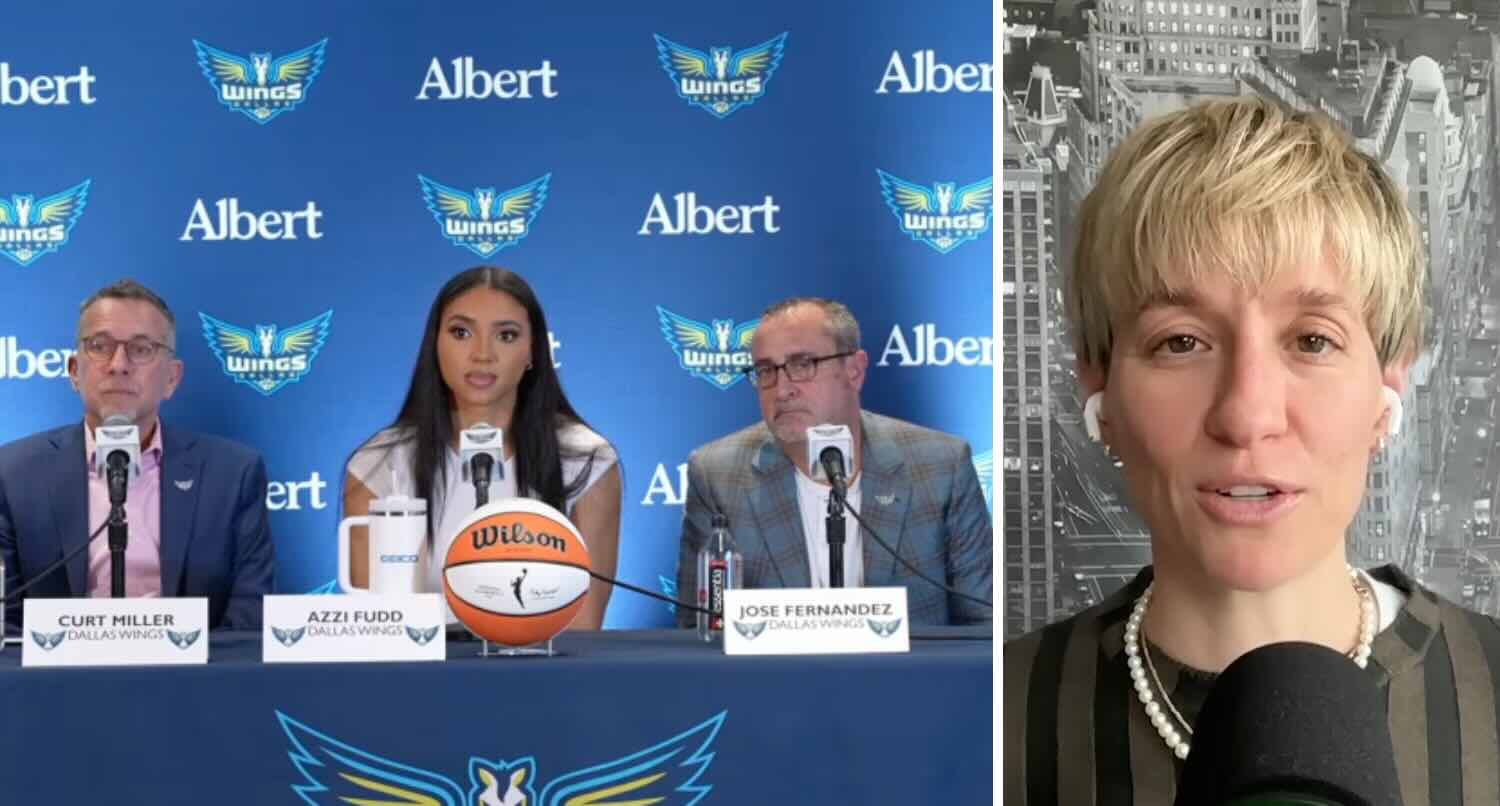
The way the WNBA is covered in the media is often a bigger story than the league itself, and Megan Rapinoe thinks she’s identified one of the major issues.
The Dallas Wings selected Azzi Fudd with the first pick in the 2026 WNBA Draft, which was a no-brainer of a selection. However, it was notable given that she and Wings star Paige Bueckers had previously announced they were dating. There have been plenty of cases of WNBA teammates dating, but for a team to have two high-profile stars in a relationship is not only rare but also a situation many mainstream journalists haven’t encountered before, especially if they’ve mostly covered men’s sports.
That’s led to a lot of conversations about the appropriateness of asking questions about their relationship and whether that’s even fair game. The issue came to a head last week when Wings PR shut down a question from Dallas Morning News’ Kevin Sherrington about their relationship.
The debate has raged on over whether it’s perfectly reasonable for reporters to ask about their personal relationships and how they might impact the team or their play. For her part, Rapinoe didn’t have an issue with Sherrington’s question, but she does think there is a larger issue with many of the people in sports media covering the league, especially if they only have experience covering men’s sports.
“I do think we are watching legacy or establishment media come in, and sort of like do business as usual, and it just feels like it needs more understanding and nuance,” Rapinoe said on the latest episode of the A Touch More podcast. “Like it’s not quite hitting. I think anybody who’s been in the sport a long time just sort of has that feeling of like that’s like, I, I get why you’re doing that. You do that (with) men’s sports, but like it’s not really quite hitting here.
“As it continues to grow, as it continues to become more a part of mainstream culture and media, I do think we are watching legacy or establishment media come in and sort of do business as usual. It just feels like it needs more understanding and nuance.”
As for what she’d like to see change, Rapinoe hopes more media members can meet WNBA players where they’re at, culturally and personally, rather than demanding they meet mainstream standards.
“How do we collectively protect and craft the future of this space as the people who care about what the WNBA has built and enjoy the culture that it brings? Because let’s be honest, the reason why the WNBA is out front in culture is because of how rooted it is in Black and queer culture and around equality for women and progress in all of those realms,” she said. “So how do we contribute to an ecosystem that can sustain player authenticity?”
As noted by the outlet Them, a majority of WNBA players are Black, and over a quarter are openly LGBTQ+.
Specific to the situation surrounding Fudd, Bueckers, and the Wings, Rapinoe noted the need for reporters and PR professionals who understand queer culture.
“That’s going to need to include PR teams and managers and agents and media members that can understand queer culture and have an imagination around how to give these players media platforms that work for them,” she added.
There have been two competing narratives about how the WNBA has been covered in the last few years. On one side is the sense that longtime women’s basketball media is too protective of the players and game and unwilling to dig into thorny issues that could court controversy. On the other side is the influx of mostly male sports media members who seem to use the WNBA and its players to further personal agendas and narratives without actually knowing what’s going on.
What Rapinoe is asking for might not solve these issues, but it could be an opportunity to help bridge some of the gaps that exist currently between women’s basketball players and the media ecosystem around them.