
The Athletic has live coverage of the 2026 NFL Draft.
The Minnesota Vikings entered the 2026 NFL Draft on April 23 with nine picks over the three-day event.
In the first round, they took a big chance, drafting talented (but recently injured) Florida defensive tackle Caleb Banks with the 18th pick. In Round 2, the Vikings traded down two spots and selected Cincinnati linebacker Jake Golday with pick No. 51.
With their first pick of the third round, the Vikings took enormous, run-stuffing Domonique Orange from Iowa State. Shortly thereafter, they nabbed Northwestern offensive tackle Caleb Tiernan and Miami safety Jakobe Thomas with back-to-back selections.
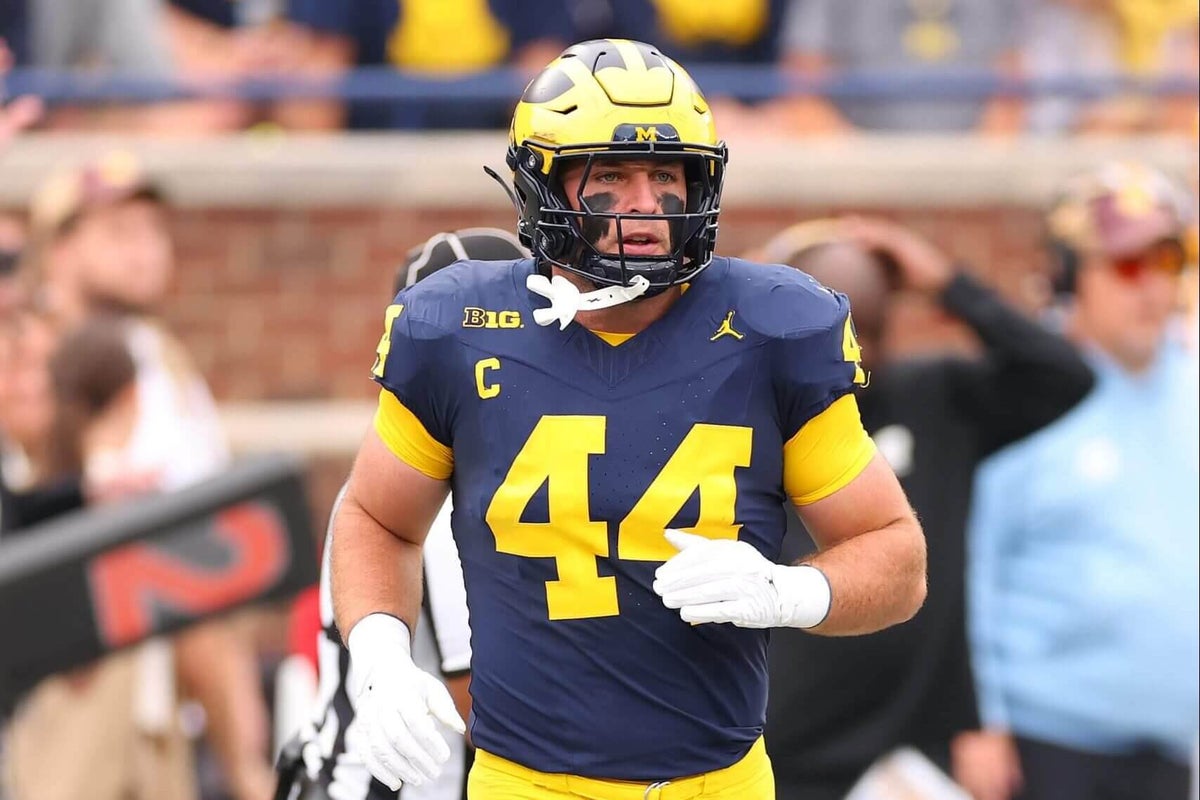
With their first selection of Day 3, Minnesota took smashmouth Michigan fullback Max Bredeson in the fifth round. Four picks later, the Vikings grabbed Charles Demmings, a cornerback from Stephen F. Austin.
Keep coming back here throughout the draft for grades and analysis of each Vikings pick.
Round 1No. 18: Caleb Banks, DT, FloridaHow he fits
This is bold (if that’s the right word). When Banks is healthy and engaged with his technique, he’s a serious problem. On talent alone, he’s definitely DT1 in this class. However, he’s not a very consistent player, and despite the athletic potential, he could be a bust. Banks, who is 6-6, 330 pounds, has had two serious foot injuries in less than a year.
Many teams dropped Banks out of the first round after he broke his foot at the combine. The Vikings could’ve had a perfect fit to fill a need here in Oregon safety Dillon Thieneman. Instead, they make a serious gamble on a recently injured — albeit very talented — athlete. Too big a risk for my taste, though I could easily be proven wrong in a year. We’ll see. — Nick Baumgardner
Dane Brugler’s analysis
Banks is a towering athlete with the fluid athleticism and unique physical traits to be impactful against the pass and the run. He is long and strong enough to claim early wins when he stays disciplined in his initial attack. But his taller stature can zap his power and take him out of plays, as he allows blockers to out-leverage him and stay attached. He leaves too much production on the field, although his tackling should improve with better conditioning.
Banks has a rare combination of size, raw power and big-man twitch, all of which lead to big-time flashes and glimpses of his ceiling. However, the absence of a healthy senior season complicates his projection, and his draft grade will depend on each team’s appetite for risk.
Alec Lewis’ analysis
How the Vikings shocked the NFL with a big swing for Caleb Banks
Grade: C+Round 2No. 51: Jake Golday, LB, CincinnatiHow he fits
Golday is one of the great stories of this draft based on his career trajectory. He was incredibly productive at Cincinnati and should compete to start right away.
But the Vikings have major issues in the secondary. They bypassed them in the first round for an oft-injured — albeit very talented — defensive tackle, but the alarm needs to sound right now. There’s no GM in place right now in Minnesota, and based on the draft so far, it’s fair to suggest the Vikings might not have one for a while. — Scott Dochterman
Dane Brugler’s analysis
Golday was asked to operate in a ton of space in college (almost like a nickel defender), which helped showcase his gazelle-like speed to chase down the ball anywhere on the field. His mental processing took a clear jump in 2025, which was the hope during his second season as a full-time overhang linebacker. Though he had the explosive athleticism to get away with false steps in the Big 12, it won’t be that easy in the NFL. He is trending in the right direction against the pass, but his coverage recognition isn’t yet a strength.
Golday is still unrefined in several areas, but his size, speed and ascending skill set are reasons to be encouraged. He projects as an immediate special-teamer who can compete for defensive snaps during his rookie year.
Grade: C-Round 3No. 82: Domonique Orange, DT, Iowa StateHow he fits
I love the value here, though this does make me further question why Minnesota took Caleb Banks so high in the first round. “Big Citrus” is an outstanding nose tackle who can kick out and play some three-tech as a stout run defender who could surprise with his pass-rush upside. — Nick Baumgardner
Dane Brugler’s analysis
A two-time “Freaks List” alum, Orange translates his weight-room strength (450-pound bench, 650-pound squat) to the field, where his impact is felt on tape more with disruption than production. Using his long extension, he creates powerful knockback, controls the point and eventually discards blockers, although his shed timing must improve. Despite having a limited range of impact, he played lighter in 2025, and his conditioning is a critical factor in his on-field success.
Orange is an ineffective pass rusher but has the frame and play strength to be an immovable, stout nose when he wants to be. He projects best as a one-technique or shade in a 4-3 scheme.
Grade: A-No. 97: Caleb Tiernan, OT, NorthwesternHow he fits
After a few questionable picks early in the draft, Minnesota has made some nice moves in the third round. Tiernan (6-7 1/2, 323) started 44 games at tackle, including his final 38 on the left side. He was one of the Big Ten’s most overlooked players and was a second-team All-Big Ten selection last year. With below-average arm length (32 1/4), Tiernan may kick inside to guard or flip to the right side. But he’s definitely an NFL player. — Scott Dochterman
Dane Brugler’s analysis
Tiernan is a large-framed blocker with the controlled, efficient movements as a pass blocker to stay square against various pass-rush angles. His use of hands is advanced for his age, and it allows him to quickly reset and toy with defenders. His recovery skills and body control aren’t as consistent in the run game, which leads him to lose control of reps.
Tiernan relies on refinement to compensate for his average length and redirect skills, using disciplined hands and poise to execute assignments. He’ll have swing tackle ability, although his best long-term position might be guard.
Grade: ANo. 98: Jakobe Thomas, S, MiamiHow he fits
This isn’t my favorite available safety on Miami’s roster, as I’d have preferred Keionte Scott. I also would’ve preferred Penn State’s Zakee Wheatley or South Carolina’s Jalon Kilgore. Even Arizona’s Genesis Smith. This feels like a reach on a rotational safety who should be a special teams asset. — Nick Baumgardner
Dane Brugler’s analysis
Against the run and in coverage, Thomas is champing at the bit to make plays. He reads it, triggers and looks to tune up ball carriers. He plays a lot more physically than he looks, although his aggressiveness can be a double-edged sword and lead to over-pursuit or missed tackles. He tracks the quarterback well from depth with ball skills but will overthink route concepts and isn’t as effective once he turns his back to the ball.
Thomas is a passionate competitor, which can lead to missteps, but will also put him in position to play fast and make plays. He has the floor of a special-teamer and the potential to earn a starting role.
Grade: CRound 4
No picks
Round 5No. 159: Max Bredeson, FB, MichiganHow he fits
The Vikings needed a fullback with C.J. Ham’s retirement. It should also be noted that the team added assistant head coach Frank Smith, who thrived in Miami with Alec Ingold. Bredeson was widely regarded as the best fullback in the draft. He’ll have an immediate impact and arrive with some relationships, specifically with quarterback J.J. McCarthy. — Alec Lewis
Perhaps the best pound-for-pound blocker in this class. Bredeson can be an H-back and probably even a TE in some 13 personnel situations. But his real value is on special teams and as an outstanding run blocker. As good as it gets. — Nick Baumgardner
Bredeson fits the mold of a smashmouth, no-nonsense blocker that was an integral part of NFL football 30 years ago — but not as much in the modern game. He does offer versatility in the ways he is deployed as a run blocker, creating movement with the same physicality and violence on every snap (former Michigan teammate Rayshaun Benny: “I watch Bredeson highlights to get jacked up.”). His lack of ideal length and speed will be more noticeable on a field with NFL athletes.
Bredeson will have limited landing spots because of his position, but his passionate energy and blocking toughness are NFL-worthy if he lands in the right offense. Special teams will be key for him to make a roster.
No. 163: Charles Demmings, CB, Stephen F. AustinHow he fits
The Vikings needed depth at cornerback. Demmings, a physical and fun-loving player, arrives as a prototypical corner for defensive coordinator Brian Flores. Demmings will be able to play on the boundary. He’ll also add some more man coverage ability. — Alec Lewis
Physically, Demmings is a balanced athlete with length, change-of-direction skills and top-end speed. He can do a better job reading the route, instead of just playing the receiver, but he competes with supreme confidence and skillfully tracks the ball to play through the hands. He is more comfortable in press man than zone, although some play-strength concerns show up (in coverage and run support).
Demmings has some learning-on-the-job lessons waiting for him in the NFL, but he has the cover athleticism and mental toughness to weather that storm and be better for it. He can offer immediate depth on defense and special teams.
Round 6
No picks
Round 7
No. 234
No. 235