

Listen to this article
Estimated 2 minutes
The audio version of this article is generated by AI-based technology. Mispronunciations can occur. We are working with our partners to continually review and improve the results.
Some Winnipeggers rallied this weekend to call for peace.
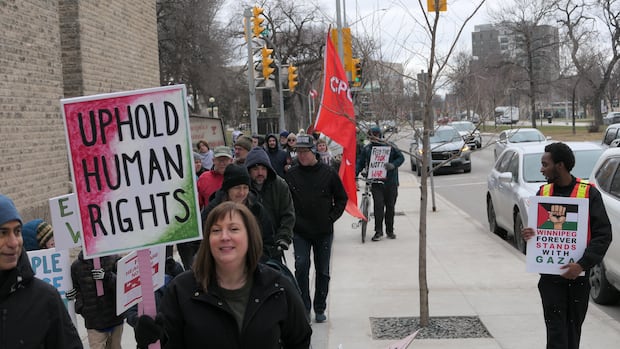
Several dozen people walked from the Manitoba Legislature to the Canadian Museum of Human Rights Saturday afternoon as part of the Stop Endless War march, voicing their opposition to ongoing conflicts across the world.
The event was held about two months after the U.S. and Israel attacked Iran, starting a conflict that also sparked a ground invasion of Lebanon and has resulted in thousands of deaths across the Middle East.
“I don’t remember in my lifetime ever having to think about whether the United States was going to drop a nuclear weapon on somebody,” Diane Frolick said.
“Now just a few weeks ago, that was the reality.… My kids might have to live through that.”
Protesters also rallied against wars in Gaza and Ukraine, as well as recent U.S. military operations in Venezuela and threats President Donald Trump and his administration have recently issued against Cuba.
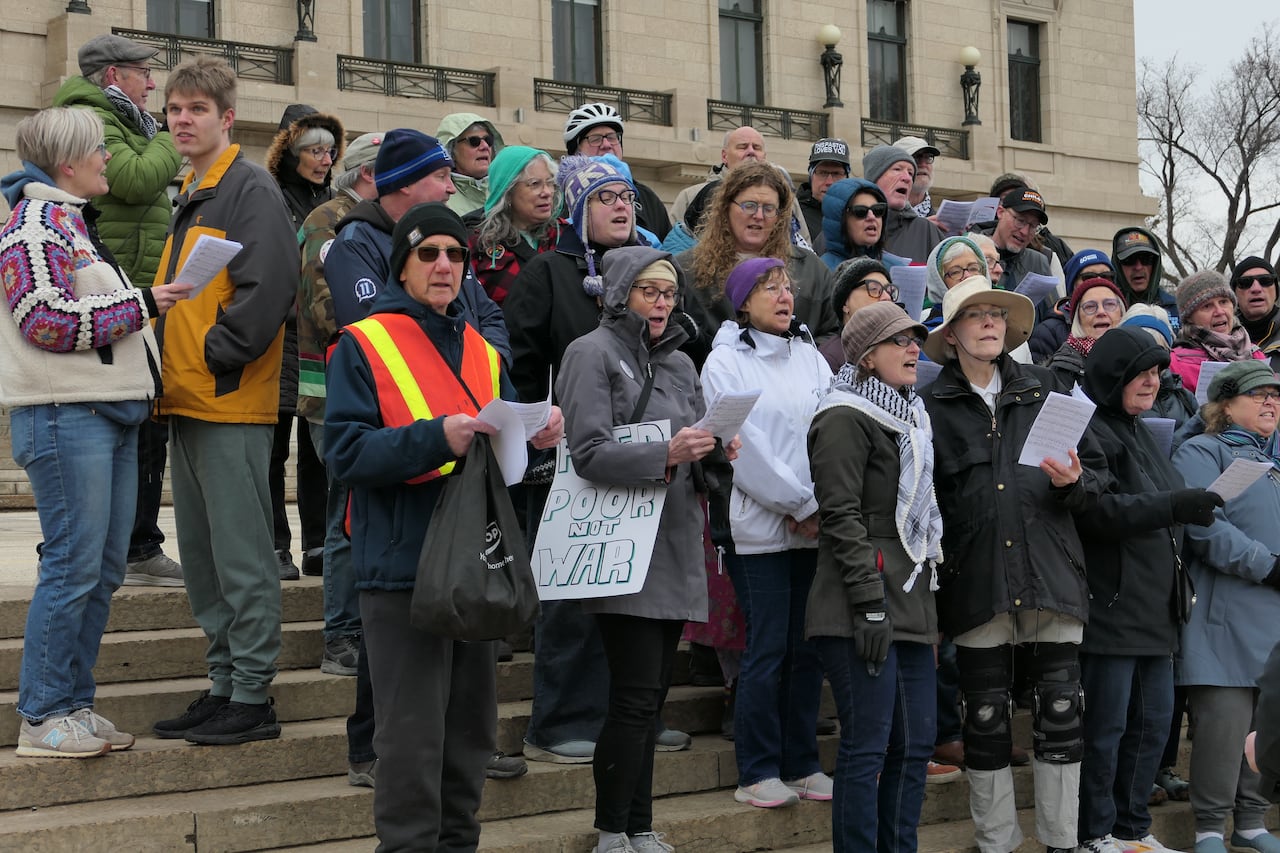 Demonstrators singing on the steps of the Manitoba Legislature as part of the Stop Endless Wars march in Winnipeg Saturday. (Jeff Stapleton/CBC)
Several organizations including Peace Alliance Winnipeg participated in Saturday’s March. Speakers addressed the links between all these conflicts and Canada’s role in them, as well as the impacts of military spending targets and the environmental footprint of war.
“I think people feel helpless a little bit,” said Candice Bodnaruk with the peace alliance.
“It’s really important to get together as a cohesive whole and speak out against the one thing we all agree on, which is that this massive increase in war spending that [Prime Minister Mark Carney] has done to meet NATO targets is wrong.”
Hernan Fernandez said he had to show up to Saturday’s march to voice his opposition to war even if he was only part of a small group.
“We can’t stay at home because [if] we stay home … our silence make us complicit,” he said.