

Listen to this article
Estimated 4 minutes
The audio version of this article is generated by AI-based technology. Mispronunciations can occur. We are working with our partners to continually review and improve the results.
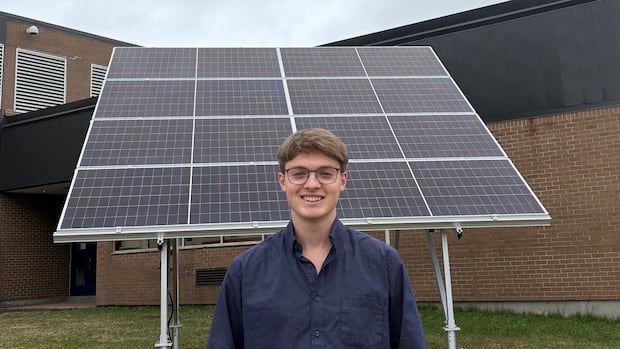
Josh Mullen, a Grade 12 student at Tantramar Regional High School hopes his solar panel project will reduce the school’s carbon footprint and help spread awareness about renewable energy.
The 16 solar panels now fully power an athletic facility overlooking the school’s football field, supplying power for its PA system, flood lights and the space that stores sports equipment.
“I think this is a really great milestone for my school in terms of renewable energy production and reducing our reliance on fossil fuel energy,” Mullen said.
According to Mullen, the project will generate an estimated 2,500 kilowatt hours of energy per year and offset 2.7 metric tons of carbon dioxide.
“There’s just a lot of problems relating to climate change in our world,” he said. “I think that our generation, my generation, really needs to take that step up … and fight it.”
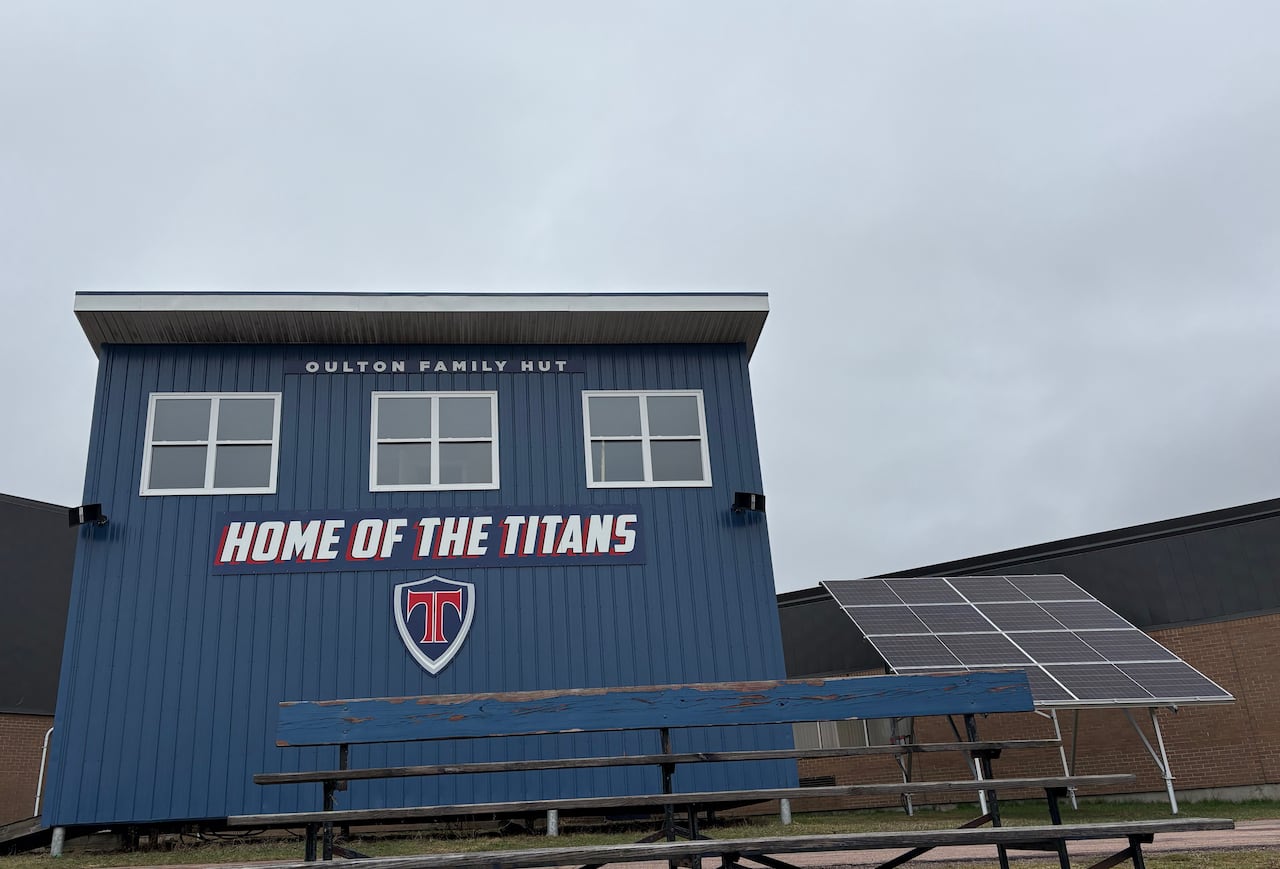 The 16 solar panels are powering the Oulton Family Hut, a sports facility at the school that stores equipment, powers flood lights and a PA system. (Hope Edmond/CBC)
Mullen said he came up with the idea about two years ago when he decided to revive the school’s environmental club and learned about a funding opportunity for youth-led projects that have the goal of reducing carbon dioxide emissions in schools.
“I’ve always really had an interest in fighting climate change and I do think it is humanity’s biggest threat,” Mullen said. “This is the first thing I wanted to do to start that change.”
He then approached Janie Brooks, climate change projects manager at EOS Eco-Energy, about how to apply for the grant. EOS Eco-Energy is an organization focused on climate change adaptation.
The cost of the project was over $35,000 and was funded by the federal government, the Mount Allison Students’ Union and EOS Eco-Energy.
Brooks said it’s a common misconception that New Brunswick is rarely sunny year-round, making solar a great alternative to extracting fossil fuels, which is a major driver of climate change.
“It really is an incredibly cost effective energy source compared to other energy sources that we are using.”
Teacher Matt Wheaton, who was the project supervisor, said the solar panels will inspire other students to take on new projects.
 Teacher Matt Wheaton was the supervisor on the project. He said many of his students were involved in different aspects of the project. (Hope Edmond/CBC)
“To see a student take a project of this magnitude on is something that I think inspires not just the students in the school but also the teachers and community members,” Wheaton said.
“I think that ultimately it just challenges students to … go after those ideas that they have that they think might be too big.”
Wheaton said the students not only learned about solar energy but also a variety of other skills.
He said a group of students in his essential skills class also helped with the project by coming up with possible locations for the solar panels from looking at shade maps. One student interested in becoming an electrician worked to help install the panels and other students are currently creating signage that will stand beside the solar array explaining how they work.
The installation of the solar panels was completed in February, but the project was officially unveiled to the whole school earlier this month.
Mullen said he hopes it’s the first of many solar projects to come at his school.
“It’s true that this isn’t solving climate change, but it does create hope,” Mullen said.
“We have the new generation coming up who are taking action and are eager to protect their home, protect the earth.”