
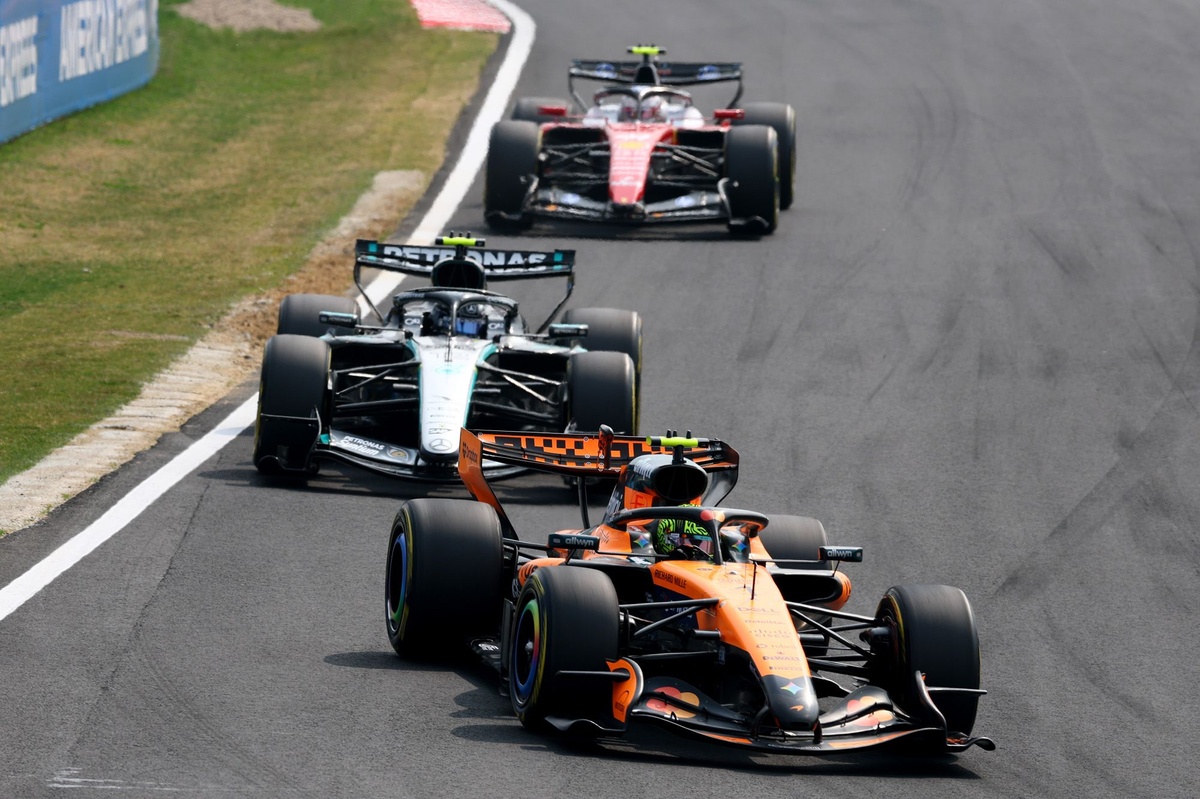
McLaren reckons F1’s first pass of power unit rule changes for the upcoming Miami Grand Prix should eliminate the need for drivers to lift and coast in qualifying.
F1 stakeholders used the series’ April break to refine the divisive 2026 power unit regulations, which heavily compromised qualifying and raised safety concerns due to the elevated closing speeds between cars.
Drivers had been unable to use their natural driving style to push to the limit in qualifying because of how energy starved the 2026 cars are due to the near 50-50 split between combustion power and electric energy. Getting the optimum lap time involved a lot of odd behaviour to charge the battery, including lifting early on the straight and coasting through fast corners, and drivers were actively punished for driving faster through the corners as it would result in them running out of power earlier on the following straights.
The two main fixes to address qualifying were to increase the super clip limit from 250 to 350kW limit, and a reduced harvesting limit from eight to seven MJ.
Raising the super clip power while reducing the total harvest limit still means cars will slow down on the straight as they recharge the battery against the power unit, but in doing so it will reduce the need to lift-and-coast in corners, still allowing drivers to push.
According to McLaren technical director for performance, Mark Temple, those changes should eradicate the need for drivers to lift and coast over a flying lap.
“The biggest impact is from a driving point of view,” Temple explained. “The idea is to get rid of some of these things that the drivers don’t like doing in qualifying – the idea of the car coasting for a long period of time into the high-speed chicane rather than a more natural feeling of staying on full throttle and then braking harder.
“There are two parts to it. One of them is what we call lift and coast, which should no longer be a thing in qualifying, which is where the driver actually lifted off the throttle and then coasted into the braking zone and then hit the brakes. We’ve now got a situation where it’s more efficient and that’s controlled by the power unit, so the driver can stay at full throttle and the power unit will recover the energy, straight mode will stay active, so the car slows down less.
“And then they also have the more natural feeling of going from full throttle directly onto the brakes rather than having this intermediate phase. In addition, the total amount of time and the duration of any single super clip or coasting phase is significantly reduced. So, when you do have that, it’s quite small.”
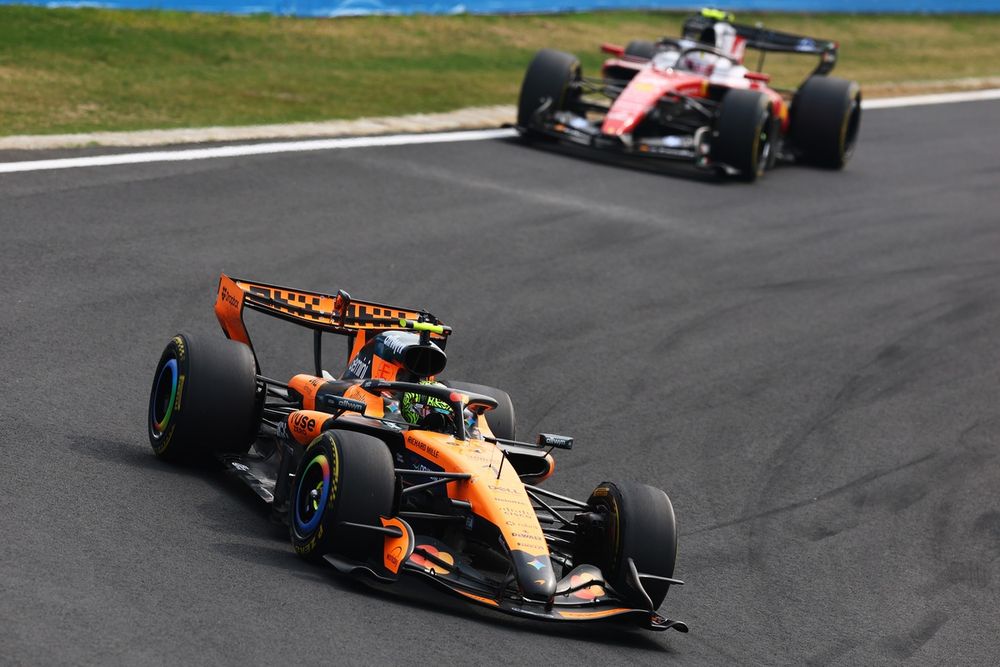
Lando Norris, McLaren
Photo by: Clive Mason / Getty Images
Temple expects 2026’s energy management needs will still throw up driving quirks but feels they will be more in line with the kind of management drivers had already been doing in recent seasons under the previous regulations.
“It’s actually much closer to some of the examples we’ve seen in previous years around tyre management or low levels of fuel management,” he added. “So that will make qualifying feel much more natural to the drivers.”
“[It’s still] a formula where you want to use the energy you have in the most efficient places, which is slightly different to previous years where you could disregard it and not worry about the power unit and the energy available. That said, we have had in the previous set of regulations situations where fuel management was a very significant part of how you drove the car and how you raced to a greater degree in some cases than we’ve seen with the electrical energy management.
“It’s just that in the last couple of years of regulations the fuel management wasn’t a big factor. It was still a small factor in racing. So, yes, there are still some aspects that remain but the more abstract ones like this kind of lifting off, being inefficient and wanting to come back on power, some of those things that were particularly counterintuitive should be eliminated, or at least the aim is to eliminate as many of those as we can.”
McLaren team boss Andrea Stella said the series should stay open-minded to further refine the Miami tweaks, if necessary, with F1’s governing body the FIA also trialling a so-called “low power start detection system” to help reduce the risks of cars being slow off the start grid.
“I think the changes that are implemented for Miami are a positive step in the right direction,” he said. “There’s already something in the pipeline to further improve what’s been put in place for Miami.
“I think Formula 1 as a community should remain quite open, that once we observe the outcome and the effect of this package of changes, we may have learned more about the new regulation and further tuning may be required. And we should have the openness and the proactivity to study this further improvement and put them in place.
“And finally, there should be a consideration for some hardware changes more for the longer term, such that we can place the operating point of the power unit somewhere where less compromises are required from a chassis or a driving point of view. We think this is possible, and we think that all stakeholders should approach this conversation with the willingness to contribute.”
Read Also:
We want your opinion!
What would you like to see on Motorsport.com?
– The Motorsport.com Team