

Premier Susan Holt says dairy giant Agropur should have told the provincial government about plans to close its Sussex-area operation when the province provided a grant to expand its plant in Miramichi.
“Yes, that would have been helpful information to have to understand the full picture of the impact on New Brunswick,” Holt told reporters at an unrelated news conference on Monday.
Quebec-based Agropur announced last week that it would close the Butternut Valley plant that employs around 60 people in 2028 and also shut down its plant in Truro, N.S., which employs 30 people.
In February, Opportunities New Brunswick announced a $2.4-million non-repayable loan for Agropur’s plant expansion and modernization plans in Miramichi, increasing dairy-processing capacity by 50 per cent.
The project would add 15 jobs in that area, but with the planned closure of the Sussex operation, the province is facing a net loss of potentially 45 jobs in New Brunswick overall.
Asked if the province would reopen conversations with the company about the grant for Miramichi, Holt said the decision was made “on its own merits” and is good for the Miramichi area.
“And the the idea of whether we could have done anything for Sussex, from my understanding with Agropur was there’s no further conversation to have there,” Holt said.
WATCH | ‘We’re trying to protect and retain what business’ we can, Holt says: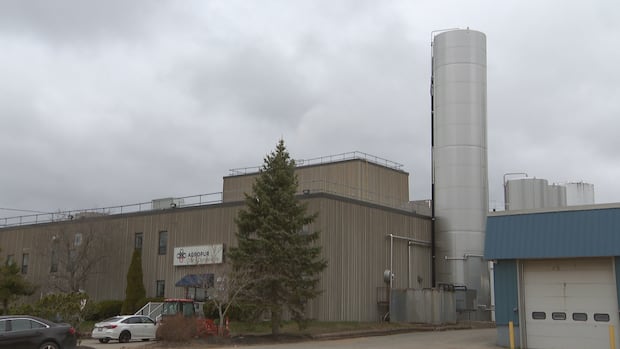
Holt says Agropur should have told N.B. about layoffs before loan deal
Agropur announced it will close its Sussex-area plant in 2028, months after it received a $2.4-million non-repayable loan from the province to modernize its Miramichi facility.
CBC News has reached out to Agropur to respond to Holt’s comments.
‘Agropur let everyone down’
Many people in the Sussex area, a community long known as Dairy Town, are feeling the pain from the news.
But perhaps none would feel the loss more acutely than Jim Brown, a former dairy farmer who was part of the original group in the mid-1980s that opened the Dairytown plant, which eventually became part of the Agropur group of companies.
“I felt terrible, just terrible,” Brown said when he learned the news. “Agropur let everyone down.”
 Jim and Marjorie Brown said the Agropur plant is an important part of the region’s economy and identity. Jim worked there for decades before retiring. (Mark Leger/CBC News)
Brown, who grew up on a farm and spent his entire working life in the industry, said he feels for the people, young and old, who could soon lose their jobs.
“I hope they’re old enough to retire,” he said. “I hope they get a good severance. Some are younger and will have to move on unless we can save it.”
Brown was no longer a part-owner when Agropur acquired the plant in 2014, but he continued working for the company until he retired when he turned 70.
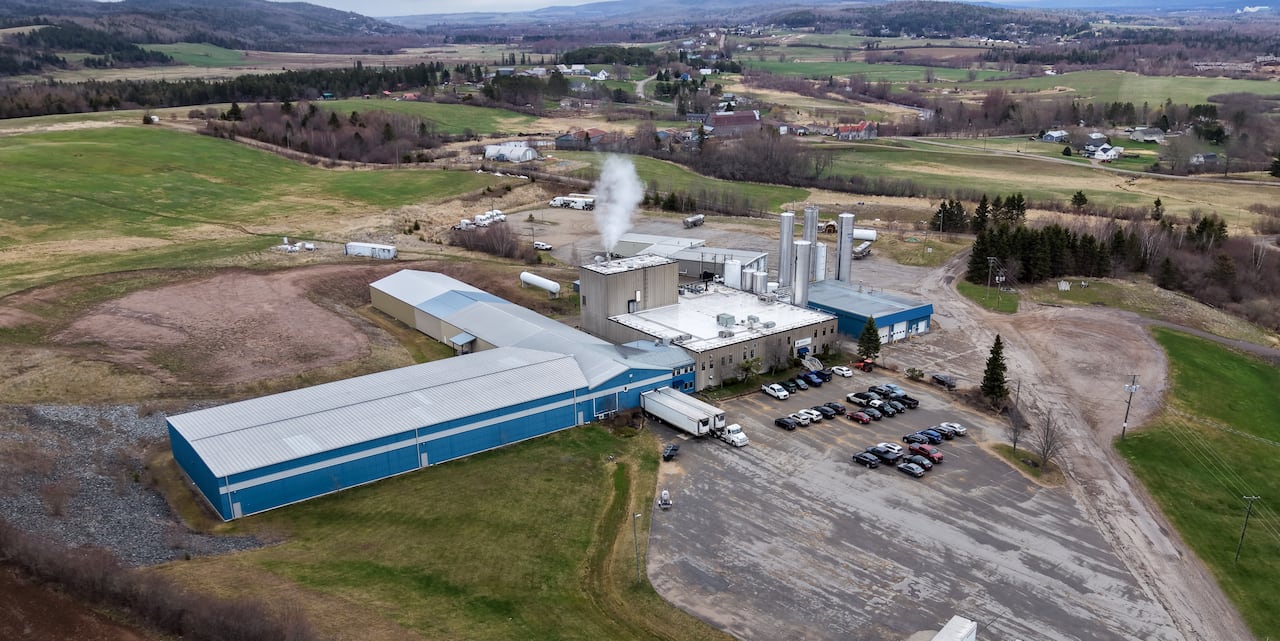 The Sussex-area Agropur plant is set to close by the end of 2028. (Roger Cosman/CBC)
He had high hopes that Agropur would grow the Sussex plant that ultimately weren’t realized.
“Dairytown was state-of-the-art, [Agropur] could have made the company grow,” Brown said.
Brown’s wife, Marjorie, was disappointed to hear that Agropur was receiving the $2.4-million grant for the Miramichi plant while the Sussex operation was being shut down.
“Why couldn’t [they] have done it here? We’ve already lost our potash mine and there’s no industries here, and so therefore the people leave,” she said.
 Sussex resident Ronald Alyea said it’s sad to see people at the plant lose their jobs. (Mark Leger/CBC News)
Sussex resident Ronald Alyea said he heard there will be retraining opportunities for people that lose their job, but that’s “easier said than done.”
“It’s sad that people are losing their jobs,” he said. “I’ve been in that situation in the past and it’s pretty hard. You’re scrambling as to what you’re going to do now.”
WATCH | ‘We need to be able to keep jobs here’: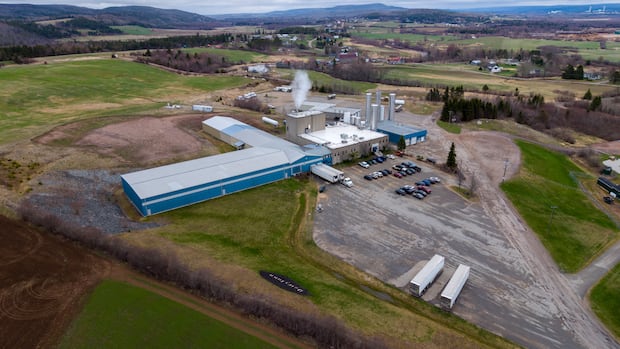
Sussex residents reacts to Agropur layoffs
Agropur announced on April 23 that it would wind down its Sussex operation in 2028, cutting 60 jobs.
Amanda Douthwright, who has lived in Sussex her whole life and considers herself a “farm girl,” said the dairy industry is part of the town’s core identity.
“I was definitely saddened to hear this, that people would be losing their jobs,” Douthwright said. “This is definitely the dairy town and we need to be able to keep jobs here.”
 Amanda Douthwright said the dairy industry is part of the town’s core identity. (Mark Leger/CBC News)
Steve Michaud, the general manager of the Dairy Farmers of New Brunswick, said the consolidations and improved production capacity could benefit the province’s dairy farmers.
He said the demand for milk powder to add protein to a variety of food products has increased by around 30 per cent, but the region’s ability to meet that growing need hasn’t been there.
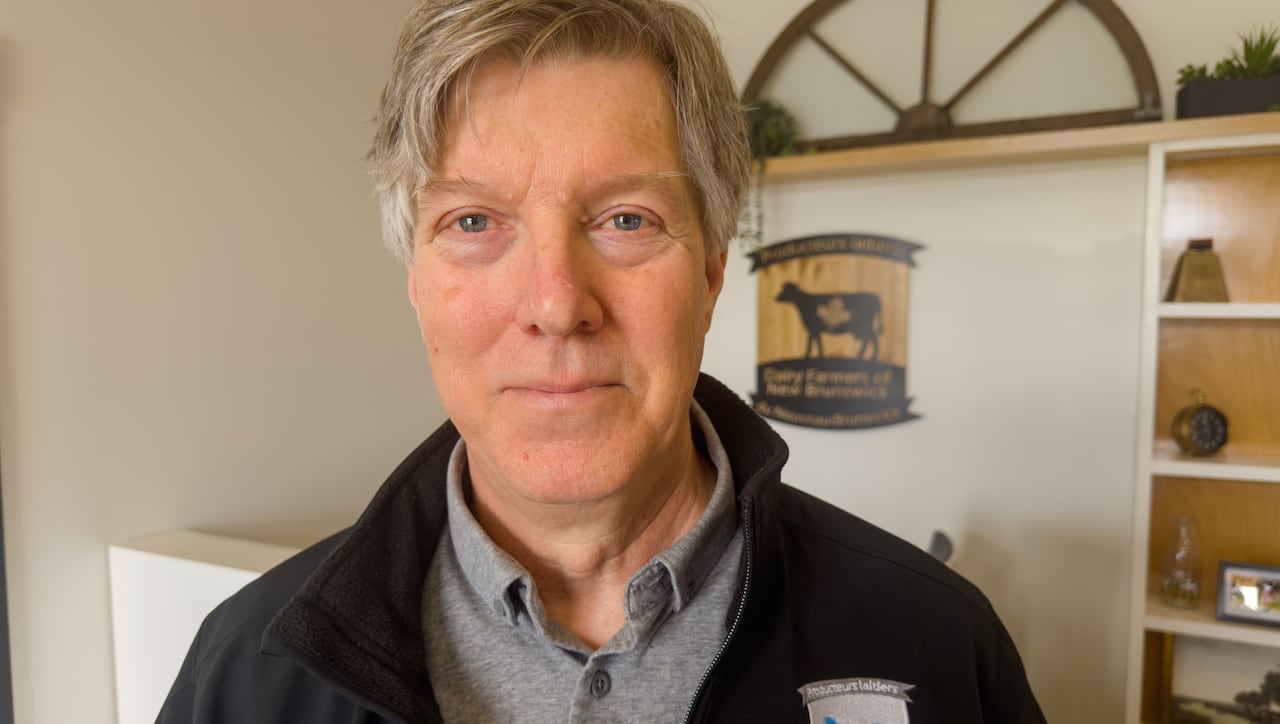 Steve Michaud, the general manager of the Dairy Farmers of New Brunswick, said the Sussex area will remain an important centre of milk production. (Mark Leger/CBC News)
Some of the province’s milk has been processed in Quebec instead, said Michaud.
“There’s been a lack of processing capacity in the region and this new project will certainly help us repatriate some of that milk and process it here in the Maritimes,” Michaud said. “There’s going to be an increased capacity, a big increase in Bedford and even in Miramichi for Northumberland’s plant there.”
Michaud has lived in Sussex for more than 40 years since he graduated from university and moved there to work for the Dairy Farmers of New Brunswick. He said Sussex will remain a dairy town even after the plant closes down.
“Dairy farming is still central to the area here in Sussex and in Moncton,” Michaud said. “That’s where the largest concentration of dairy farms are and produce at least a combined 60 per cent of the province’s milk.”