
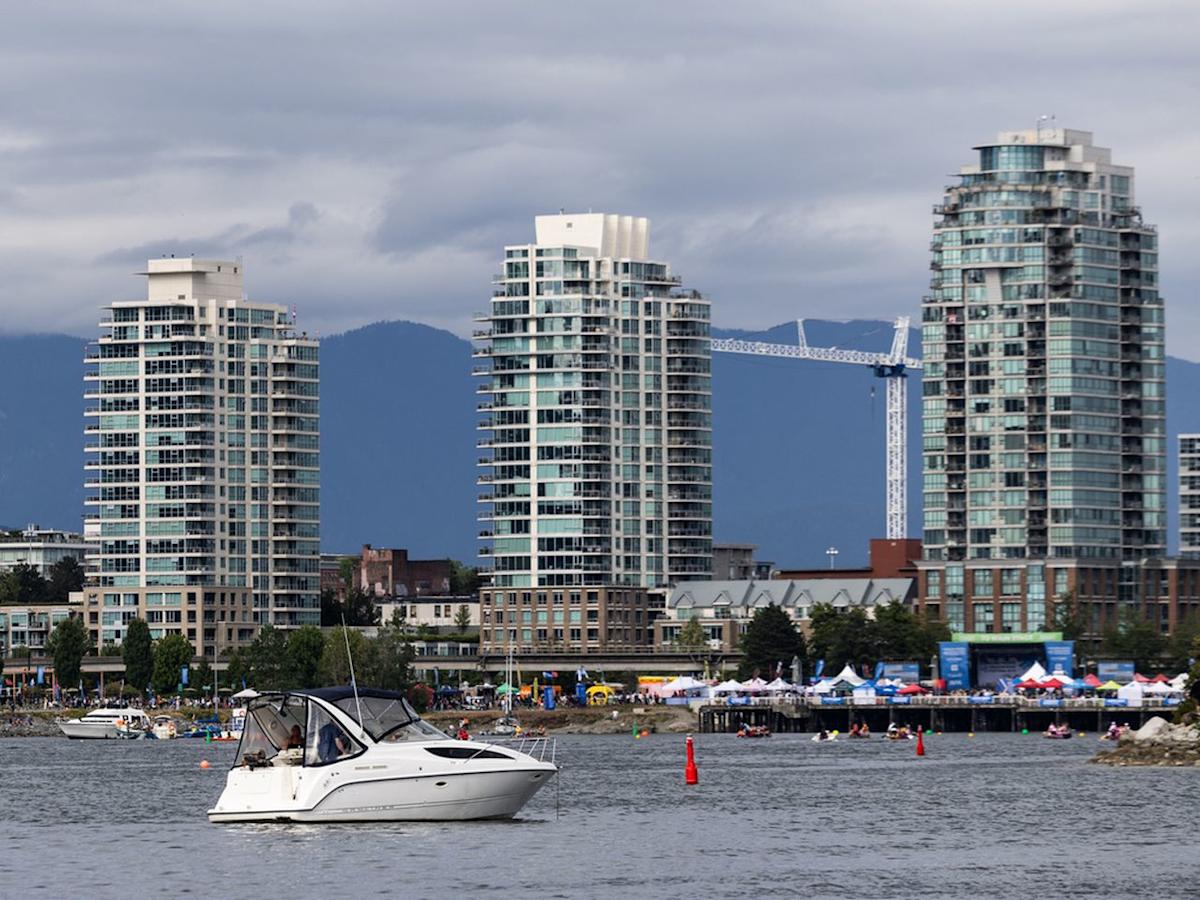
 A boat sails past residential buildings in Vancouver, British Columbia, Canada, on June 22, 2024. (Credit: SeongJoon Cho/Bloomberg)
Canada’s billionaire population is projected to grow 33 per cent by 2031, according to a report released last week by global real estate agency Knight Frank LLP. The company expects Canada to add 16 billionaires to its ranks over the next five years, hitting a total of 65 billionaires by 2031.
This number differs from the estimate by Forbes’ in its latest annual list, which put the number of Canada’s billionaires at 82. Knight Frank said it bases its figures on where billionaires are nominally resident, rather than citizenship or country of birth.
Canada’s billionaire population grew to 49 in 2026 from 47 last year, according to Knight Frank. Canada ranked 13th globally, with the United States topping the list at 914 billionaires as of this year. However the agency projected billionaire growth in the U.S. of just 12 per cent in the next five years.
After the U.S., the countries topping Knight Frank’s list of billionaires for 2026 were China at 485, India at 207, Germany at 165, Russia at 114 and Britain at 100.

The company predicted Saudi Arabia would increase its number of billionaires the most, with a 183 per cent growth rate, from 23 this year to 65 in 2031. Canada ranked 18th in Knight Frank’s estimate of global billionaire growth in the next five years. Because the U.S. was expected to see slower growth in its billionaires, it did not make the company’s ranking of Top 20 billionaire growth countries.
Overall, the number of billionaires globally could reach nearly 4,000 by 2031, according to the report, up from 3,110 billionaires in 2026.
Canada’s ultra-wealthy population is experiencing solid growth, as well. Knight Frank reported the number of ultra-high net worth individuals (UHNWIs), worth US$30 million or more, grew more than 21 per cent between 2021 and 2026, reaching 12,920 people this year.
The company expected Canada to see a 30 per cent boost in its UHNWI numbers by 2031, adding nearly 4,000 UHNWIs to reach 16,796 and making it the 13th fastest-growing UHNWI country around the world.
On a worldwide scale, the total population of UHNWIs climbed from 551,435 to 713,626 over the past five years. The U.S. led the way with a 36 per cent share of ultra-wealthy individuals and Knight Frank anticipated this concentration will “intensify further,” reaching 41 per cent of global UHNWIs by 2031.
• Email: slouis@postmedia.com