
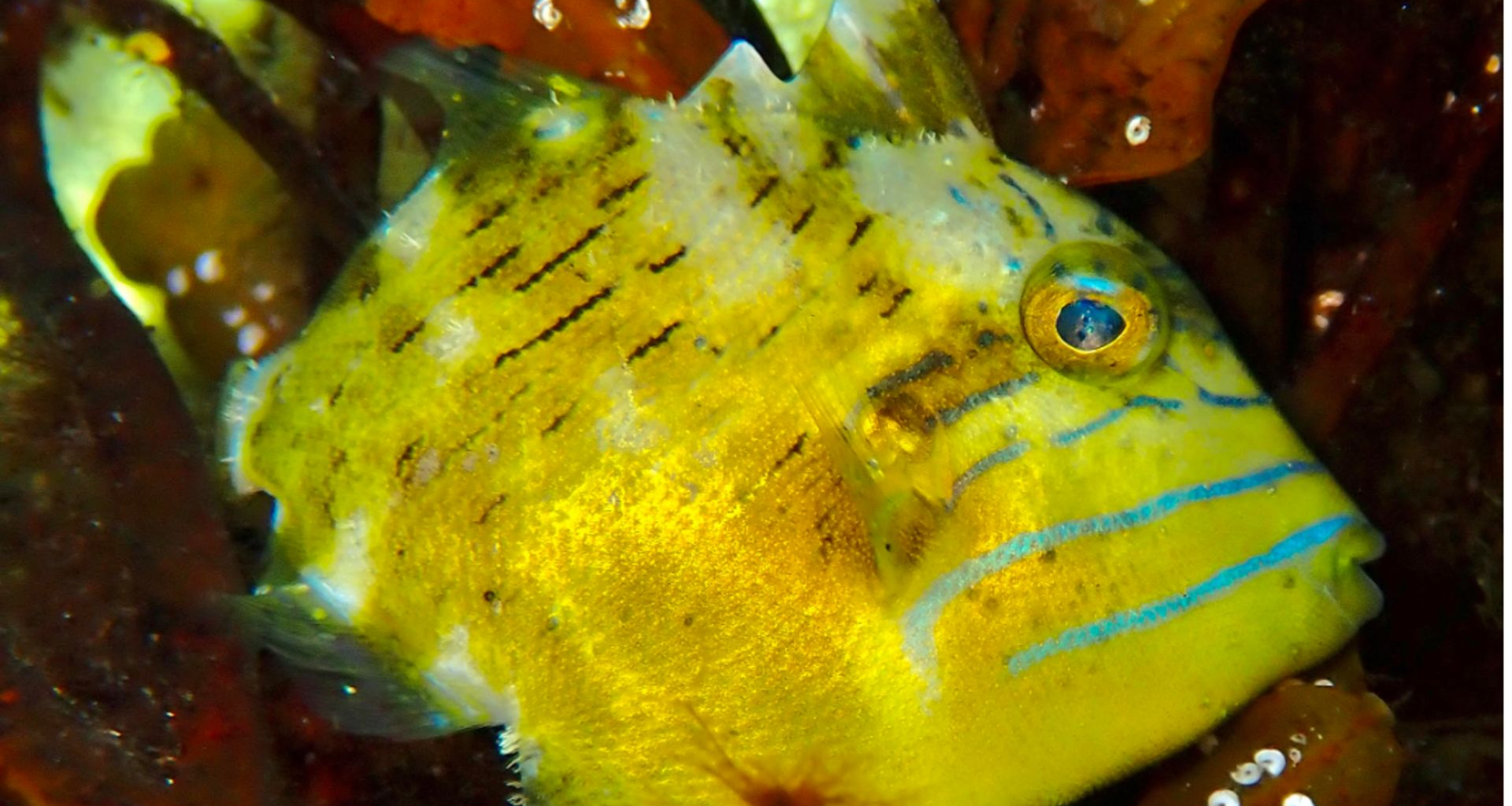
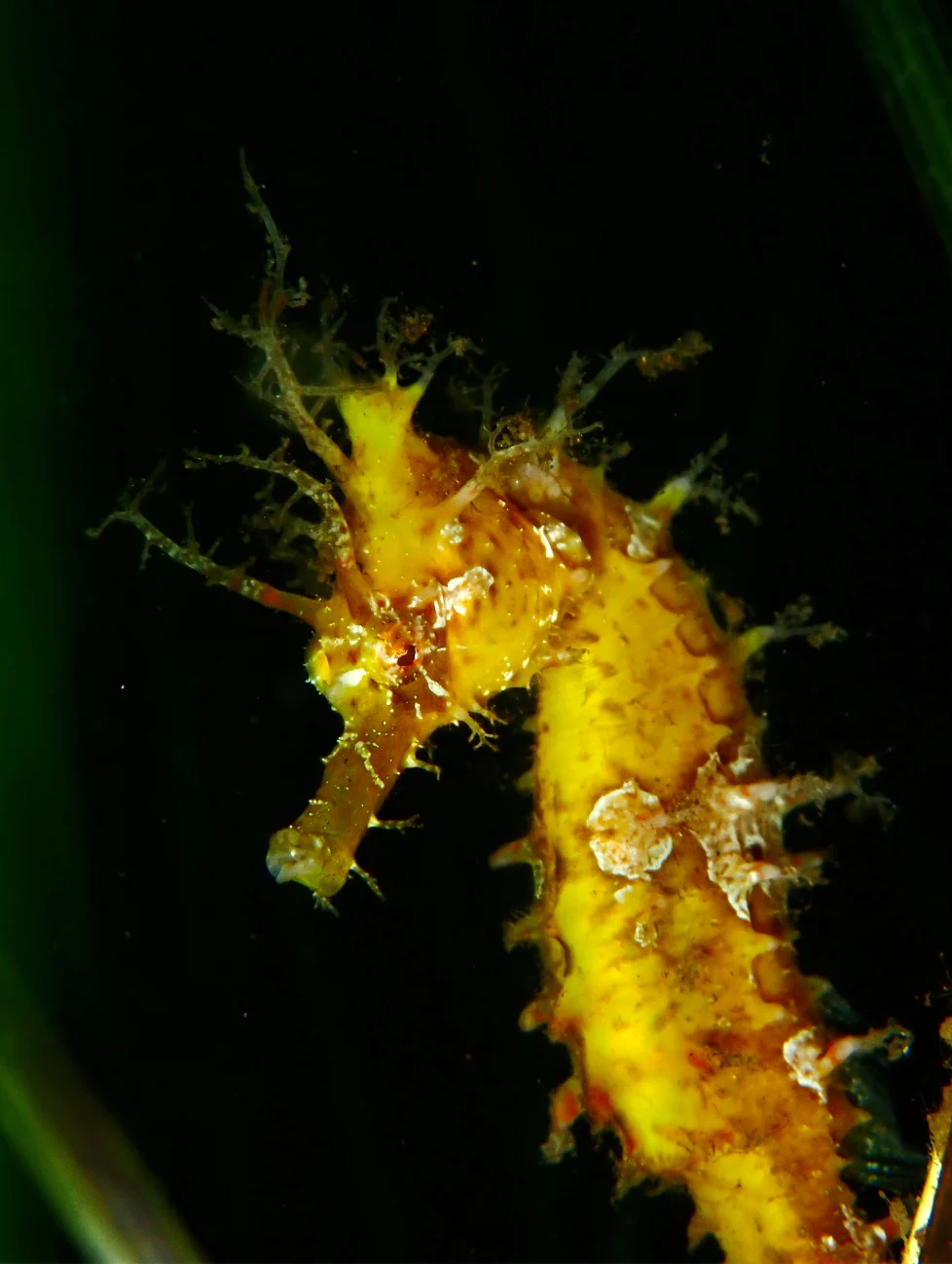
One such example of a seahorse spotted on the eastern shore of Nova Scotia. (Hunter Stevens/provided)
Worm says tropical species like seahorses, cornetfish, butterflyfish, and amberjacks often arrive passively with Gulf Stream eddies or other warm water currents as larvae or juveniles, and then it takes them some time to grow before becoming noticeable.
The winter typically kills them off if they’re not large enough to swim to warmer waters, though their paths haven’t specifically been tracked, say experts. Typically they just disappear once the water gets below a certain temperature, and it’s likely they just die.
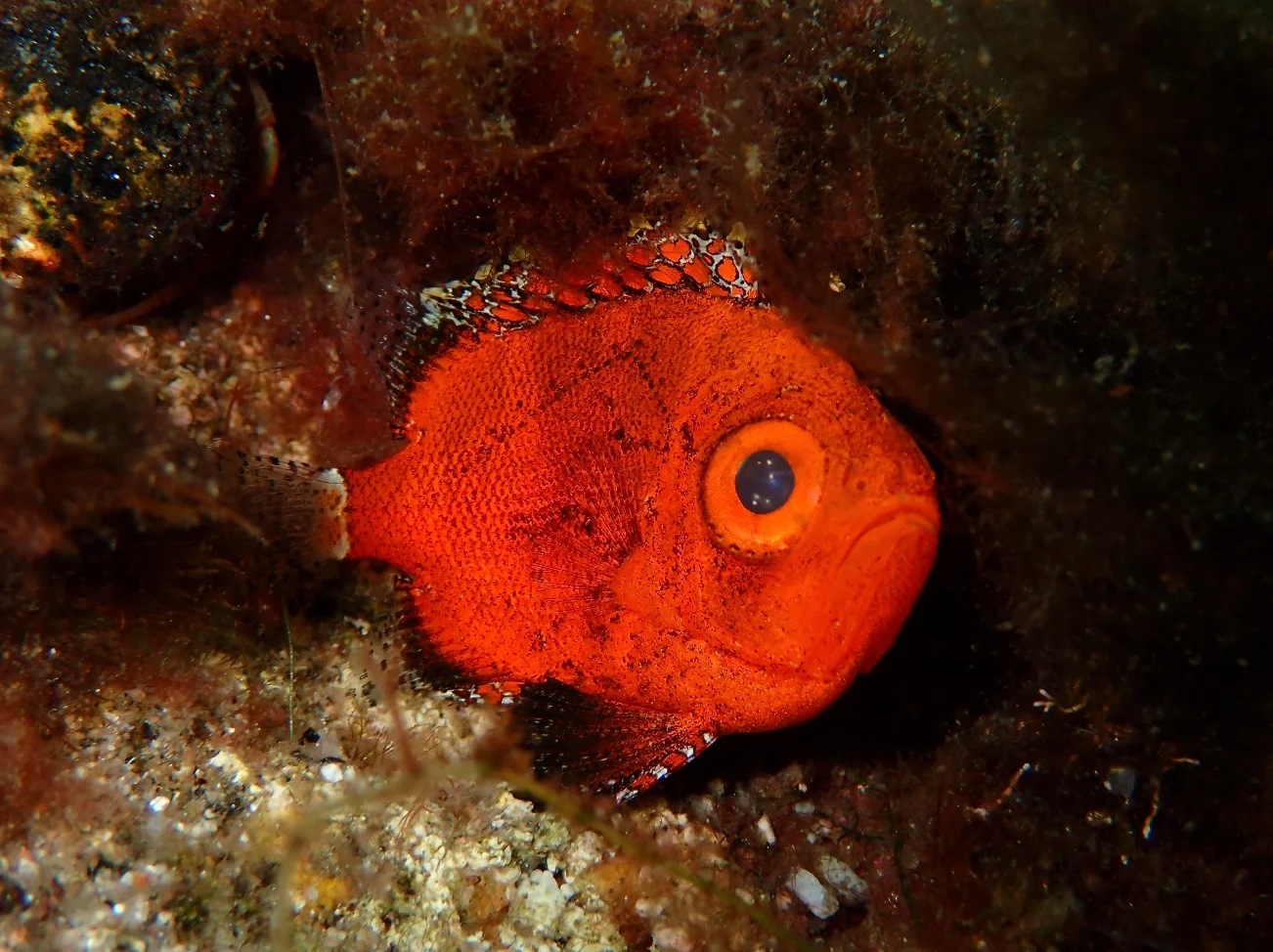
Short Bigeye fish spotted in the Atlantic waters off the coast of Nova Scotia. (Hunter Stevens/provided)
Another reason we could be seeing tropical species closer to home is hurricanes. Hurricanes can push a pulse of warm water into the Atlantic region and cause an influx of tropical fish in the immediate aftermath.
“I’ve seen it diving myself,” confirmed Worm. “The water’s really warm, like 21 degrees C maybe, and all of a sudden, you’re in a fish bowl.”