
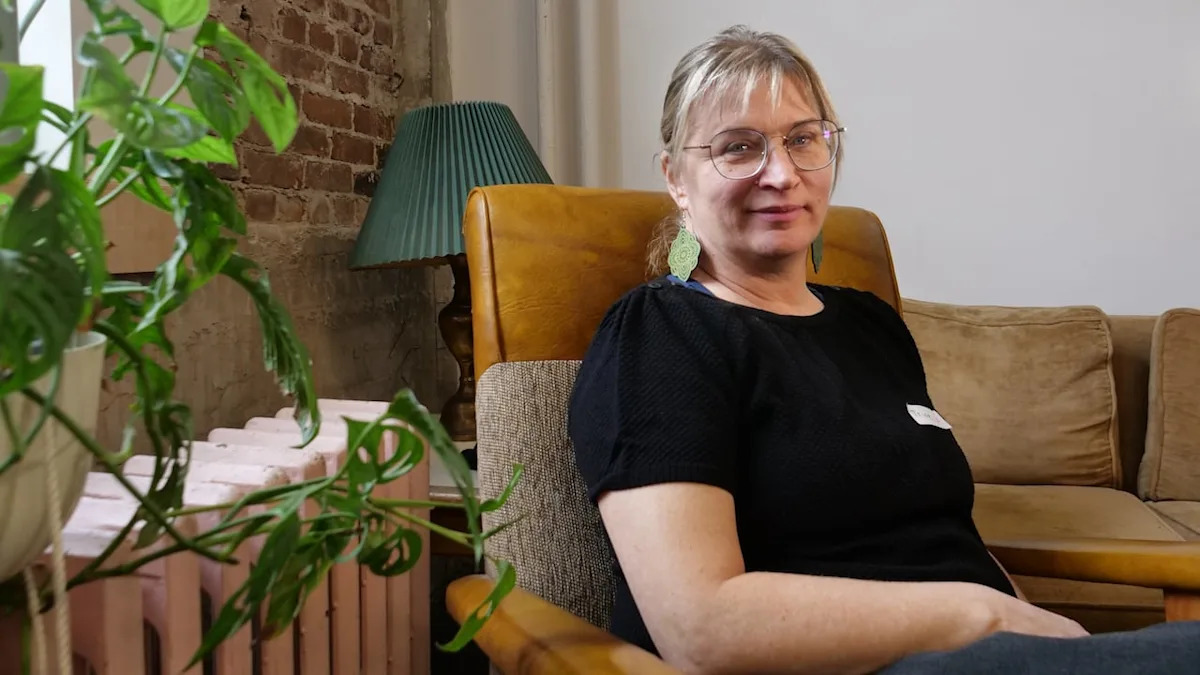
This story is a collaboration between Concordia University’s journalism department and CBC Montreal.
When Sophie O’Shaughnessy, a 32-year-old solo mom, attended a speed-dating event in February alongside her friends Joanie and Jean-François, they were looking for people to share a life with — but not in a romantic way.
Instead of a lover, they were eager to meet other adults who would, just like them, show interest in sharing a home with like-minded individuals.
Espace des Possibles, in the Montreal borough of Rosemont-La Petite-Patrie, hosted the unconventional social event last February in order for people looking for co-living opportunities to meet potential housemates.
About 30 strangers sat across from each other, in groups of four, chatting about their ideal living arrangements and daily routines.
O’Shaughnessy was looking to form a community, not just roommates to split the rent with.
A self-employed sexologist, she said that finding an apartment where she could live on her own isn’t possible with her income.
“Even if I were in a couple, I would still want to share that life with other parents and adults,” she said.
The event was organized by Lykkå Cohabitation, a Montreal-based non-profit focused on communal living.
An answer to rising costs
A growing number of Montrealers are exploring shared living arrangements to ease both financial pressures and social isolation. Facilitators such as Lykkå Cohabitation are emerging as a solution.
With now more than 600 members in a private, vetted Facebook group, the organization supports people who might lack the resources or connections they need to create co-living spaces, such as single parents or newcomers.
Lykkå organizes matchmaking events and offers various workshops on funding options, community building and co-living models. It began as a grassroots initiative and it is now transitioning into a more organized non-profit which can pursue partnerships, obtain grants and expand their services.
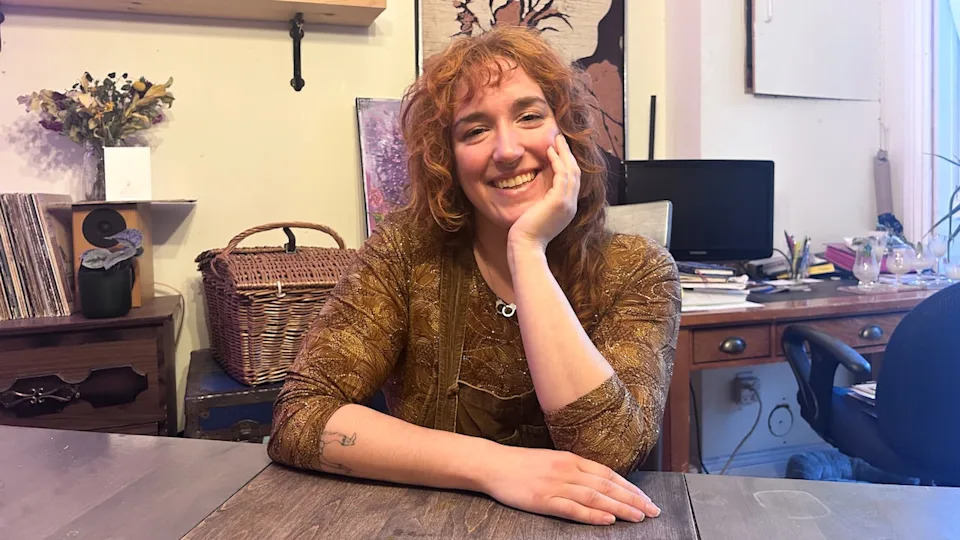
(Noor Musawi/CBC)
Trine Mikkelsen, the co-founder, had the idea when she first arrived in Montreal from Denmark 16 years ago, and felt isolated.
“We introduce people as they come in,” she says. “It has to be people who actually want to be in a community. They come in saying what they need, and we try to match them.”
With the average asking rent in Montreal up nearly 71 per cent from 2019 to 2025 and home prices also continuing to climb, living independently, particularly on a single income, is increasingly out of reach.
Single-person households are the most common in Quebec, and living on your own has a social cost.
Statistics Canada reports rising levels of loneliness among seniors and people living alone. Only 3.1 per cent of people in the province live in multi-generational households, the lowest proportion in all of Canada.
In response to both economic and social pressures, some will turn to shared living arrangements. Mikkelsen opened up her own apartment to strangers when she first moved to Montreal.
She housed people from all age groups, from students to seniors. This experience then propelled her to create a network where she can help other people wanting to do the same.
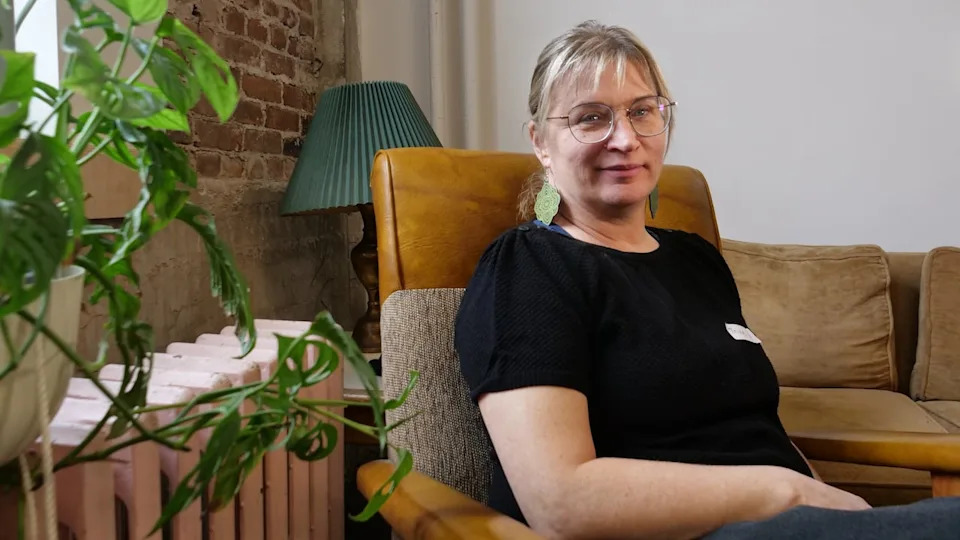
Trine Mikkelsen, Lykkå Cohabitation co-founder in L’Espace des Possibles in Rosemont-La Petite Patrie. (Esther Chaumont-Goneau)
Shared home, shared life
While O’Shaughnessy, her friends, and other people from Lykkå Cohabitation tried to connect at the speed dating event and still have to find their ideal home, other organizations have made co-living a reality.
Maria Kinoshita is the founder of Nomad Co-living, a home to 10 people of ages 25 years old to over 50 years old.
“This is currently the lowest season,” she explains, as the house can host up to 18 people.
The main Nomad residence is conveniently located in downtown Montreal, with another location currently being renovated in Hochelaga-Maisonneuve.
The downtown building, which used to be a six-plex, now has 16 bedrooms and a large kitchen, a working space and a TV room. For a price of around $1,000 monthly, residents have access to a comfortable shared living space and their private room, a cleaning service, as well as food essentials and other basic amenities.
“The goal is not to cram the most people in the space but to optimize it”, says Kinoshita, who is also a member of Lykkå Cohabitation.
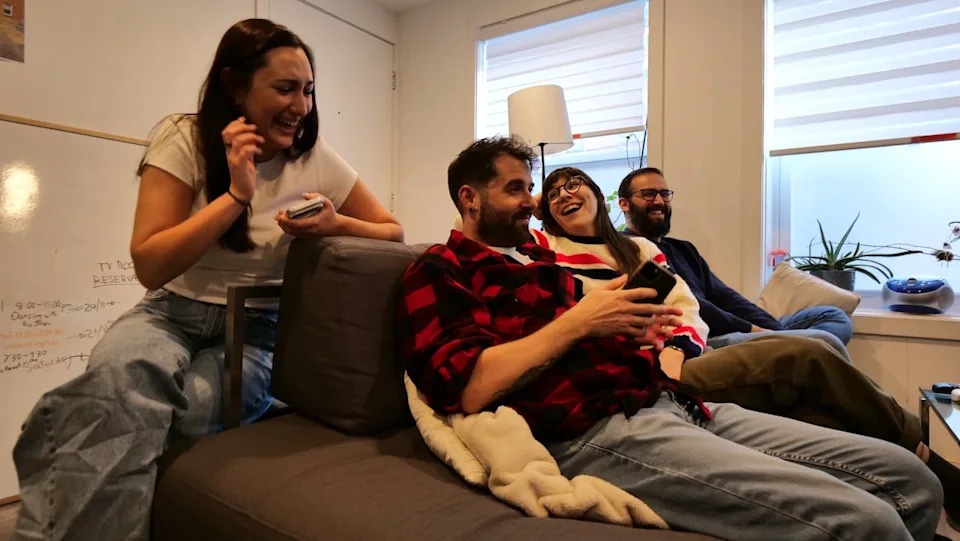
(Esther Chaumont-Goneau)
A personal solution to a structural problem
Funding constraints make it difficult for co-living initiatives to scale quickly. Not everyone either is willing to share their homes with strangers.
Nick Revington, an urban studies professor at Quebec’s Institut national de la recherche scientifique, says that shared living models can work for some, but are not a universal solution. “It is therefore a question of a diversity of models to accommodate a diversity of needs,” he says.
While multi-generational living is more common in other parts of the world, he noted it often reflects economic constraints rather than a personal preference. Nonetheless, he believes that shared living arrangements can be valuable for those who choose them, without replacing structural solutions to the housing crisis.
The cultural constraint of communal living is not lost on its supporters. “It’s hard in Canada because, culturally, people here are more into the American dream,” says Kinoshita, the Nomad Co-living founder. She feels it makes it more difficult to normalize this type of living arrangement.
While co-living in Montreal remains modest in scale, Sophie O’Shaughnessy and her friends Joanie and Jean-Francois are eyeing a six-bedroom apartment for rent in the Plateau-Mont-Royal.
They are still looking for two more people to add to their unit and are excited for this next step.
“We think we found our little gem in the neighbourhood,” said O’Shaughnessy. If all goes well, they expect to move in together this July.
About the authors
Esther Chaumont-Goneau is a multimedia journalist with a graduate diploma in visual journalism from Concordia University. Previously, she completed a bachelor’s degree in environmental geography at Macquarie University in Australia and at Université de Montréal. She has interned at Urbania Média. Using documentary photography, her work focuses on environmental and human stories, driven by a desire to amplify unheard voices.
Noor Musawi studied political science in Université de Montréal. She’s currently pursuing the graduate diploma in visual journalism at Concordia University, while doing an internship as a Fashion Reporter for Vainqueur Magazine. She’s interested in stories that cover human interest, culture and, of course, fashion.