


Listen to this article
Estimated 5 minutes
The audio version of this article is generated by AI-based technology. Mispronunciations can occur. We are working with our partners to continually review and improve the results.
New Brunswick’s minister of environment and climate change says he’s confident the province can reach a 2030 greenhouse gas emissions target, despite a significant spike in the most recent data.
Gilles LePage was predicting success in the legislature earlier this month — before the federal government released numbers showing 11.4 per cent growth in emissions in 2024.
“I can confirm that we are on track for our 2030 target,” LePage told a committee of MLAs on April 8.
That target is 10.7 million tonnes of carbon dioxide.
The 2024 numbers shows emissions rose to 12.8 million tonnes from 11.5 million the year before, putting the 2030 figure further out of reach.
“My hope is that it’s a one-time blip,” said Moe Qureshi, the director of climate research and policy at the Conservation Council of New Brunswick.
New Brunswick’s emissions have been trending generally downward over the last two decades, with a few exceptions.
The 12.8-million-tonne figure is the highest number since 2019.
 Moe Qureshi, the director of climate research and policy at the Conservation Council of New Brunswick, is concerned about a proposed natural gas plant in Tantramar. (Jacques Poitras/CBC)
In a statement, LePage said the new data did not affect his optimism.
“Based on current projections, we are still well positioned to achieve our 2030 greenhouse gas emissions target,” he said.
LePage pointed out that a large part of the spike in 2024 was the result of N.B. Power generating more electricity from its fossil-fuel plants during a longer-than-expected shutdown of the Point Lepreau nuclear generating station.
That “should be treated as an isolated event,” LePage said.
WATCH | ‘The status quo isn’t working’: Greenhouse gas emissions spike: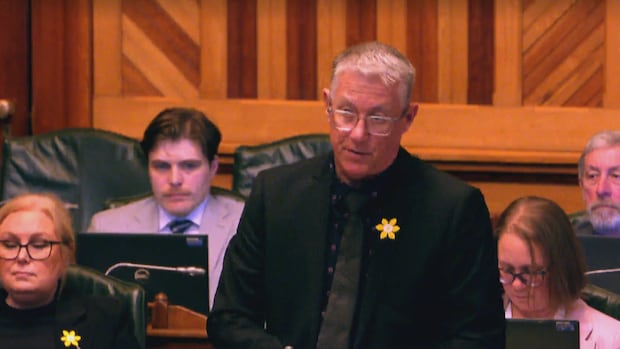
N.B. emissions jumped in 2024, jeopardizing provincial targets
Minister says province is ‘on track,’ after major emitters spewed 11.4 per cent more carbon dioxide.
Point Lepreau is shut down again this year for scheduled maintenance, but is forecast to come back online in August — before the cold weather and increased demand that could require heavy-emitting plants to fire up.
The higher emissions numbers were released as LePage’s department weighs an environment impact assessment submission from two companies planning to build a data centre in Lorneville and a natural gas plant to power it.
The assessment projects the centre’s gas plant will emit more than 755,000 tonnes of carbon dioxide, which would make it the third-largest emitter in New Brunswick after the Irving Oil Refinery and N.B. Power’s coal-fired power plant in Belledune.
“Some of these projects that are coming online are going to produce more, rather than reduce emissions,” Qureshi said.
“That’s my concern — that we’re on a trend that may start going upwards.”
Qureshi is also concerned about a proposed natural gas plant in Tantramar, though N.B. Power says it will provide backup power for new renewable generation that will lead to a net reduction in emissions.
LePage told the committee on April 8 that projects funded this year by the province’s industrial carbon-pricing system would reduce emissions by 306,000 tonnes.
But that reduction would come over the lifetime of those projects and would not be nearly enough to offset the new emissions from the Lorneville gas plant.
“What happens if we’re not on track?” LePage said in the April 8 committee session.
“Like any other thing, we’re going to evaluate on a daily basis to make sure that we move in the right direction.”
LePage recently announced funding from the province’s industrial carbon-price fund that will upgrade the AV Group mill in Campbellton in his riding to help it reduce its emissions by 3.4 per cent.
The pricing system sets a specific emission standard per unit of production — or “output” — for each of the 15 largest polluters in the province and requires them to reduce emissions by two per cent each year, until they reach 82 per cent of the standard in 2030.
Plants that succeed earn credits that can be sold to plants that fail to do so.
The standards apply only to a small portion of emissions, an element that has been criticized by environmentalists, who want to see more incentives to get emissions down faster.
Holt said during the 2024 provincial election campaign that the price “needs to be robust,” with more stringent standards but also with more incentives for companies to meet them.
After the Carney Liberals won last year’s federal election and said they would keep the requirement for industrial carbon pricing in place, Holt said she would move ahead with changes.
There’s been no word on progress since then, though LePage said the province is working toward an update to its Climate Change Action Plan in time for 2027-28.
“Reducing greenhouse gas emissions and protecting the environment are priorities to our government,” he said in his statement.