
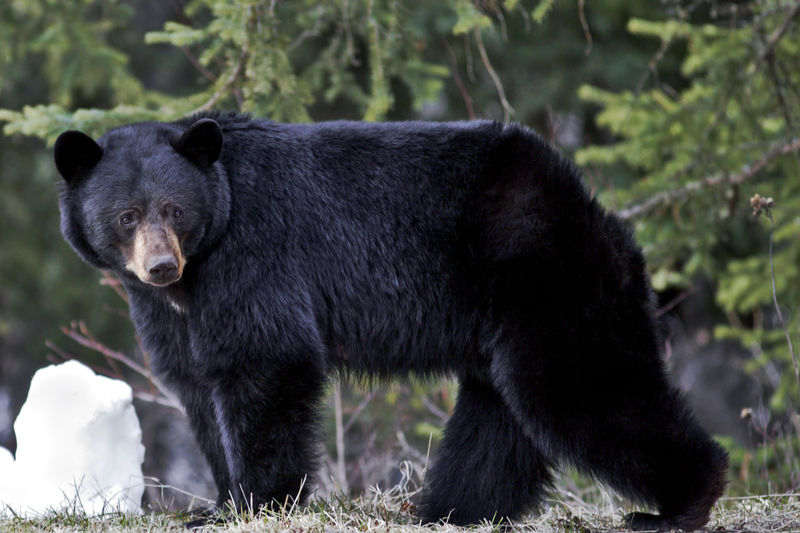
Black bears are omnivores, feeding on whatever is most readily available, and are not typically aggressive toward people. However, O’Hara said the late snowpack means bears may have to travel farther than usual to find food.

“It won’t make bears more aggressive at all, but they might just be forced to travel further distances for food,” she explained. “Having this late spring snow, it increases the energetic cost to bears particularly, and during a period where their fat stores have already been depleted from the winter. So in order to replenish that energy, you’re going to see them having to move a lot farther to get food.”
That search can sometimes bring them closer to homes, cabins and campsites, especially if food sources are easy to access.
“If your home, cabin, or campsite is in the north of the province, there’s a good chance bears will smell whatever food source you have in the area,” O’Hara said.
She recommends keeping properties free of attractants by properly storing garbage and eliminating strong food smells.
“It’s things like keeping your yards and campsites free of garbage and any strong scents that may attract bears, storing garbage in buildings or in bear-proof canisters, and only putting garbage bins out morning of collection and making sure that those bins are washed regularly so they don’t give off really strong scents that can attract bears,” she said. “Make sure that barbecues are properly cleaned and stored after each use so that they’re not attracting bears as well.”
Common attractants include bird feeders, fish, meats and fats, oils, and unrinsed eggshells.
Environmental factors may also play a role this year. Wildfires last summer and spring flooding linked to heavy snowfall have reduced available habitat in some areas, which could further concentrate bear activity.
“Anything that impacts their habitat can make it harder for them to find denning sites,” O’Hara said. “So they may be less likely to leave those spots that they know are good habitat because there’s not very many options of places where they can go.”
Despite these challenges, O’Hara said Saskatchewan’s black bear population remains stable, and those heading north still have a good chance of seeing wildlife, provided they do so safely and responsibly.
—
nick.nielsen@pattisonmedia.com