
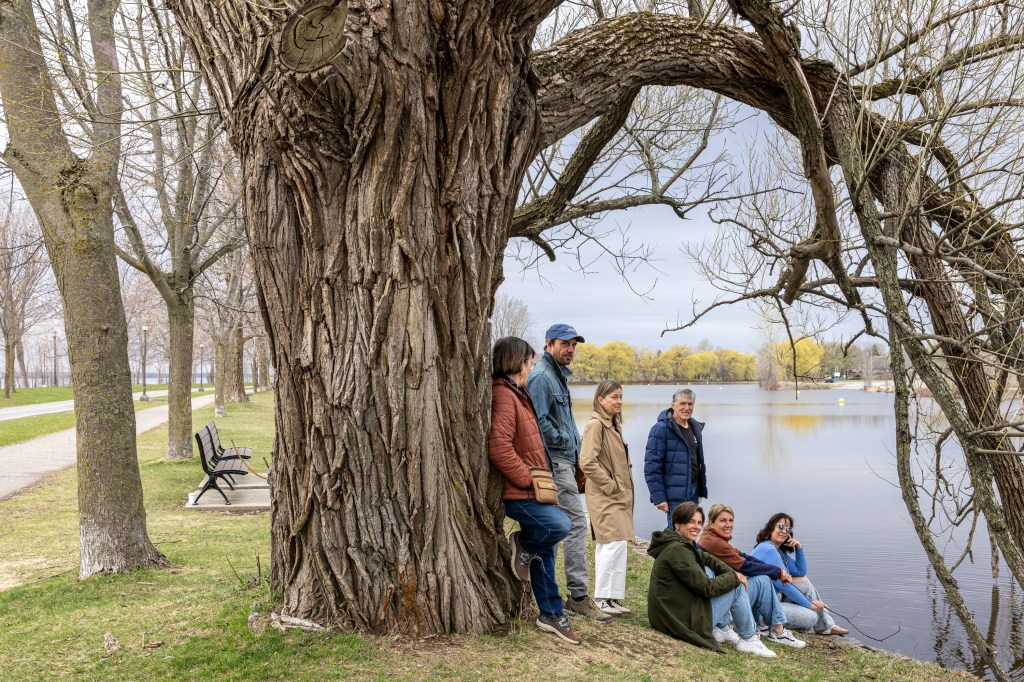
Walking along the waterfront in Lachine’s René-Lévesque Park, Valérie Léger can envision every detail of a long-planned open-water swimming project for the site.
She points to where swimming would be supervised, walks to the rocky bank where ladders would be installed, and speaks of how the water is just deep enough that sediment wouldn’t be disturbed by swimmers.
“It’s a real opportunity,” Léger says. “And it’s a gem that isn’t a given in Montreal — there aren’t many places to access the water, and we feel everyone should be able to access it here.”
After years of planning, the swimming project was supposed to launch last summer but stalled when the borough failed to obtain the needed permit in time.
It finally received provincial approval in January, but the new Ensemble Montréal borough administration, elected last November, has decided to call off the project over its $500,000 price tag.
Now, Léger is among those in Lachine urging the borough to reverse its decision and reconsider the project for next summer instead of letting years of planning go to waste.
Known as floating pools or harbour baths, similar projects have proved successful in European cities like Copenhagen and Paris, but also closer to Montreal, with versions in Quebec City’s port and on the Richelieu River in Beloeil.
They’re growing in popularity as governments contend with hotter summers and a push to make natural waterways more accessible. Proponents also say they’re much cheaper to create in waterways than land-based public pools, which can cost tens of millions of dollars in Montreal.
The Lachine project was planned for an inlet off Lac St-Louis near the former marina. It called for floating docks with buoy ropes limiting lanes, regular water testing, and lifeguards on duty at all times.
While some residents already swim in the area, Léger feels a supervised space would make the water more accessible to families, children, and people who are uncomfortable in open water — groups she says are currently shut out.
“It’s really true open-water swimming. So it can be intimidating,” she said.
In preparing for the project last year, the borough had readied engineering plans and submitted bids for equipment and lifeguards, expecting the site could accommodate 90 people at a time.
The permit received from the provincial Environment Ministry in January states the project needs to be launched within the next two years.
So while residents know it’s off the table for this summer, they’re pressing the borough to consider it for next year before the permit expires.
“There are many boroughs that would love to have a permit like this one — it’s not easy to obtain authorizations; it takes years of work,” said Mathieu Lacombe, who runs a water equipment rental project on site.
“So to have the permit and then say you’re not going to do this project is really disheartening. And it makes you wonder what the vision is for the waterfront at Lachine.”
Borough mayor says project is too expensive
In an interview with The Gazette, borough mayor Julie-Pascale Provost said the swimming project does not make financial sense given her priorities: fixing roads, improving safety and pushing for a new sports complex.
“It’s not true that half a million dollars isn’t a lot,” Provost said. “For me, it’s a hole in a budget I don’t have and can’t afford.”
Provost said she understands some people feel deceived by the reversal, but blamed the previous Projet Montréal administration for promising projects it didn’t deliver.
Asked whether she would consider the project for next summer, given the expiring permit, she was unequivocal it is not in her plans.
“We need to govern responsibly,” she said. “It’s well and good to dangle projects, but now the idea is to ensure we can meet current needs with our existing facilities.”
The swimming project would sit in the area once occupied by the former Lachine Marina, closed by the previous administration in 2021 as part of a larger plan to build a vast riverfront park that has faced various delays.
A sign on site explains the city has already invested $11.3 million since 2021 on studies and obtaining permits for water-based activities, water quality assessments, planting trees, and consultations on the new park.
Asked about her longer-term vision for the area, Provost said the decision to close the marina was controversial and described the park project as a vague “hypothetical concept.”
She is not yet sure what a future project for the site could look like, she added.
“The riverside park divides people; the marina divides people. We want to find something in between,” she said. “A unifying project where everyone can use the waterfront and fully enjoy the extraordinary space we have.”
Editor’s Picks