
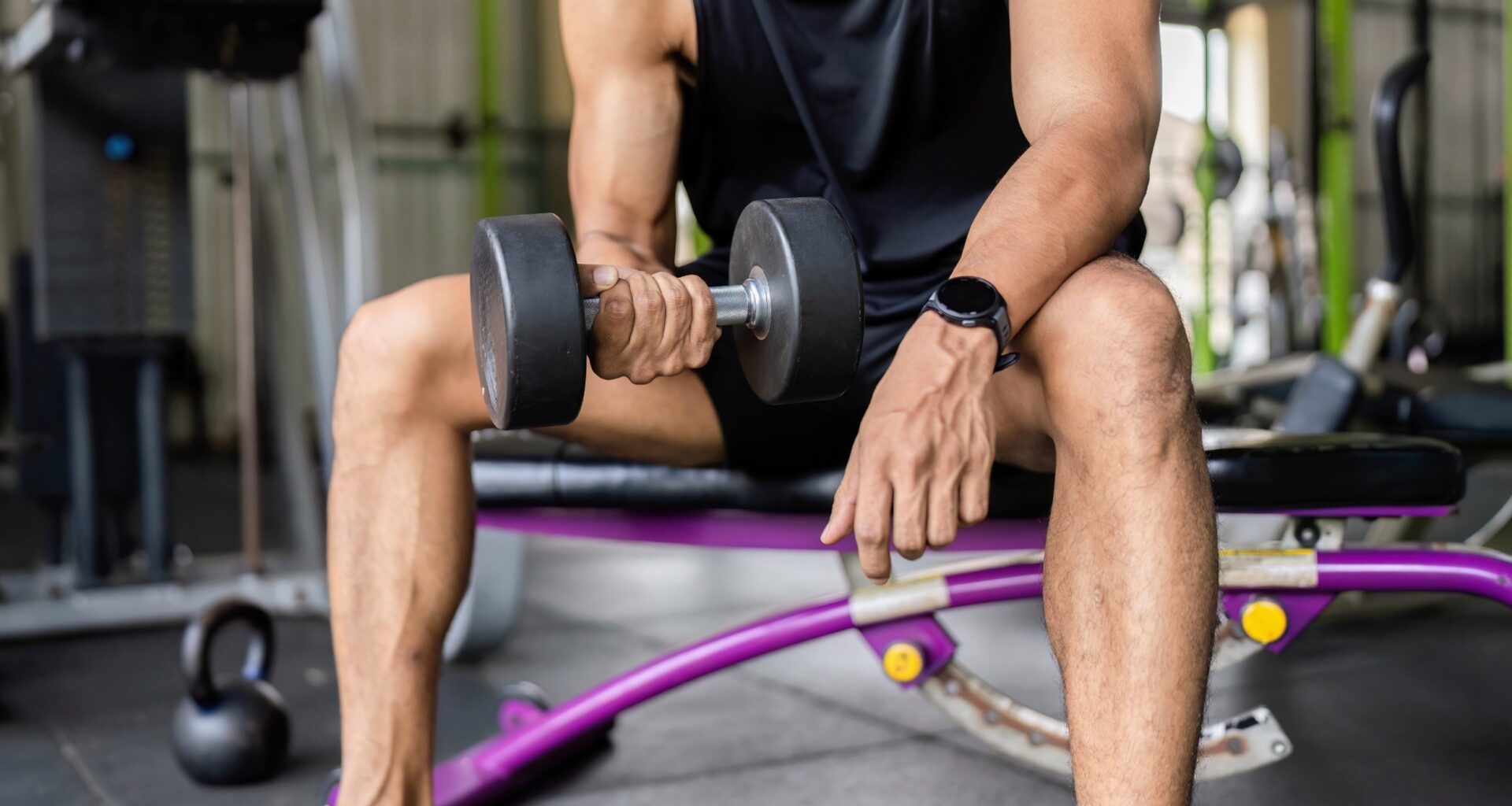
Muscles can grow stronger during slow lowering movements without exhausting workouts or next-day soreness, according to new research.
The finding challenges the gym habit of treating pain as proof, and it brings useful exercise into chairs, walls, stairs, and short daily routines.
The force behind lowering weights

Professor Ken Nosaka at Edith Cowan University (ECU) highlighted a practical message: simple lowering movements, such as chair descents, heel drops, wall push-ups, and stair steps, can build strength with less effort.
Nosaka found that muscles generate more force while lengthening than while lifting, yet this type of work requires less oxygen and causes a smaller increase in heart rate.
That mismatch explains why a modest routine can still ask muscle tissue to adapt before fatigue takes over.
Why lowering works
Eccentric exercise, a muscle action that controls movement as the muscle lengthens, happens when someone slowly sits, descends stairs, or lowers a weight.
During that lowering phase, muscle fibers resist the load while stretched, so force rises without the same breathing demand.
By contrast, concentric exercise, a muscle action that shortens muscle during lifting, usually costs more energy for the same outside work.
That difference does not make lifting useless, but it makes lowering work a smart entry point for people who quit hard routines.
Soreness is optional
Unfamiliar lowering can still leave delayed onset muscle soreness (DOMS), the ache that builds hours after exercise and peaks later.
Soreness often reflects irritated connective tissue, supportive material around muscle fibers, rather than torn fibers alone.
After one careful exposure, the repeated bout effect, protection created by prior effort, can reduce damage from later sessions.
“The idea that exercise must be exhausting or painful is holding people back,” said Nosaka.
The role of everyday movement
Everyday movements give this approach its practical edge because many people already lower themselves into chairs and down steps.
A slow descent makes the thigh and calf muscles brake body weight, which adds load without adding equipment.
Small routines can use chair squats, heel drops, wall push-ups, and chair reclines while keeping the motion controlled.
“When exercise feels achievable, people keep doing it,” said Nosaka.
Just a few minutes counted
ECU’s 4-week home-based eccentric exercise program, a daily routine built around slow lowering, tested 22 inactive adults ages 32 to 69.
Participants did 10 repetitions each of chair squats, chair reclines, wall push-ups, and heel drops, with harder versions added gradually.
After four weeks, participants completed 91% of sessions, increased strength by 13%, performed 66.1% more push-ups, and improved flexibility by 9.1 percent.
A later 8-week extension found 90% reported ongoing activity after 12 months, but routine blood measures still did not change.
Stairs tested hearts
That ECU logic met a harder test in a stair trial that followed 30 older women with obesity for 12 weeks.
One group walked downstairs while an elevator removed the climb, making the training mostly lowering work.
Average exercise heart rate was 88.6 beats per minute during descent, versus 113.7 during stair climbing.
Descending also cut resting heart rate 10% and systolic blood pressure, the top blood pressure number, 9%, while knee strength rose 34%.
Results from enhanced walking
Regular walking improves endurance, but it may not give leg muscles enough load to build useful strength.
An eight-week eccentric walking program, – walking with controlled lunge steps – added body-weight braking to ordinary walks.
Eleven regular walkers ages 54 to 88 improved leg strength, physical function, and thinking skills after adding those steps.
Because the sample was small, the idea looks promising as a starter strategy rather than a settled prescription.
Recovery time after sports
Athletes also use lowering strength because sprinting, landing, cutting, and slowing down all demand controlled braking.
A sports review found recovery can take longer after soccer and rugby than after several other sports.
Short match gaps may leave players carrying soreness and reduced force into the next contest, raising injury concerns.
For elite teams, eccentric training helps performance only when coaches also protect recovery time after heavy competition.
High muscle force, low energy demand
Safe use begins with preconditioning, gentle preparation that lowers damage risk before harder lowering work.
People can start by sitting slowly, lowering heels from a step, or bending arms during wall push-ups.
Progress should add range, repetitions, or load one piece at a time, while breathing stays steady.
Sharp pain, dizziness, chest discomfort, or unstable joints should prompt medical guidance before the routine continues.
Eccentric exercise turns ordinary lowering into training by matching high muscle force with lower energy demand and manageable effort.
Its best use is not heroic gym pain, but gradual practice that builds strength while respecting soreness, health limits, and recovery.
The study is published in the Journal of Sport and Health Science.
—–
Like what you read? Subscribe to our newsletter for engaging articles, exclusive content, and the latest updates.
Check us out on EarthSnap, a free app brought to you by Eric Ralls and Earth.com.
—–